Singapore Adds S$1.45 Bn to Equity Push as Liquidity Becomes a Tough Test
MAS has now committed S$5.4 Bn of a S$6.5 Bn programme designed to pull more institutional money into local stocks. The tougher question is whether stronger trading can become durable liquidity for companies beyond Singapore’s biggest names.
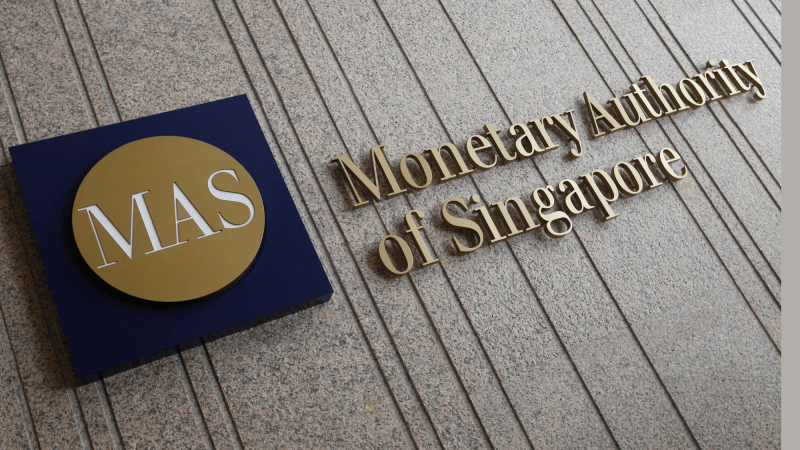
The Monetary Authority of Singapore (MAS)
Opinions expressed by Entrepreneur contributors are their own.
You're reading Entrepreneur Asia Pacific, an international franchise of Entrepreneur Media.
Singapore is putting another S$1.45 Bn behind an experiment that goes to the heart of a longstanding contradiction in its capital markets. The city-state manages vast pools of global money, but comparatively little of that capital has historically flowed into large parts of its own stock market.
The Monetary Authority of Singapore (MAS) said today (September 29) it would allocate the money to five asset managers under the third round of its Equity Market Development Programme (EQDP), taking its total commitments to S$5.4 Bn. These five include Amundi, Franklin Templeton, HSBC Asset Management, M&G Investments and Natixis Investment Managers. According to MAS deputy chairman Chee Hong Tat, these five have strong regional track records and have committed to making significant allocations to Singapore.
EQDP was expanded from S$5 Bn to S$6.5 Bn in February after the first nine managers received S$3.95 Bn.
The aim goes beyond lifting share prices. MAS wants appointed fund managers to run strategies with substantial exposure to Singapore equities, crowd in private capital alongside government funding and build deeper pools of money for listed companies, particularly beyond the largest and most liquid names.
That is a different problem from attracting capital to Singapore itself. The country’s asset management industry has grown at an average of 7.5% annually over the past five years to almost S$7 Tn, according to MAS, making it one of Asia’s largest fund management centres. Yet hosting asset managers, private banks and global investment firms does not automatically translate into liquidity for Singapore-listed businesses. The EQDP is designed to narrow that gap.
More Money is Already Trading
Early signs suggest activity in Singapore equities is moving in the right direction. The daily average value of securities on the Singapore Exchange (SGX) rose 35% in FY26 to S$1.8 Bn, its highest in 18 years, while total securities turnover increased by the same percentage to S$455.7 Bn. Small and mid-cap activity grew considerably faster. Daily average trading value jumped 155% to S$310 Mn, the highest since FY14, while institutional net buying in that segment tripled to S$606 Mn.
Momentum continued into the new financial year. In August, securities daily average value reached about S$2.2 Bn, up 35% YoY, while total securities turnover rose 29% to S$43.3 Bn. Retail participation also strengthened across smaller stocks and REITs.
Those numbers are significant because Singapore’s equity market problem has never been solely about the benchmark index. The Straits Times Index (STI) can perform strongly while smaller listed companies still struggle with thin trading, limited analyst attention and relatively narrow institutional ownership.
For founders, PE investors and growth companies considering an IPO, that distinction can determine whether a public listing provides a genuine financing and exit route or simply a place for shares to trade infrequently. That is why the rise in small and mid-cap turnover is arguably more important to the EQDP experiment than the headline performance of Singapore’s biggest stocks.
From Listings to the Market After the Listing
Singapore has spent much of the past two years addressing the public market problem from several directions. The EQDP addresses demand by backing Singapore-focussed strategies with institutional capital. Other reforms have targeted listing rules, research coverage, investor engagement and the mechanics of trading.
MAS also announced a S$20 Mn market-making sleeve under its Grant for Equity Market Singapore scheme, aimed at newly listed and next-tier small and mid-cap stocks, where tighter spreads and better execution can make it easier for investors to enter and exit positions.
The logic is straightforward. More IPOs do not create a deeper market if newly listed companies subsequently become illiquid.
For entrepreneurs and early investors, the usefulness of a public market depends on what happens after the listing. Companies need enough turnover to raise additional capital. Institutions need confidence that they can build and unwind positions without moving prices sharply. Existing shareholders also need a credible route to liquidity.
Singapore’s policy response increasingly treats those pieces as part of the same ecosystem. That matters because the city-state is competing for companies that have alternatives. An ASEAN technology or consumer business large enough to list internationally can choose between Singapore, Hong Kong or the US; remain private longer; or sell to a strategic or PE buyer.
A stock exchange, therefore, has to offer more than a listing venue. It has to offer capital after the IPO.
The Crowd-In Test
That is also why the S$6.5 Bn figure can be misleading if viewed purely as government money being put into stocks. MAS has explicitly designed the programme to attract additional third-party investment alongside its allocations. Managers were selected in earlier rounds partly on their ability to draw commercial capital into their strategies and expand investment and research capabilities in Singapore.
The longer-term test, therefore, is whether public capital becomes catalytic rather than permanent. If a larger institutional investor base produces better liquidity, it can encourage more research coverage and increase other investors’ willingness to participate. Greater participation can, in turn, make listings more attractive and give companies more confidence that a public-market valuation will be supported by actual trading. But the reverse is equally possible if interest fades once government-supported capital stops expanding.
Singapore’s equity market revival is still in its early stages. So, it is hard to say how much of the rise in trading is due to the EQDP. Trading volumes have risen alongside strong equity performance, corporate earnings, buybacks and wider market reforms. The EQDP is one part of that change, not proof of it.
What has changed is the scale of the attempt. With S$5.4 Bn now committed across 14 managers, MAS has allocated more than four-fifths of the programme and expects to name a fourth batch of managers in 2027. At the same time, Singapore continues to strengthen its broader asset management ecosystem, including new incentives aimed at attracting hedge funds, investment professionals and more high-value fund management activity.
The result is an increasingly deliberate attempt to connect two parts of Singapore’s financial system that have not always reinforced each other—its strength as a centre for managing global money and its ability to channel enough of that money into companies listed at home.
The S$1.45 Bn allocation can put more institutional capital into Singapore stocks. The tougher test is whether that capital changes the market enough for private investors to keep coming after the government money stops expanding
Singapore is putting another S$1.45 Bn behind an experiment that goes to the heart of a longstanding contradiction in its capital markets. The city-state manages vast pools of global money, but comparatively little of that capital has historically flowed into large parts of its own stock market.
The Monetary Authority of Singapore (MAS) said today (September 29) it would allocate the money to five asset managers under the third round of its Equity Market Development Programme (EQDP), taking its total commitments to S$5.4 Bn. These five include Amundi, Franklin Templeton, HSBC Asset Management, M&G Investments and Natixis Investment Managers. According to MAS deputy chairman Chee Hong Tat, these five have strong regional track records and have committed to making significant allocations to Singapore.
EQDP was expanded from S$5 Bn to S$6.5 Bn in February after the first nine managers received S$3.95 Bn.