Winning at Home is Not Enough in Southeast Asia
In this conversation with Entrepreneur APAC, Golden Gate Ventures founding partner Vincent Lauria shares what works for cross-border fintechs in Southeast Asia. A Silicon Valley entrepreneur-turned-VC with global exposure, he says the harder reality is that capital often does not travel across regions, even when companies do.
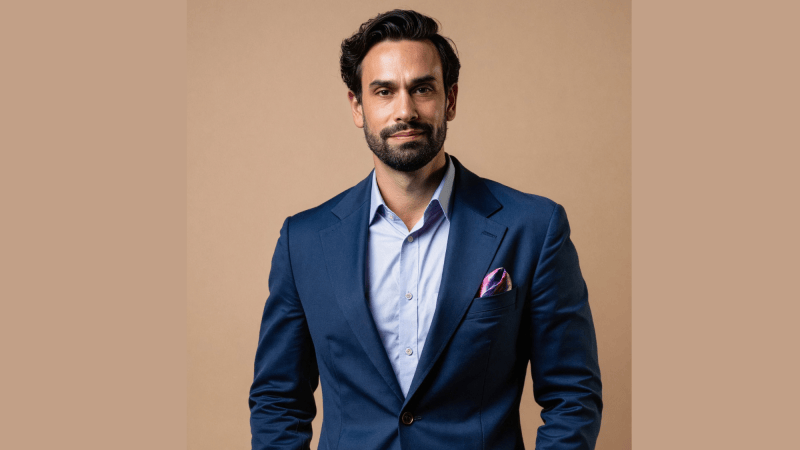
Vinnie Lauria
Disclosure: Our goal is to feature products and services that we think you'll find interesting and useful. If you purchase them, Entrepreneur may get a small share of the revenue from the sale from our commerce partners.
You're reading Entrepreneur Asia Pacific, an international franchise of Entrepreneur Media.
Vincent Lauria was not planning to move to Asia. While travelling through the region, he found startups he wanted to back and asked investor friends in the US to join him, given their expertise in those sectors. They all declined, saying they did not want to invest outside the country.
Nearly two decades later, little has changed. The founding partner of Golden Gate Ventures finds that early-stage venture capital is “incredibly local across the innovation ecosystem even though we are all super connected. It’s because I need to know who else is competing on the ground and who the best talent is. I don’t invest in one company. I need to understand the entire landscape.”
There are exceptions. Perhaps one in 100 investors would be willing to invest outside their own market, and only about 1% of startups could secure funding from cross-border VCs at an early stage. “To be in that niche is kind of crazy,” he said.
That’s not the only pain point explored in Mind the Gap: Scaling Businesses Across Cultures, a book Lauria co-authored with Stefano Pellegrino and Savanid Vatanasakdakul. Drawing on interviews with more than 50 CEOs and investors, the trio examines why products, teams and business assumptions break down when they move across cultures.
For Southeast Asia’s fintech 2.0 shift — Golden Gate has long avoided the consumer-wallet race — these findings offer a hard business edge. Cross-border B2B fintechs may promise regional scale, but the work of building them remains stubbornly local.
Your book, Mind the Gap, explores the idea of transcreation for business success. What does that mean in practice?
I think there are two angles to it. The first is trust. The concept of trust is really interesting in this age of artificial intelligence, where we are all leaning into it even though we know it can give us wrong information. We cannot trust it 100%. When we interviewed more than 50 CEOs and investors, we always asked, “What have you seen go wrong?”
These cultural issues often came down to trust across cultures. What an American, a Vietnamese or an Indian may say about timelines and expectations or how they say no can break trust. That is where the whole team dynamic breaks down.
The other part is the way a product translates across markets. It is not universal. There are major failures, such as Uber’s global expansion, because the product that worked in the US did not necessarily work elsewhere. People might not have credit cards, or drivers may need to get paid daily and cannot wait until the end of the month. That is why products must be different.
There is a fascinating anecdote in the book about a Polish startup that has now spread across Europe. It is doing very well, with tens of millions of dollars in revenue, but it only provides booking and payments for haircuts. Even a haircut is not the same across borders. In Poland, London, New York or India, who collects the payment? Is it the barber or the barbershop? Who handles the scheduling? All of this varies culturally across markets.
The investor was involved with the company very early on, and it blew his mind. The CEO had to keep iterating the product as they learnt more. Something as simple as a haircut showed that product-market fit does not translate across cultures.
You came from Silicon Valley and now invest in Southeast Asia. What separates the two ecosystems?
There are two ways to look at it. From the outside, Silicon Valley is often seen as the world’s innovation hub, the place where new technology companies are expected to emerge. But I look at the market access. It gives startups access to a very large, high-premium market in the US. If I compare Silicon Valley with Southeast Asia, there is no such premium market here. You could say Singapore has a very high gross domestic product, but it is a city.
Whether you are building in Singapore or in any country in Southeast Asia, you do not have the market access you do in the US, and there is no way to recreate it. For better or worse, software, teams and investing are still heavily localised. That is one difference.
The second is that Silicon Valley is highly international in its innovation. People come from all over the world, and that global talent base is part of what makes the ecosystem so difficult to replicate. The Kauffman Foundation did a study and found that immigrant founders accounted for more than half of Silicon Valley’s technology and engineering startups in the decade to 2005.
For Southeast Asian companies, expanding into multiple markets early is often necessary for growth. What separates the founders who do it well?
I would say this is a unique market, a difficult region for international expansion because companies often have to move beyond their home markets early. An individual country can be relatively small, while the neighbouring market may be very different, not just in language but in culture and business behaviour. Look at Thailand and Vietnam, for instance, the Philippines and Indonesia, with all the islands, or India, which is also very diverse. What I have learnt over 15 years is that our biggest companies can do this well. That was part of the reason I wanted to write the book. I had learnt all these things as an investor by watching companies become very big, and I wanted to share how to do that.
Certain traits stand out. International experience matters. One can be a local Indonesian founder, but that experience could come from studying abroad, living abroad, working abroad or working for an international company in Indonesia. But if I am going to launch in another country, I must consider who I know there who could become the first hire. Who could make some introductions?
This is where it gets scary. People might get on a plane for a tour, but when you actually have to make that hire, build trust across borders and know whether you are hiring the right person, you need a network that you can ask for feedback or customer introductions.
This is where the bar is really high. Entrepreneurs who can do that are successful, and it gives them an unfair advantage.
We have seen this so many times. A local Vietnamese e-commerce company starts competing with a Singapore e-commerce business. The CEO in Vietnam says, “We know Vietnam better, so we are going to win.”
But the reality is that the company in Singapore may already have expanded across Malaysia, Singapore, the Philippines and Indonesia. By the time it enters Vietnam, it may be 10 times the size, with stronger engineering, better marketing and a better product. It might not know the local culture so well, but this is where regional companies end up taking market share from local champions.
That is why it is so important to go global. If you do not, you have a short window to be No. 1 in your market. But at some point, somebody else is going to come in and take that from you.
What about the team on the ground?
You need to have the right person on the ground. You cannot do it with assumptions from abroad. Here is another anecdote, again from our interviews with CEOs. One company expanded an online financial-comparison marketplace from Singapore to Hong Kong. Culturally, the markets appeared similar, and the company thought it could do it without a problem. But it was not gaining traction in Hong Kong, even with little competition. The company sent one of its senior leaders, a European national who had grown up across Asia and was used to working across cultures. He had not spent much time in Hong Kong, but he knew how to build relationships in unfamiliar markets.
By sending him to Hong Kong, the company was able to build a team and partnerships with banks. But that person does not necessarily have to be deeply embedded in the local national network. They need to know how to start building trust, relationships and business connections.
Golden Gate backed enterprise fintech while much of the market chased consumer wallets. Is fintech moving beyond payments to become the digital CFO layer for businesses?
We have been investing in fintech for 15 years, in companies such as Xendit, Funding Societies and even Stripe in the US. Historically, a lot of money went into business-to-consumer fintech. But from an investor’s perspective, it never made sense to me, and we avoided consumer-facing fintech. We have invested in almost two dozen fintech companies, all of which are B2B. That is where the transaction value is. You do not have to spend money to acquire a transaction. You just
have to get a customer.
In consumer fintech, you have to spend hundreds of millions of dollars, if not more than a billion, to acquire customers, assuming you will own them. But that is not the case. People were making wallets, but ultimately they were about user convenience, and you tend to compete with Visa and Mastercard. It never made sense to me.
In fact, outside China and apart from a few exceptions, there really is no giant consumer fintech. Everything is behind the scenes. What you are now seeing is cross-border B2B fintech growing in popularity. Businesses want to move money between currencies more easily.
There was not much demand for cross-border operations before, but that trend has changed, and many startups are now entering this space. I would phrase it as money shifting from consumer fintech to B2B fintech, as investors learnt that consumer fintech was the wrong place to put it.
Can you elaborate on how that works operationally?
I will give you an example. Look at a company like Wise, which is doing it within the regulatory framework. A customer sees fast cross-border payments, foreign exchange services and multi-
currency accounts. But underneath that is a deeper operating layer for handling local accounts, payment rails, liquidity, compliance, bank relationships, currency routing and APIs. Currencycloud sits in that B2B infrastructure layer, helping banks and fintechs embed FX, collections and cross-border payment capabilities into their own products.
Two things are happening here. The first is demand across borders. The revenue that you could potentially earn, compared with the cost of setting up all these local relationships and local licences, is becoming attractive.
There can be a high cost, and sometimes it is not worth it. But companies are doing it properly. They are opening local bank accounts, holding cash there and appropriately exchanging funds across countries in accordance with regulations.
The second factor driving this trend is technology. There are many different transactions, and businesses want them automated. They also have to trust their fintech partners. That was the biggest challenge for Xendit. It took the company four years to earn the trust of its major customers. Now these customers trust it. They see other tools, and they are willing to trust more.
If fintech leans so heavily on technology, can a single founder build a venture-scale company with artificial intelligence? Lean, talented teams with a lot of technology — is that the future you are looking at?
I don’t think so. Leadership, employees and what people do for work will shift. Today, you could build a company with $1 Mn in annual recurring revenue with a single founder. That is amazing because of artificial-intelligence tools.
But that is not what venture capitalists are investing in. The question is: are you talking to a VC or are you building your own company?
If you are building your own company, go for it. But if you are talking to a VC, we need to see $100 Mn in revenue. We need to see a billion-dollar outcome at minimum. You cannot do that with two leaders. You need people.
AI may be changing how companies work, but look at OpenAI itself. In just a few years, it has scaled with thousands of people. Building multibillion-dollar companies requires multiple really smart, talented people and multiple leaders.
I don’t agree that the future will be made up of small teams. Maybe founders can build their own companies without raising venture capital. But if they are raising venture capital, the company will have to look much more like OpenAI than a two-person operation.
Where does Golden Gate see its next opportunities?
Golden Gate Ventures is a bit unique. You have an American kid who has been in Asia, unlike most of our peer funds. What I pride myself on as a founding partner is understanding trends before they emerge. All venture capitalists need to predict the future, and we have been pretty good at that.
Southeast Asia was early for us, but it worked well. A few years ago, we set up offices in the Middle East and North Africa and launched a separate fund there. Now that MENA is becoming a trend, we are seeing many VC firms moving there.
As for Golden Gate, we are very focussed on ecosystem building. We not only identify the ecosystem, but we also help build it. As of now, we are exploring East Asia, including [South] Korea and Japan, for international and cross-border opportunities. For us, geopolitical and macro trends will continue to shape our next opportunities.
That is what is really exciting. Silicon Valley is not the end-all and be-all. There are other innovation ecosystem hotspots, and we try to identify them before everybody else hops on.
Vincent Lauria was not planning to move to Asia. While travelling through the region, he found startups he wanted to back and asked investor friends in the US to join him, given their expertise in those sectors. They all declined, saying they did not want to invest outside the country.
Nearly two decades later, little has changed. The founding partner of Golden Gate Ventures finds that early-stage venture capital is “incredibly local across the innovation ecosystem even though we are all super connected. It’s because I need to know who else is competing on the ground and who the best talent is. I don’t invest in one company. I need to understand the entire landscape.”
There are exceptions. Perhaps one in 100 investors would be willing to invest outside their own market, and only about 1% of startups could secure funding from cross-border VCs at an early stage. “To be in that niche is kind of crazy,” he said.