Mi Material’s S$215 Mn Singapore IPO Tests the Value of the Malaysian Semiconductor Spin-Off
The SGX listing values Mi Technovation’s materials business at S$891 Mn after profits surged, but investors must weigh its advanced packaging ambitions against customer concentration, capital spending and semiconductor cycles.
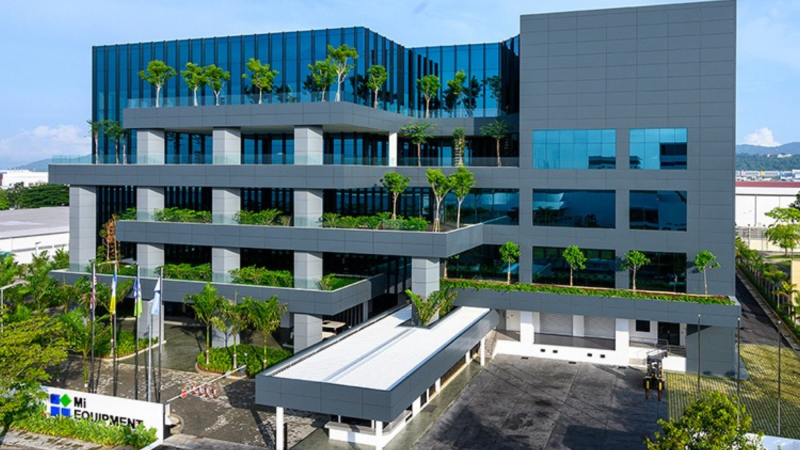
Mi Technovation
Opinions expressed by Entrepreneur contributors are their own.
You're reading Entrepreneur Asia Pacific, an international franchise of Entrepreneur Media.
Penang-based Mi Technovation, a Bursa Malaysia-listed maker of semiconductor die-sorting equipment and materials, is seeking to unlock the value of its semiconductor materials business through a S$215 Mn initial public offering in Singapore, testing investor appetite for a profitable but relatively specialised supplier whose growth increasingly depends on advanced chip packaging.
Its subsidiary, Mi Material Holding, launched the offering on October 19 at S$1.80 a share, valuing the Singapore-headquartered company at S$891 Mn. Mi Material makes precision solder spheres, sold under the Accurus brand, at factories in Tainan, Taiwan, and Ningbo, China. The transaction will raise S$168.2 Mn in gross proceeds for Mi Material, while allowing its Malaysian parent to sell part of its holding without relinquishing control.
Trading on the Singapore Exchange (SGX) Mainboard is scheduled to begin on October 28. The offering opened days after a mid-October sell-off in semiconductor stocks that also hit SGX counters. Mi Material chief executive officer Kevin Tan said the company was more focussed on the things it could control.
The listing comes at an important point in the semiconductor investment cycle. Demand for AI processors, high-bandwidth memory and increasingly complex chip packaging is creating opportunities for materials suppliers operating further down the industry’s value chain. Yet Mi Material’s biggest market remains mobile devices and wearables, leaving its investment proposition tied to both established consumer electronics demand and the expansion of advanced computing.
The company is also undertaking an ambitious manufacturing and research expansion across Malaysia, Taiwan, Singapore and the US. Its ability to translate that investment into sustained earnings will determine whether public markets reward the spin-off.
For Mi Technovation, the transaction offers a separate valuation for a business that generates roughly half of group earnings, while releasing capital that can be deployed elsewhere. The parent said in its listing application that the spin-off would crystallise the value of its investment and allow price discovery for the stake it keeps. At the IPO price, that retained stake would be worth about S$657 Mn, PublicInvest Research estimated.
A Singapore Listing Coming with Malaysian Control
Mi Material’s IPO offers about 77.5 Mn shares on offer, including 51.5 Mn newly issued shares and 26 Mn existing shares sold by Mi Technovation. A separate placement of approximately 41.94 Mn new shares to seven cornerstone investors brings the total shares offered to about 119.44 Mn, worth approximately S$215 Mn at the issue price.
Of the S$215 Mn, Mi Material will receive S$168.2 Mn from the new shares and cornerstone subscriptions, or approximately S$157.9 Mn after estimated expenses.
Mi Technovation’s sale of existing shares will generate approximately S$46.8 Mn in gross proceeds, which will go to the parent, not the newly listed subsidiary.
The cornerstone investors are abrdn Asia, abrdn Malaysia, Amova Asset Management Asia, Areca Capital, Barings Singapore, Fullerton Fund Management and Manulife Investment Management Singapore. OCBC and CGS International Securities Singapore are the joint global coordinators, bookrunners and underwriters.
After the offering, Mi Technovation will retain about 73.7% of Mi Material, assuming the over-allotment option is not exercised, and the parent does not acquire additional offering shares. Mi Technovation has granted the underwriters an over-allotment option of up to 5 Mn additional shares to support trading after listing. Its stake could decline to 72.7% if the option is exercised in full.
The Malaysian parent is also distributing approximately 8.98 Mn Mi Material shares to eligible shareholders through a dividend-in-specie arrangement, based on one Mi Material share for every 100 Mi Technovation shares held on the October 12 entitlement date.
The transaction, therefore, creates two shareholder groups with direct exposure to Mi Material’s performance while keeping Mi Technovation firmly in control.
That structure matters to investors assessing the spin-off. The Singapore listing provides a dedicated capital-raising platform and greater visibility over the materials business. But minority shareholders will have limited influence over major corporate decisions as long as the parent retains its controlling stake.
The choice of Singapore also reflects operational considerations. Mi Material is headquartered in the city-state, across the causeway from its new manufacturing base in Johor, where initial output has been earmarked for multinational front-end semiconductor customers based in Singapore.
Oh Kuang Eng, executive director and group chief executive officer of Mi Technovation, told The Business Times in July that Singapore ranked highest among the markets considered for access to talent, transparency and researcher quality. He also cited the city-state’s geopolitical stability and its proximity to the Senai plant in the Johor-Singapore Special Economic Zone.
Mi Technovation, meanwhile, intends to use proceeds from its secondary share sale to support its vehicle technologies business and working capital requirements.
The spin-off lets the Malaysian group expand across separate business lines without requiring the semiconductor materials operation to compete with the parent company for all its growth capital.
Profits Accelerate, but AI is Not Yet the Core Business
Mi Material is entering the public market after a sharp improvement in its financial performance. Its revenue for the six months ended June 30, 2026, rose 109.8% to $53.7 Mn from $25.6 Mn a year earlier. Net profit increased to $14.3 Mn from $2.9 Mn, while gross profit rose 156.3% to $24.6 Mn.
The gross profit margin widened to 45.9% from 37.3%, reflecting higher sales volumes, a richer product mix and demand for specialised solder spheres that command higher average selling prices.
The growth represents a substantial acceleration from 2025, when the company generated $65.3 Mn in revenue and $10 Mn in net profit.
The management’s preliminary estimates suggest the momentum continued into the third quarter. Revenue for the three months ended September is expected to reach $37.8 Mn, up 15.6% from the preceding quarter, with gross margin at about 47.5%, against 48% in the June quarter.
The company’s reporting accountant did not audit or review its third-quarter estimates. But stronger earnings underpin Mi Material’s valuation. The proposed S$891 Mn market capitalisation represents a substantial premium to its historical earnings, making it crucial that the first-half acceleration is sustained.
PublicInvest Research estimates the IPO price values Mi Material at 17 to 21 times the research house’s own FY26 and FY27 earnings forecasts.
The company’s commercial exposure also requires distinguishing between the wider semiconductor industry’s AI investment boom and Mi Material’s actual revenue base.
For example, mobile devices and wearables contributed 61.7% of revenue during H1 2026. High-performance computing and memory accounted for 31.1% during that period, and automotive and renewable energy applications contributed 7.2%.
The distribution has not changed much from 2025, when mobility and wearables represented 62% of revenue, high-performance computing and memory 29.6%, and automotive and renewable energy 8.4%.
Mi Material is, therefore, not primarily an AI hardware supplier, even though demand from high-performance computing and advanced memory customers is becoming increasingly important to its growth prospects.
Its core products are precision solder spheres used to establish electrical connections within semiconductor packages and between packaged chips and circuit boards.
As chip architectures become more complex, manufacturers need smaller, more precise and more reliable connections. Advanced packaging for AI processors and high-bandwidth memory creates particularly demanding requirements because more components must be integrated within limited physical space.
Mi Material has developed proprietary solder alloys and fine-pitch products to address those requirements. Its portfolio includes solder spheres as small as 30 microns in diameter, compared with the 75-180 micron range commonly used in mobile-device applications.
Mi Material describes itself as one of the world’s three largest solder sphere suppliers, and semiconductor research firm Yole puts its share of the global serviceable addressable market at 24% in 2025. Mi Technovation’s circular to shareholders projected the total addressable market for solder spheres to grow from about $220 Mn in 2023 to $1.9 Bn by 2031.
That position provides an established industrial base from which the company can expand into more specialised products.
Nevertheless, semiconductor materials remain subject to pricing pressure, qualification requirements and changing production needs. The growing importance of advanced packaging does not automatically guarantee higher profits for every supplier participating in the market.
For Mi Material, the commercial advantage lies in increasing the share of higher-value products while maintaining manufacturing efficiency as volumes expand.
A Four-Market Expansion Strategy
The IPO proceeds will finance Mi Material’s efforts to expand both production capacity and its position in materials research.
Its largest planned allocation, S$55.9 Mn, is for an R&D and demonstration centre in Texas, where a significant proportion of its customers’ design, qualification and technical operations are based.
The centre will include two fully automated production lines and may be converted into a full manufacturing facility if required. Mi Material expects the operation to be ready by the end of 2028.
The U.S. investment reflects a broader challenge confronting specialist semiconductor suppliers. Materials increasingly need to be developed and qualified alongside customers, not introduced after chip packaging designs have been finalised.
That makes proximity to design teams commercially important. Suppliers able to participate earlier in development programmes may secure longer customer relationships, although qualification cycles can delay revenue generation.
The company has allocated a further S$33.3 Mn to refurbish and upgrade production facilities in Taiwan, while S$27.9 Mn will support manufacturing expansion in Malaysia.
The Malaysian investment centres on a new facility in Senai, Johor, within the Johor-Singapore Special Economic Zone.
The factory is being developed in two phases. The first three production lines are expected to be ready by Q4 2026, with production ramp-up beginning in early 2027. Another four lines are targeted to become operational by the end of 2027, followed by further ramp-up in 2028.
Together, the seven lines are expected to add annual capacity of approximately 2.1 Tn to 2.8 Tn solder spheres, depending on product specifications. Oh told The Edge Malaysia in April that the Senai plant would contribute about 8-12% of projected 2027 revenue.
The company currently operates 19 production lines across Taiwan and China, with combined annual capacity estimated at 6.6-8.9 Tn solder spheres.
After completing the planned expansions in Malaysia and Taiwan, it expects combined annual production capacity to reach approximately 11.34-15.26 Tn units. But the scale of that increase introduces an important execution risk. Building production lines does not immediately generate revenue. New facilities must complete customer qualification, achieve commercial utilisation and manage production costs before they can contribute meaningfully to earnings.
Mi Material has also earmarked S$23 Mn for a new Singapore research laboratory, expected to become operational in the second quarter of 2030.
The Singapore facility is planned to house about 40 research and technical staff working on advanced solder sphere technology, with university research collaborations on solder metallurgy, copper-based interconnects and novel filler technologies targeted from early 2027. Management has also told analysts it plans to diversify into other packaging materials, including thermal interface materials used to manage heat in semiconductor devices.
These investments extend the company’s ambitions beyond increasing output of its existing products. Management seeks a stronger position in semiconductor materials design, where intellectual property, customer collaboration and qualification capabilities can be as important as manufacturing scale.
Concentration, Costs and Dividends
Substantial customer and geographic concentration accompany Mi Material’s growth prospects. Its five largest direct customers generated 41.4% of revenue during the first half of 2026. Although that proportion has declined from 46% in 2025, a relatively small number of customers still account for a significant share of sales.
The company typically operates without long-term contracts and relies instead on purchase orders and production requirements. This is common practice in the semiconductor supply chain, where component suppliers maintain technical qualifications and compete for positions in successive product generations.
It can strengthen relationships once customers incorporate materials into their manufacturing processes, but it does not guarantee future purchasing volumes.
Geographic concentration is also critical. Taiwan accounted for 54.4% of Mi Material’s 2025 revenue by delivery destination, followed by China at 23.3%. Malaysia contributed 7.2% and Singapore 4.3%.
Its plans to expand manufacturing in Malaysia and strengthen customer development in the US may gradually diversify its operating footprint. But semiconductor manufacturing will likely remain concentrated in a few Asian markets.
Raw material costs are another potential source of margin pressure. Mi Material relies on metals, including tin, silver and copper. When prices rise, the company’s ability to pass costs on to customers depends on product specifications, customer relationships and market competition.
The company says specialised products provide greater pricing flexibility than standard solder alloys. That advantage will become increasingly important as new capacity raises depreciation and operating costs.
Mi Material is also offering shareholders a potential income component alongside its growth strategy.
Although it has no fixed dividend policy, the board intends to recommend distributions of at least 20% of net profit after tax from listing through December 2026 and for FY2027, subject to cash flow, capital expenditure and other financial requirements.
The proposed distribution provides shareholder-return visibility, but it is not an unconditional commitment.
Investors must, therefore, weigh the company’s improving earnings and planned dividends against the capital required for expansion.
Proving the Premium
Mi Material’s S$891 Mn valuation places it in a different position from an early-stage semiconductor technology company seeking capital before achieving commercial scale. It already has established manufacturing operations, a significant global market position and a record of profitability.
However, the valuation requires investors to look beyond the exceptional first-half earnings increase and assess whether higher margins can endure through new capacity investment and industry cycles.
For Mi Technovation, the spin-off establishes a separate listed identity for a business whose earnings and growth prospects may warrant a different valuation from the parent’s remaining operations.
For Singapore, it brings a cross-border semiconductor issuer to the SGX Mainboard, with manufacturing funds spreading to neighbouring Johor and research operations spanning global technology markets.
The immediate transaction will determine the price public investors are willing to pay for that exposure.
The longer-term test is more demanding. Mi Material must demonstrate that its position in precision semiconductor materials can support sustained revenue growth, defend margins and justify a premium valuation as its next phase of manufacturing and research investment comes online.
Penang-based Mi Technovation, a Bursa Malaysia-listed maker of semiconductor die-sorting equipment and materials, is seeking to unlock the value of its semiconductor materials business through a S$215 Mn initial public offering in Singapore, testing investor appetite for a profitable but relatively specialised supplier whose growth increasingly depends on advanced chip packaging.
Its subsidiary, Mi Material Holding, launched the offering on October 19 at S$1.80 a share, valuing the Singapore-headquartered company at S$891 Mn. Mi Material makes precision solder spheres, sold under the Accurus brand, at factories in Tainan, Taiwan, and Ningbo, China. The transaction will raise S$168.2 Mn in gross proceeds for Mi Material, while allowing its Malaysian parent to sell part of its holding without relinquishing control.
Trading on the Singapore Exchange (SGX) Mainboard is scheduled to begin on October 28. The offering opened days after a mid-October sell-off in semiconductor stocks that also hit SGX counters. Mi Material chief executive officer Kevin Tan said the company was more focussed on the things it could control.