Macron’s Malaysia Visit: The Business of Strategic Autonomy
From rare earths and advanced chip design to energy and aerospace, Paris and Kuala Lumpur are seeking to hedge their supply-chain vulnerabilities through deeper industrial co-operation. A new strategic partnership promises Malaysian firms access to proprietary technologies, institutional capital, and European markets long out of reach.
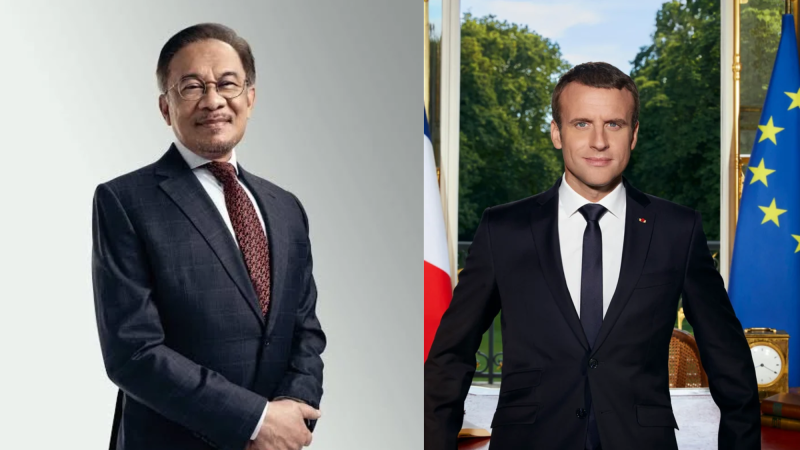
L-R ( Prime Minister of Malaysia, YAB Dato' Seri Anwar bin Ibrahim , The President of France , Emmanuel Macron)
Opinions expressed by Entrepreneur contributors are their own.
You're reading Entrepreneur Asia Pacific, an international franchise of Entrepreneur Media.
French President Emmanuel Macron brought a blunt proposition to business leaders in Kuala Lumpur on Nov. 17. In a global economy increasingly fractured by Sino-US rivalry, France and Malaysia could blunt their reliance on Washington and Beijing without severing commercial ties with either.
“We don’t want to decouple, neither with China nor with the US,” Macron told the France–Malaysia Economic Forum.
The commercial mechanics of that strategy had crystallised earlier in the day. Kuala Lumpur agreed to waive its export ban on raw rare earths for France in exchange for French co-operation on domestic processing capacity. Meanwhile, domestic semiconductor designer SkyeChip and France’s SiPearl unveiled plans for a joint venture to develop an advanced computing platform, alongside bilateral pacts spanning energy transition, digital infrastructure, education and defence.
The deals were signed during Macron’s two-day official visit, which ended on Nov. 17. During this period, both countries elevated bilateral relations to a strategic partnership, a year ahead of the 70th anniversary of diplomatic ties.
The timing is opportune. Europe’s scramble for non-Chinese critical minerals and tech supply chains has converged with Malaysia’s push up the industrial value chain. Having anchored a substantial manufacturing hub on foreign direct investment, the Southeast Asian economy now aims to cultivate globally competitive domestic technology champions.
France’s industrial heft could plug critical capability gaps for Kuala Lumpur. In turn, Malaysia offers French corporates access to upstream resources, an entrenched manufacturing base and a springboard across ASEAN.
Yet their shared pursuit of industrial sovereignty exposes a core tension: how much value-added production does each capital insist on keeping at home?
Building on an Uneven Economic Relationship
Macron’s visit came amid a marked acceleration in Malaysian exports to France, even as French capital remains underweight in Malaysia. Two-way trade stood at RM17.78 Bn ($4.32 Bn) in 2025, making France Malaysia’s fourth-largest European trading partner. Malaysian exports amounted to RM6.05 Bn ($1.47 Bn), while imports from France reached RM11.73 Bn ($2.85 Bn).
In the first eight months of 2026, bilateral trade hit RM14.17 Bn ($3.44 Bn). Malaysian exports to France surged 82.3% YoY to RM6.85 Bn ($1.66 Bn), already exceeding shipments for the whole of 2025, according to the Malaysia External Trade Development Corporation (MATRADE).
Electrical and electronic products anchor Malaysian exports, reflecting the country’s deep integration into global manufacturing supply chains.
Capital flows, however, tell a different story. According to the French Treasury, citing Banque de France data, the stock of French foreign direct investment in Malaysia fell 26.7% in 2025 to €1.8Bn ($1.96 Bn), a decline attributed to the high base created by TotalEnergies’ 2024 expansion in Malaysia’s gas sector.
The stock nevertheless remains 42% above its 2020 level. According to the French foreign ministry’s November 2026 update, citing Department of Statistics Malaysia data for 2024, France accounted for just 0.9% of Malaysia’s inward FDI stock. In the same dataset, France ranked fifth among EU investors in Malaysia by FDI stock, holding 7.3% of the bloc’s total, against a combined share of nearly 65% for the Netherlands and Germany.
Still, an extensive corporate network provides a base for further development. Investment, trade and industry minister Johari Abdul Ghani told the business forum that more than 660 French companies operate in Malaysia, supporting over 30,000 jobs. Thirty of the 40 constituents of France’s benchmark CAC 40 index maintain a presence in the country.
Alongside established industrial heavyweights such as Airbus, Safran, STMicroelectronics and TotalEnergies, French companies are also building digital and technology operations in Malaysia. The Malaysia Digital Economy Corporation (MDEC) recorded RM812.68 Mn ($197.25 Mn) in approved French investments under the Malaysia Digital programme between 2024 and 2026, making France the fifth-largest European capital source under the initiative.
The launch of a high-level bilateral business leaders’ council during Macron’s visit aims to deepen commercial engagement. For Malaysia, however, the priority is not merely to boost the volume of French investment. The quality of that capital matters—particularly its capacity to help domestic firms develop proprietary products, acquire intellectual property and scale into international markets.
Malaysia–France Economic Ties at a Glance
| Bilateral Trade & Investment | Key Figures |
| Diplomatic ties established | 1957 |
| Bilateral trade (2025) | RM17.78 Bn |
| Malaysian exports to France (2025) | RM6.05 Bn |
| Malaysian imports from France (2025) | RM11.73 Bn |
| Bilateral trade (Jan–Aug 2026) | RM14.17 Bn |
| Malaysian exports to France (Jan–Aug 2026) | RM6.85 Bn |
| Export growth (Jan–Aug 2026, YoY) | 82.3% |
| French FDI stock in Malaysia (2025) | €1.8 Bn |
| FDI stock growth (2025 YoY) | -26.7% |
| Approved French investment under Malaysia Digital (2024–2026) | RM812.68 Mn |
| French companies operating in Malaysia | 660+ |
| Jobs supported | 30,000+ |
Sources: MATRADE, French Treasury (September 25, 2026, citing Banque de France), MDEC and MITI minister’s remarks at the France–Malaysia Business Forum, November 17, 2026
The Rare Earth Bargain
Perhaps the most revealing concession secured during Macron’s visit centres on Malaysia’s rare earth reserves.
Kuala Lumpur has maintained a moratorium on raw rare earth exports since January 2024 to anchor a domestic processing industry. Its willingness to carve out an exception for France underscores the leverage resource-rich nations hold as Western economies scramble for alternatives to Chinese supply. At his joint press conference with Macron, Malaysian Prime Minister Anwar Ibrahim tied the waiver directly to France’s commitment to collaborate on processing in Malaysia.
The immediate beneficiary is a joint venture between French rare earth specialist Carester and Malaysia’s Malaco Mining, based on an agreement signed in Paris on July 4, 2025, during Anwar’s visit to France. But its industrial scope is more substantial than the summit announcements suggest.
On July 16, 2026, Syed Ibrahim Syed Noh, deputy minister for Malaysia’s natural resources and environmental sustainability, told parliament that Carester was committing $15 Mn to a proof-of-concept separation facility in Gopeng, Perak, with an annual capacity of 3,000 metric tonnes. A proposed full-scale commercial plant would expand output to 13,000 metric tonnes, with the French firm supplying plant design, mineral separation, chemical processing and workforce training.
Execution timelines, however, raise questions. In July, parliament was told that Malaco’s proposed mining operations in Gua Musang, Kelantan, were slated for 2028, subject to technical, legal and environmental approvals—even though the Gopeng separation facility cannot operate without raw feedstock. Yet Macron said on November 17 that operations under the partnership were expected to start in early 2027. How that target aligns with earlier mining and processing schedules remains unexplained in public disclosures.
Malaysia’s export concession has also triggered domestic scrutiny. On Nov. 19, the government reiterated in Parliament that its export ban remained in force, noting that guidelines effective from Oct. 1 allow only limited, conditional shipments for research, development and processing. The precise quotas and terms governing exports under the French deal remain undisclosed.
Malaysia’s Rare Earth Partnership With France
Project Details | Scope and Status |
| Malaysian partner | Malaco Mining Group |
| French partner | Carester |
| Initial agreement signed | July 4, 2025 |
| Partnership duration | 10 years |
| Proposed separation facility | Gopeng, Perak |
| Proof-of-concept funding by Carester | $15 Mn |
| Initial annual processing capacity | 3,000 metric tonnes |
| Proposed commercial annual processing capacity | 13,000 metric tonnes |
| Technology cooperation | Plant design, mineral separation, chemical processing and personnel training |
| Products envisaged | Light and heavy rare earths |
| French offtake | A portion of concentrate |
| Proposed mining site | Gua Musang, Kelantan |
| Targeted commencement of mining | 2028, subject to approvals |
| Expected commencement of project operations | Early 2027, according to Macron |
| Export policy | Conditional flexibility under existing moratorium |
| Full commercial project cost | Undisclosed |
| Separation plant commissioning date | Not established |
Sources: Malaysian parliamentary proceedings (Kamar Khas, July 16 and Dewan Rakyat, Nov. 19, 2026); Malaysian Prime Minister’s Office, Nov. 17, 2026; Carester CEO’s July 6, 2026, briefing reported by Reuters; Élysée
Note: The $15 Mn funding covers the proof-of-concept phase, not the entire commercial project. Macron’s early 2027 operational target has not been reconciled publicly with the earlier mining and processing schedules.
For Paris, the project addresses an acute supply-chain vulnerability. According to the International Energy Agency (IEA), China’s share of global rare earth refining edged down from more than 90% in 2023 to 85% in 2025, partly driven by increased Malaysian output. Malaysia hosts a major processing facility operated by Australia’s Lynas Rare Earths.
Yet alternative supply chains are scaling unevenly. The IEA’s Global Critical Minerals Outlook 2026 estimates that announced non-Chinese projects could deliver nearly 50,000 tonnes of magnet rare earth mining capacity by 2035, against less than 40,000 tonnes of refining and separation capacity—concentrated largely in Malaysia and the US. Further downstream, planned capacity for metals, alloys and magnets stands at around 18,000 tonnes on a rare earth content basis.
That downstream bottleneck explains Malaysia’s insistence on acquiring processing technology, as the highest margins lie beyond raw extraction. Still, moving from separated rare earth oxides to commercially viable metals, alloys and magnets requires heavy capital expenditure, specialised tooling and deep metallurgical expertise—with no guarantee those high-value stages will land in Malaysia. Macron made France’s priorities clear at the business forum, outlining a model of extraction and processing in Malaysia paired with offtake agreements and further refining in France.
The partnership, therefore, delivers a measure of supply security for both capitals without settling where downstream manufacturing value will ultimately accrue.
Besides, Malaysia faces mounting environmental hurdles as it expands the sector. In July, its parliament was told that regulatory approval for the environmental impact assessment (EIA) terms of reference for the proposed Gua Musang mining project was still pending.
Carester is working with France’s geological and mining research agency to evaluate extraction practices and environmental risks. While the French firm’s proposals include methods to mitigate groundwater contamination and land instability, their real-world effectiveness remains unproven. Moreover, the Malaysian government told parliament in July that detailed technical specifications required to assess the proposed technology had yet to be submitted to the relevant geological authority.
The project, therefore, represents a tangible opportunity for industrial development. But its commercial scale, environmental track record and contribution to Malaysia’s downstream manufacturing ambitions remain untested.
Beyond the Semiconductor Factory
Another prominent announcement during Macron’s visit highlighted Malaysia’s intent to move up the chip value chain. On Nov. 17, SkyeChip and SiPearl signed a largely non-binding MoU to develop and commercialise an advanced computing platform based on Arm’s Compute Subsystem N4 (CSS N4) architecture.
The proposed JV, targeted for incorporation in Malaysia in December, would be 51% owned by SkyeChip and 49% by SiPearl. The partnership aims to pair the Malaysian firm’s silicon development and IP capabilities with the French company’s system-level computing expertise to cater to global markets.
For Kuala Lumpur, the venture’s structure is significant. Malaysia’s National Semiconductor Strategy, unveiled in 2024, seeks to leverage decades of back-end manufacturing, assembly and testing expertise to expand domestic capacity in integrated circuit design, advanced packaging and proprietary product development. The strategy targets at least RM500 Bn ($121.36 Bn) in investments in its first phase, backed by planned fiscal allocations of at least RM25 Bn ($6.07 Bn), while aiming to train and upskill 60,000 Malaysian engineers by 2030 and cultivate globally competitive domestic chip champions.
SkyeChip already operates as a fabless semiconductor designer, and teaming up with SiPearl could help it diversify its product roadmap, share R&D costs and access new markets. SiPearl, meanwhile, brings experience in developing processors for European high-performance computing infrastructure. Its Rhea1 processor is slated to power the CPU cluster module of JUPITER, Europe’s first exascale supercomputer.
Their proposed tie-up is thus an effort to pool complementary R&D strengths rather than merely replicate the traditional model of a foreign chipmaker setting up a local assembly plant.
The proposed JV, or SkyeChip acting on its behalf before incorporation, intends to apply to Malaysian authorities for the Arm CSS N4 licence by Dec. 15. If approval is not secured by June 30, 2027, and the partners cannot agree on an alternative within 30 days, either party may terminate the MoU, triggering the deregistration of the venture.
Although the broader agreement is largely non-binding, its exclusivity clauses are enforceable. During the MoU’s term, neither company may pursue or back a competing application for a Malaysian government-sponsored Arm CSS licence outside the JV, while SiPearl remains bound by that restriction for 12 months after termination unless working with SkyeChip.
The partners are thus locking themselves into a single regulatory route for securing the technology in Malaysia before settling the commercial economics of their tie-up.
SkyeChip also cautioned investors that the MoU is not expected to have an immediate or material impact on earnings per share, net assets per share or gearing for the financial year ending March 31, 2027, noting that financial returns will hinge on definitive agreements still to be negotiated. Capital commitments remain unquantified, and the 51:49 ownership split alone does not settle how newly created IP or commercial proceeds will be divided.
A separate clause could channel Malaysian capital into Europe’s chip sector: SkyeChip is evaluating a strategic equity stake in SiPearl via the French firm’s Series B funding round, although the proposed JV is not conditional on that investment.
Beyond the corporate tie-up, Macron pointed to co-operation between Malaysian sovereign wealth fund Khazanah Nasional and French private equity firm Ardian spanning semiconductor research, innovation and talent development, alongside an MoU on micro- and nanotechnologies signed by Malaysia’s MIMOS and France’s CEA-Leti.
Together, these initiatives target distinct bottlenecks in building a competitive chip ecosystem. Proprietary product development demands sustained R&D, deep engineering talent and patient capital willing to endure lengthy commercialisation cycles. For Malaysian policymakers and investors accustomed to judging manufacturing projects by upfront capital expenditure, headcount and export receipts, backing IP-driven technology firms will require recalibrating commercial expectations.
The Limits of Strategic Autonomy
The constraints of pursuing the economic independence Macron advocated became starkly apparent in the days following his departure.
On Nov. 19, new US export controls took effect, imposing additional licensing requirements on specified advanced semiconductors involving Malaysia, Singapore, Indonesia, Thailand and Brazil as Washington moves to block restricted foreign entities from accessing advanced American computing power, including remote access via data centres in third countries.
SkyeChip issued a regulatory clarification regarding the new curbs on Nov. 23. Although there is no indication that the restrictions directly impair its proposed French tie-up, the episode underscores the extraterritorial regulatory risks facing Malaysian technology firms: diversifying commercial alliances may temper reliance on a single supplier or market, yet it cannot insulate firms from bottlenecks in underlying technologies controlled in Washington.
Malaysia’s critical minerals pact with France must also be weighed against its existing commitments to the US. Under the Agreement on Reciprocal Trade signed with Washington in October 2025, Kuala Lumpur pledged access to critical minerals and co-operation with American firms.
However, Sim Tze Tzin, deputy minister for investment, trade and industry, told parliament on Nov. 19 that the pact had not yet entered into force following the US Supreme Court’s February 2026 ruling invalidating reciprocal tariffs imposed under the International Emergency Economic Powers Act, leaving Malaysia awaiting an amendment protocol from Washington.
Sim also stressed that the agreement does not bar Malaysia from partnering with other nations on critical minerals and rare earths. This vital distinction preserves Kuala Lumpur’s leverage to negotiate with multiple industrial blocs rather than anchoring its resource sector to a single economic power.
Anwar’s itinerary underscored that hedging strategy. A day after hosting Macron in Kuala Lumpur, he travelled to Shenzhen to address the Malaysia–China High-Level Trade and Investment Dialogue. In an interview with the South China Morning Post published on Nov. 24, Anwar said the new US chip curbs would not deter Malaysia from working with Beijing and Chinese firms, Reuters reported.
The French partnership should, therefore, be read as an expansion of Malaysia’s commercial optionality, not a geopolitical realignment.
A Wider Industrial Partnership
Although critical minerals and semiconductors anchored the economic agenda of Macron’s visit, bilateral pacts across aerospace, digital infrastructure and energy could unlock further commercial opportunities for Malaysian companies.
Aerospace, in particular, offers an entrenched industrial base to scale from. France is Malaysia’s second-largest aerospace supplier, while Malaysia ranks as Airbus’s third-largest Asian market after China and India, according to Macron. For Malaysian component makers and engineering firms, deeper integration into French aerospace supply chains promises access to specialised manufacturing capabilities, global certifications and international buyers, reinforced by a new bilateral roadmap for defence capabilities and industrial co-operation.
Digital infrastructure presents a more immediate catalyst. Malaysia’s LitUp Network and France’s Alcatel Submarine Networks exchanged an MoU on Nov. 17 to develop and deploy the SALAM submarine cable project, designed to bolster connectivity between Peninsular Malaysia, Sabah and Sarawak.
On the same day, Telekom Malaysia disclosed that its subsidiary TM Technology Services had secured regulatory approval for SALAM Part 1, with a maximum approved project cost of RM2.7 Bn ($655.34 Mn). Work is scheduled to begin on Dec. 15, with phased completion targeted by the first quarter of 2030, subject to formal acceptance and applicable conditions. However, the approved cost ceiling reflects the total project budget rather than the value of the French company’s involvement. Upgraded bandwidth between Peninsular and East Malaysia should help digital operators scale beyond the country’s established tech hubs.
The energy partnership, likewise, stretches beyond conventional trade, spanning renewables, energy efficiency, civil nuclear power, grid infrastructure and financing. Macron highlighted an MoU signed during the visit between France’s EDF and Malaysia’s Tenaga Nasional Berhad on energy transition and nuclear power, alongside the long-standing tie-up between TotalEnergies and Petronas, while expressing interest in expanding LNG co-operation—particularly for shipments targeting European markets.
Both countries also pledged to back the ASEAN Power Grid. For Malaysian infrastructure developers, independent power producers and grid-tech providers, regional power integration could open new markets, provided cross-border trading is backed by regulatory harmonisation alongside hard infrastructure investment. The planned establishment of a regional school for energy regulation in Malaysia, supported by the French Development Agency, aims to help bridge that institutional gap.
Civil nuclear energy, meanwhile, remains a longer-term play. While France’s offer of technical expertise opens a channel for co-operation, the bilateral MoU stops short of a commitment to build a nuclear power plant in Malaysia.
From Diplomacy to Business: Key Malaysia–France Agreements
Sector | Partners | Scope and status |
| Critical minerals | Malaysia–France | Government MoU on research, development and industrial co-operation for a higher-value minerals industry |
| Rare earths | Malaco Mining–Carester | Mining and processing partnership |
| Semiconductors | SkyeChip–SiPearl | Largely non-binding MoU for proposed computing platform JV |
| Semiconductor research | Khazanah–Ardian | Letter of intent on potential collaboration in semiconductors and advanced manufacturing |
| Scientific research | MIMOS–CEA-Leti | MoU on micro- and nanotechnologies in the semiconductor sector |
| Power | TNB–EDF | MoU on energy transition and nuclear energy, covering nuclear energy knowledge sharing, skills development, technical co-operation and potential power generation solutions |
| Energy transition | Malaysia–France | Government MoU covering renewables, energy efficiency, grid infrastructure, civil nuclear energy and financing |
| Digital connectivity | LitUp Network–Alcatel Submarine Networks | MoU for the development and implementation of the SALAM submarine cable project |
| Defence | Malaysia–France | Industrial partnership and capability development roadmap signed |
Sources: Malaysia–France Joint Declaration, Élysée, France–Malaysia Business Forum and corporate disclosures, November 2026
The European Opportunity
The broader significance of Macron’s visit also hinges on Malaysia’s commercial ties with the European Union. According to European Commission data, EU–Malaysia goods trade reached €48.9 Bn ($53.30 Bn) in 2025, with Malaysia posting a surplus of €11.7 Bn ($12.75 Bn).
Negotiations for an EU–Malaysia free trade agreement, on ice since 2012, resumed in January 2025 and reached their fifth round in September 2026. Macron reiterated French backing for a deal during his visit, although he also flagged concerns over discriminatory rules and non-tariff barriers.
For Malaysian firms seeking to commercialise more sophisticated technology products, preferential access to European markets could unlock the revenue scale needed to justify upfront investment in R&D and manufacturing. It would also level the playing field against regional rivals Singapore and Vietnam, both of which already hold EU trade pacts.
The trade talks, nevertheless, expose a core friction underlying the new strategic partnership. Malaysia wants foreign corporates to anchor deeper domestic industrial upgrading, whereas European firms demand predictable regulation, level-playing-field market access and commercially viable terms. Bridging those priorities will require hard bargaining well beyond the memoranda signed during a presidential visit.
Macron also leveraged the business forum to court Malaysian capital, pitching France’s R&D expertise, infrastructure and abundant low-carbon electricity. The appeal underscored that Paris is not merely shopping for alternative suppliers or offshore assembly hubs. It is competing to draw industrial capital and scale technology ventures within its own borders.
For decades, Malaysia’s industrial model rested on plugging into supply chains architected by multinationals. Today’s global scramble for strategic resources and technologies offers Kuala Lumpur a chance to help co-design those networks.
Macron’s visit aligned two nations seeking wider economic room for manoeuvre in a fragmenting global economy. The lasting test of their partnership will be whether the ventures they build can stand on commercial fundamentals long after geopolitical urgency ceases to be the primary catalyst for doing business.
CONVERSION RATE
All dollar conversions are at RM4.12 to the dollar and $1.09 to the euro.
French President Emmanuel Macron brought a blunt proposition to business leaders in Kuala Lumpur on Nov. 17. In a global economy increasingly fractured by Sino-US rivalry, France and Malaysia could blunt their reliance on Washington and Beijing without severing commercial ties with either.
“We don’t want to decouple, neither with China nor with the US,” Macron told the France–Malaysia Economic Forum.
The commercial mechanics of that strategy had crystallised earlier in the day. Kuala Lumpur agreed to waive its export ban on raw rare earths for France in exchange for French co-operation on domestic processing capacity. Meanwhile, domestic semiconductor designer SkyeChip and France’s SiPearl unveiled plans for a joint venture to develop an advanced computing platform, alongside bilateral pacts spanning energy transition, digital infrastructure, education and defence.