Key Takeaways From Singapore Budget 2019
The government wants to ensure firms and workers remain competitive and stay relevant to the world
Screenshot
Opinions expressed by Entrepreneur contributors are their own.
You're reading Entrepreneur Asia Pacific, an international franchise of Entrepreneur Media.
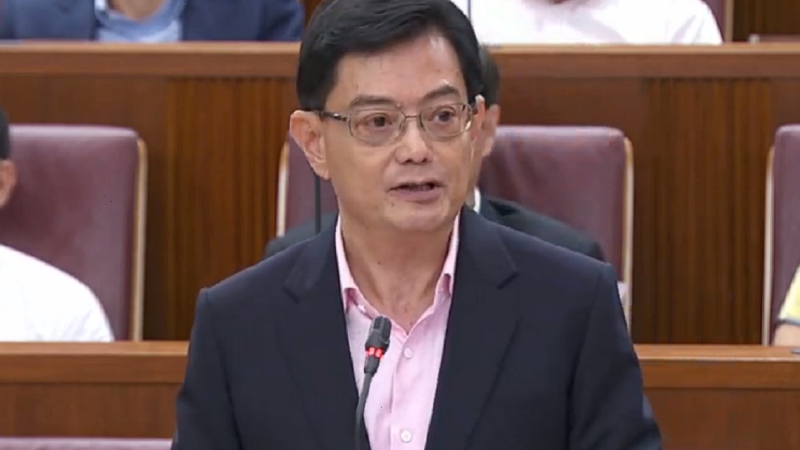
The finance minister of Singapore outlined a strategic plan “to build a strong, united Singapore” while delivering the 2019 budget in Parliament on 18 February.
Heng Swee Keat said “new forces are reshaping the global environment”, and the changing global and domestic landscape presents both challenges and opportunities. “We will continue to chart our way forward confidently in the Singapore way, building on our distinct strengths and our Singaporean DNA,” he emphasized.
Things to Focus on
This year marks 200 years since Sir Stamford Raffles landed in Singapore, and the minister nodded to the country’s past in the start of his speech.
“1819 was a key turning point in Singapore’s development. The British decision to declare Singapore a free port plugged us into an emerging network of global trade. This, and subsequent developments, transformed Singapore into a global node,” he said.
To mark the occasion, he said the government will set aside S$200 million for a Bicentennial Community Fund, which will provide dollar-for-dollar matching for donations made to Institutions of a Public Character (IPCs) in Financial Year 2019. “With this, we hope to further encourage more Singaporeans, including younger Singaporeans, to embrace the spirit of giving back. At the same time, we are encouraging IPCs to reach out to more donors,” he said.
Scale Up
The government outlined its plan to continue its support towards the development of startups. The minister said, “Start-ups can only thrive if they scale up, and venture into new markets. To help them do so, we will provide support in three areas: providing customized assistance, better financing options, and supporting technology adoption.”
Customized support will enable firms to identify and overcome the unique challenges they face, and scale up quickly. For this, the government body Enterprise Singapore will launch a Scale-up SG programme, in partnership with the private and public sectors. Scale-up SG will work with aspiring, high-growth local firms to identify and build new capabilities, to innovate, grow, and internationalize. The government will also support innovation by launching a pilot Innovation Agents programme, for firms to tap on a pool of experts to advise them on opportunities to innovate and commercialize technology.
Having smart, patient capital that attracts investors with the expertise and the right time horizon is another way to help firms scale-up. Over the past few years, the government has worked on improving access to private capital for start-ups and SMEs. Consequently, the pool of private equity and venture capital managers in Singapore has grown.
The Monetary Authority of Singapore (MAS) has simplified the regulatory regime for venture capital managers, and launched a US$5 billion private markets programme to encourage global private equity players to deepen their presence here.
To further deepen the pool of smart, patient capital, the government has, since 2010, set aside $400 million through two rounds of fund injections for the Co-Investment Programme (CIP) to invest in SMEs, alongside the private sector. So far, the Government’s investments have catalysed approximately $1.3 billion of additional funding for our SMEs. This year, the government will set aside an additional $100 million to establish SME CoInvestment Fund III. As part of the CIP, it will catalyse investment in Singapore-based SMEs that are ready to scale up. “We expect that this will bring in at least $200 million of additional funding,” the minister said.
Tackling Cyber Security
Defence and security issues were also in focus at this year’s budget. While noting that a safe and secure Singapore will “give us the confidence to chart an independent course”, Heng cited how the threat of terrorism and malicious cyber activities remain high.
“In particular, foreign actors will try to influence our domestic affairs and politics. This is not new, but new technologies have made it easier for others to mount attacks with greater ease and intensity, and with more sophisticated tactics,” he said.
To stay ahead of these threats, the Ministry of Home Affairs (MHA) will set up a Home Team Science and Technology Agency by the end of this year. It will develop science and technology capabilities to support the Home Team’s operational needs. These capabilities will strengthen the Home Team’s ability to carry out its mission of safeguarding Singapore.
Recognizing the importance of guarding against cyber threats, the sixth pillar of digital defence was added to Singapore’s Total Defence framework, which includes military, civil, economic, social and psychological defence.
“Like other pillars of Total Defence, digital defence involves everyone – individuals, community groups, businesses and the Government.
“We must all play our part to be secure, alert and responsible online, be it through practising good cyber hygiene, being vigilant against fake news, and helping one another use technology safely,” the minister said.
The finance minister of Singapore outlined a strategic plan “to build a strong, united Singapore” while delivering the 2019 budget in Parliament on 18 February.
Heng Swee Keat said “new forces are reshaping the global environment”, and the changing global and domestic landscape presents both challenges and opportunities. “We will continue to chart our way forward confidently in the Singapore way, building on our distinct strengths and our Singaporean DNA,” he emphasized.
Things to Focus on

Pooja Singh • Former Features Editor, Entrepreneur Asia Pacific
A stickler for details, Pooja Singh likes telling people stories. She has previously worked with... Read more