US Slaps 12.5% Tariff on Selected Singapore Exports Over Forced-Labour Rules
Products accounting for about one-third of Singapore’s exports to the US are affected, prompting businesses to review prices, contracts and supply chains.
Freepik
Opinions expressed by Entrepreneur contributors are their own.
You're reading Entrepreneur Asia Pacific, an international franchise of Entrepreneur Media.
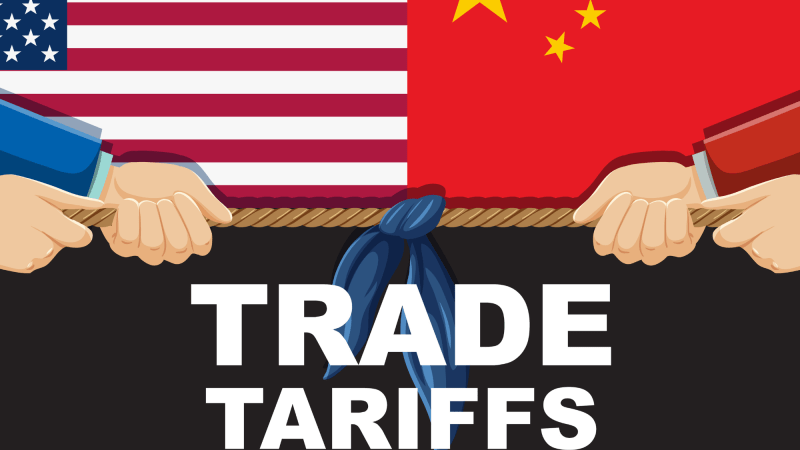
The US imposed an additional 12.5% tariff on selected Singapore exports on Friday, affecting products that account for about one-third of the city-state’s exports to the American market.
The action targets the country’s lack of an explicit prohibition on importing goods produced using forced labour, rather than any finding of forced labour in Singapore’s export industries.
The US Trade Representative concluded that Singapore failed to impose and effectively enforce such a ban. Washington argues this ban is needed to prevent goods linked to forced labour from entering global supply chains and competing with responsibly produced merchandise.
The tariff took effect at 12.01 am Eastern time on July 24. Goods already in transit before the deadline will escape the additional duty if they enter the US before July 28.
The measure does not cover all Singapore exports. Products already subject to US Section 232 tariffs, including steel and aluminium, are exempt. The exclusions also cover energy products, pharmaceuticals and pharmaceutical ingredients, semiconductors, certain electronics and aerospace products and metals used in currency and bullion.
Singapore’s Ministry of Trade and Industry estimated that the remaining products subject to the tariff account for about one-third of the country’s exports to the US. It said it would continue discussions with the USTR and provide companies with further details on the measure’s implementation.
The Singapore Business Federation (SBF) urged exporters to determine whether their products are covered by the tariff or qualify for an exemption before calculating the financial impact.
Companies with exposure to the US should review product classifications, contact customers early and assess the possible effects on prices, contracts and supply chains, the federation said.
“Clear guidance and adequate transition periods will be essential to help businesses comply effectively,” SBF chairman Mark Lee said.
Lee said Singapore businesses supported efforts to address forced-labour risks but cautioned that new import restrictions could raise compliance costs and disrupt supply chains. Any measures should be developed in consultation with industry, given Singapore’s role as a global trading and transshipment hub, he added.
The tariff follows US investigations into 60 economies. Countries that introduced a forced-labour import prohibition, committed to establishing one through a trade agreement or implemented a partial regime were assigned a lower rate of 10%. Singapore and the remaining economies face the 12.5% levy.
Singapore said it has a comprehensive domestic enforcement framework against forced labour but has not imposed a corresponding prohibition on imported goods. The government argues that abuses embedded in complex international supply chains are a cross-border problem that should be addressed at their source.
The latest measure may not be the final source of US tariff risk for Singapore. The country is among 16 economies also facing a Section 301 investigation into structural excess manufacturing capacity. Washington has yet to release its findings or proposed action in that case.
The US imposed an additional 12.5% tariff on selected Singapore exports on Friday, affecting products that account for about one-third of the city-state’s exports to the American market.
The action targets the country’s lack of an explicit prohibition on importing goods produced using forced labour, rather than any finding of forced labour in Singapore’s export industries.
The US Trade Representative concluded that Singapore failed to impose and effectively enforce such a ban. Washington argues this ban is needed to prevent goods linked to forced labour from entering global supply chains and competing with responsibly produced merchandise.