Yinson’s Take-Private Talks Highlight Public-Private Valuation Disconnect
An indicative RM2.35-a-share proposal to privatise Malaysian energy infrastructure group Yinson Holdings Bhd highlights a persistent valuation gap as its core offshore production unit transitions from a capital-heavy build cycle to long-duration operating cash flows.
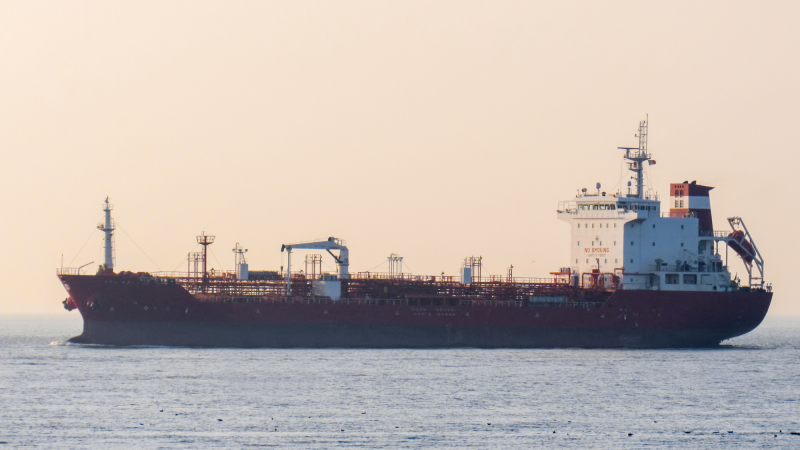
Magnific
Opinions expressed by Entrepreneur contributors are their own.
You're reading Entrepreneur Asia Pacific, an international franchise of Entrepreneur Media.
Malaysia’s Yinson Holdings Bhd could again be headed towards exiting the public market, but this time the prospective ownership structure looks markedly different.
Yinson’s major shareholder, Yinson Legacy Sdn Bhd, is in preliminary, exploratory discussions with state-backed shipping group MISC Bhd, the Employees Provident Fund (EPF), Yinson Legacy affiliates and other stakeholders regarding a potential privatisation of the Bursa Malaysia-listed group. The proposal is structured as a scheme of arrangement under Section 366 of Malaysia’s Companies Act 2016.
If implemented, the scheme would acquire all remaining Yinson shares not already held by Yinson Legacy and its affiliates, while the EPF would retain its existing effective shareholding. However, MISC stressed that it has not made a firm offer. The final price remains subject to due diligence, negotiations and commercial viability assessments, as well as definitive agreements and regulatory approvals.
At RM2.35 a share, the proposal implies a total equity value for Yinson at approximately RM6.86 Bn ($1.7 Bn). The price represents a 9.3% premium to Yinson’s RM2.15 closing price on August 28. However, trading data suggests the pre-bid price was not undisturbed. Yinson shares had climbed nearly 12% during the week to peak at RM2.22 on August 27, before retracing 3.15% the following day.
While the transaction remains uncertain, the preliminary talks underscore a structural challenge facing public markets: valuing a highly leveraged infrastructure platform that has moved from its most capital-intensive engineering phase to one dominated by decades of predictable, contracted cash flows.
The Valuation Gap Is Not New
Yinson Production owns and operates floating production, storage and offloading (FPSO) vessels under charters that span multiple decades. As of the end of FY26, its contract backlog stood at $19.5 Bn through to 2050, inclusive of options and calculated on an enterprise reporting basis.
Yinson ranked its production business as third globally by both order book value and fleet size. Financially, 97% of Yinson Production’s contracted revenues have shifted to operational assets as major vessels transitioned out of the construction phase and into active charter.
That operational transition fundamentally shifts the underlying economics. Building an FPSO requires significant upfront capital, years of construction and complex project financing. Once commissioned, however, the asset generates highly predictable revenue under long-term contracts.
Yinson’s FY26 annual report also noted that this transition from the capital-intensive engineering, procurement, construction, installation and commissioning (EPCIC) phase into active operations has significantly increased the group’s cash flows. Its total order book of approximately RM85 Bn provides revenue visibility over a 20-25 year horizon.
This inflexion point is increasingly visible in recent financial results. In the first quarter of FY27, net cash flow from operating activities reached RM689 Mn, while group EBITDA rose 5% YoY to RM 611 Mn. This earnings growth occurred despite a 15% decline in top-line revenue, as construction activity tapered off after charters began for major FPSO assets.
Yet Yinson remains a highly leveraged infrastructure platform. As of April 30, 2026, the group carried RM17.71 Bn of total borrowings against RM9.36 Bn of total equity, resulting in a net gearing ratio of 1.36 times. This leverage profile comes from Yinson’s first-quarter FY27 investor relations data, which reports RM17.70 Bn of borrowings and RM9.35 Bn of equity.
This financial mix—long-duration contracted revenues paired with heavy debt requirements and ongoing capital deployment—remains difficult for public equity markets to price accurately.
Yinson management previously acknowledged this market friction. In its FY25 annual report, the company said its objective was to deliver higher, more sustained returns to shareholders, noting that the most effective way to do so was to narrow the valuation gap between its market price and where it believed it should be.
The management pointed to private equity investment in Yinson Production as clear evidence of this disconnect. International institutional investors valued the production subsidiary at $3.7 Bn on a post-money basis, equivalent to 2.1 times the Yinson group-level market capitalisation on January 14, 2025.
Consequently, the latest privatisation talks represent more than typical deal speculation. They revive a structural valuation mismatch that Yinson has actively tried to resolve for several quarters.
Private Capital Price Points
In January 2025, Yinson Production agreed to raise $1 Bn from an institutional consortium comprising a wholly owned subsidiary of the Abu Dhabi Investment Authority (ADIA), funds managed by British Columbia Investment Management Corporation (BCI) and RRJ Group. The consortium subscribed to redeemable convertible preferred shares and warrants at the $3.7 Bn post-money valuation, with an option to issue up to an additional $500 Mn of preferred equity within 24 months of closing, subject to mutual agreement.
The transaction closed in June 2025, with investors funding an initial $300 Mn tranche, of which $200 Mn was distributed to the listed parent, Yinson Holdings. The remaining $700 Mn of committed capital is scheduled to be called in up to three instalments by December 2026.
To be sure, the $3.7 Bn subsidiary valuation cannot be directly compared with Yinson Holdings’ consolidated market capitalisation. Yinson Production maintains its own independent capital structure, debt profile and investor rights, while the listed parent also holds separate renewables and green technology assets.
However, the transaction set an important institutional benchmark. Sophisticated, long-horizon investors were willing to assign substantial private market value to the core FPSO platform. A full take-private transaction would carry that ownership logic to its natural conclusion.
The Buyer Mix Has Changed
As we have mentioned, this is not Yinson’s first encounter with take-private discussions. In June 2025, Bloomberg reported that infrastructure investor Stonepeak Partners was in exclusive talks with the Lim family over a potential transaction valuing Yinson at as much as RM9 Bn. Yinson subsequently clarified in a Bursa Malaysia filing that the company itself was not in buyout discussions. However, its major shareholders were holding exploratory talks with various parties over possible corporate proposals concerning their stakes.
The idea resurfaced in March 2026, when Bloomberg reported that the Lim family, Stonepeak and some local pension investors were nearing an approximately RM8 Bn take-private through a scheme of arrangement. But by late May, Stonepeak and the Lim family were reportedly considering withdrawing that plan. The Edge reported last week that the earlier proposal was ultimately withdrawn.
The current talks are different, though. These are now formally acknowledged, and MISC Bhd, 51% owned by Malaysia’s national oil company Petronas, brings industrial rather than purely financial capital to the table. MISC’s 2025 annual report lists Petronas as holding 2.277 Bn shares, or exactly 51% of the company, as of March 4, 2026.
MISC is itself a major maritime and offshore infrastructure operator, with businesses spanning energy shipping and offshore floating solutions. The Edge reported that its offshore fleet includes six FPSOs, five floating storage and offloading vessels, and one floating production and storage facility across Malaysia, Thailand, Vietnam and Brazil.
That overlap does not mean the proposed transaction includes operating synergies. Neither Yinson nor MISC has disclosed a strategic rationale for the discussions.
But it changes the nature of the prospective consortium. A strategic offshore operator assessing Yinson’s FPSO platform alongside the founding shareholder and one of Malaysia’s largest pension funds is different from a conventional private equity sponsor buying a listed company primarily as a financial investment.
EPF’s proposed role is equally notable. According to The Edge on August 27, EPF held 17.09% of Yinson, while Lim Han Weng and his family held 27.68%. But instead of cashing out with other shareholders, EPF is expected to retain its effective exposure under the proposed structure.
That leaves the prospective ownership group with the capital that can take a long view on infrastructure: founding capital, pension money and a strategic industrial operator.
Malaysia Has Already Taken Infrastructure Off-Market
Yinson would not be the first large Malaysian infra company to make that journey.
Malaysia Airports Holdings Berhad (MAHB) was taken private by Gateway Development Alliance, a consortium comprising Khazanah Nasional, EPF, Abu Dhabi Investment Authority and Global Infrastructure Partners, now part of BlackRock.
The RM11-a-share offer valued the airport operator at RM18.4 Bn. The consortium ultimately acquired 98.68% of MAHB, and the company was delisted from Bursa Malaysia on February 25, 2025.
The rationale offered at the time is particularly relevant to Yinson. Gateway Development Alliance said MAHB’s transformation would be better undertaken as a private company supported by strategic and financial investors, allowing it to take a long-term approach to decision-making, capital investment and improvements in airline connectivity and customer service.
UEM Edgenta provides another but smaller example. Khazanah-owned UEM Group moved from a 69.14% stake to full ownership through a selective capital reduction, paying about RM282 Mn for the remaining 30.86%. UEM Group said private ownership would provide greater flexibility to set strategic direction and manage the infrastructure and asset-management company. UEM Edgenta was removed from Bursa Malaysia’s official list on July 10, 2026.
The three companies are different businesses, and their ownership structures and motivations should not be conflated. But they highlight the same underlying tension. In each case, strategic and institutional capital has concluded that an infrastructure platform was better held privately than publicly. For Yinson, the question is whether it is reaching the same conclusion at precisely the moment public shareholders have the most to lose by leaving.
Why It Matters ‘Now’
The privatisation talks test a broader structural question than transaction pricing. It is all about whether public equity remains the right structure to hold this business through the next decade. Every future capital raise at current valuations becomes more dilutive, whereas private ownership removes that constraint. A concentrated group of shareholders can fund the next investment cycle through retained cash flows, asset-level financing, or fresh private capital.
Each member of the prospective consortium has a distinct reason to prefer that structure. MISC can price the fleet as part of a wider offshore system. EPF can set contracted revenues against its own multi-decade liabilities. The Lim family can avoid raising equity at valuations it considers inadequate. However, the parties have stated none of these reasons and should not be presented as declared.
Public shareholders would effectively be asked to decide how much of the future value of the operational FPSO portfolio they are prepared to surrender today.
The counterargument matters. Yinson will continue to require capital. FPSOs remain expensive assets. The current order book does not remove the need to secure the next generation of projects. And private owners would inherit the refinancing, execution and capital-allocation risks that accompany future growth.
The deal, if it proceeds, won’t be a simple transfer of mature cash flows. It will be a bet that private strategic and institutional investors may manage Yinson’s next investment cycle more effectively than a listed ownership structure can,
Malaysia’s Yinson Holdings Bhd could again be headed towards exiting the public market, but this time the prospective ownership structure looks markedly different.
Yinson’s major shareholder, Yinson Legacy Sdn Bhd, is in preliminary, exploratory discussions with state-backed shipping group MISC Bhd, the Employees Provident Fund (EPF), Yinson Legacy affiliates and other stakeholders regarding a potential privatisation of the Bursa Malaysia-listed group. The proposal is structured as a scheme of arrangement under Section 366 of Malaysia’s Companies Act 2016.
If implemented, the scheme would acquire all remaining Yinson shares not already held by Yinson Legacy and its affiliates, while the EPF would retain its existing effective shareholding. However, MISC stressed that it has not made a firm offer. The final price remains subject to due diligence, negotiations and commercial viability assessments, as well as definitive agreements and regulatory approvals.