DayOne’s $3.7 Bn Johor Loan Puts Its AI Expansion Economics to the Test
DayOne doubles its Johor financing to $7.3 Bn ahead of a US IPO, as heavy spending and customer concentration put its growth model to the test.
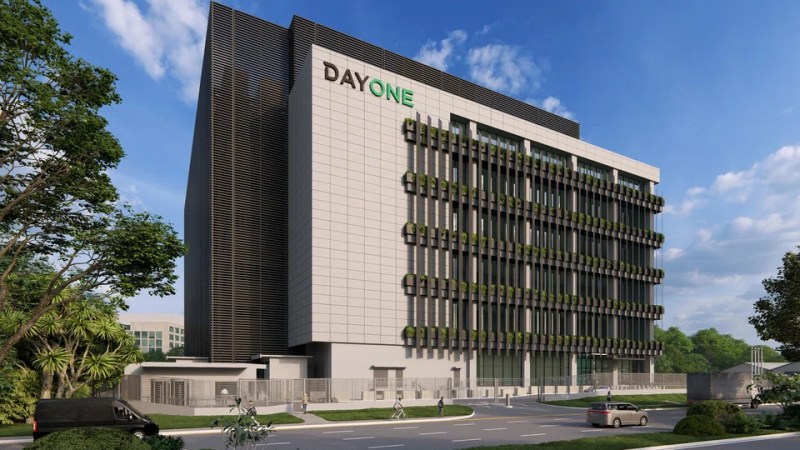
DayOne
Disclosure: Our goal is to feature products and services that we think you'll find interesting and useful. If you purchase them, Entrepreneur may get a small share of the revenue from the sale from our commerce partners.
You're reading Entrepreneur Asia Pacific, an international franchise of Entrepreneur Media.
The Singapore-based data centre operator has doubled its Johor financing to $7.3 Bn ahead of a planned US IPO, bringing the cost of expansion and customer concentration into sharper focus.
For DayOne Data Centers, a successful US IPO would do more than raise equity. It would also lower the cost of its existing borrowing, directly linking its stock market debut to the economics of capital-intensive expansion.
The Singapore-headquartered company has secured another $3.7 Bn in financing for its Malaysian operations, even as its H1 2026 development-related payments reached $3.11 Bn against just $14 Mn in operating cash flow. The question for prospective investors is: Will its exceptional growth generate returns sufficient to support the debt and investment commitments behind it?
Seven banks have arranged an additional RM15 Bn ($3.7 Bn) in financing for DayOne’s hyperscale data centres in Johor, Malaysia, the lenders said in a joint statement on Tuesday (October 13). The loan does not set up a separate borrowing programme. Instead, it expands facilities arranged in June 2025, doubling them from about RM15 Bn to RM30 Bn, or about $7.3 Bn in total.
The CIMB Group of Malaysia, Crédit Agricole Corporate and Investment Bank, DBS Bank, Malayan Banking Bhd (Maybank), Oversea-Chinese Banking Corporation (OCBC), Standard Chartered and United Overseas Bank (UOB) acted as mandated lead arrangers, bookrunners and joint co-ordinators. Malaysia’s CIMB said it is the largest financier across the combined RM30 Bn.
The September 10 amendment agreements, disclosed in DayOne’s October 5 US IPO filing, raised its offshore term loan facility by $2.4 Bn to $4.1 Bn and its ringgit-denominated Murabahah facility, a Shariah-compliant structure, by RM5.5 Bn to RM13 Bn. Together, the enlarged facilities provide approximately $7.3 Bn in committed financing capacity.
A separate accordion provision, which allows further expansion of the facilities subject to its terms, was increased to RM3.5 Bn. The facility amounts represent available borrowing arrangements, not necessarily debt that has been drawn down or spent.
The financing also carries an IPO-linked incentive. According to DayOne’s prospectus, the margin on its five-year US dollar facility will decline from 2.20% to 2.10% over the compounded Secured Overnight Financing Rate (SOFR) following an IPO. The reduction could lower financing costs on outstanding borrowings, although the actual savings would depend on amounts drawn and prevailing benchmark rates.
DayOne’s Johor Financing, Before and After
| Facility | June 2025 | After Sept. 2026 Amendment | Change |
| Offshore US dollar-term loan | $1.7 Bn | $4.1 Bn | +$2.4 Bn |
| Ringgit Murabahah facility | RM7.5 Bn | RM13 Bn | +RM5.5 Bn |
| Total | RM15 Bn | RM30 Bn (about $7.3 Bn)* | +RM15 Bn |
Sources: DayOne F-1 filing, October 5, 2026; lenders’ joint statement, October 13, 2026.
*Note: The $7.3 Bn figure is converted at the prospectus rate of RM4.082 to the dollar and is not company-disclosed. Facility amounts represent borrowing capacity, not debt drawn.
The Cost of Rapid Expansion
DayOne’s October 5 prospectus reveals how quickly its operating business is growing, and how much capital that growth consumes.
Revenue surged 238% to $512 Mn in H1 2026 from $151.5 Mn a year earlier, driven largely by additional capacity delivered in Johor. Malaysia accounted for 87% of H1 revenue, up from 81.5% in 2025. Yet its net loss widened to $77.2 Mn from $12.6 Mn over the same period.
DayOne’s development-related payments of $3.11 Bn in H1 2026 exceeded the $2.29 Bn spent throughout 2025. It also disclosed $4.94 Bn in unconditional purchase commitments related to data centre development as of June 30, indicating that significant expenditure remains contractually committed.
Its balance sheet reflected the pace of expansion. DayOne reported about $4.43 Bn in short- and long-term borrowings at the end of June, along with $1.98 Bn in cash, $1.4 Bn in short-term investments and $1.82 Bn in unutilised credit facilities, for total liquidity of about $5.2 Bn. The June borrowing figures represent outstanding debt, while the newly enlarged Malaysian facilities represent financing commitments. The two measures cannot be added together.
The larger figure is what remains to be built. DayOne estimates it will cost about $11.4 Bn, beyond what it had spent by June 30, to complete the roughly 2.3 GW of capacity customers have already committed to. It expects to deliver nearly all of that by the end of 2028 and says its available capital resources are sufficient to fund it.
The question goes beyond how much DayOne can borrow. Its ability to service debt depends on completing facilities on schedule and converting contracted capacity into dependable operating cash flow.
The financial exposure also extends to currencies. DayOne reported a $27.1 Mn foreign exchange loss in H1 2026, against a $27 Mn gain a year earlier.
The Customer Concentration Question
DayOne’s growth depends on a relatively narrow group of major technology customers, making its commercial relationships especially important. Its largest customer, described in the prospectus as a global technology company operating a leading short-form video platform, accounted for 69.2% of H1 2026 revenue. Its second-largest customer contributed another 15.1%, taking the two to 84.3% of revenue.
The concentration reflects a business model built around large, dedicated facilities for major technology groups. Such arrangements can underpin substantial investments, but they also make the company’s financial performance particularly sensitive to individual customers’ infrastructure strategies.
The contracts behind that concentration are long-term. Most of DayOne’s customer agreements run 10 to 15 years, typically with five-year renewal options, and 98.7% of its in-service capacity was generating income at the end of June. Its adjusted EBITDA margin rose to 40.2% in H1 2026 from 32.3% a year earlier.
DayOne’s ability to deliver capacity quickly has been instrumental to its expansion. Its billable IT capacity rose from 213 MW at the end of June 2025 to 666 MW a year later, helping explain the sharp revenue rise.
Still, additional capacity does not eliminate the underlying commercial risk. Changes in a major customer’s demand, deployment timetable or contractual commitments could have significant consequences for a business spending billions of dollars on construction.
Why Johor Matters
Johor has become central to DayOne’s expansion strategy, benefiting from its proximity to Singapore and growing demand for large-scale computing facilities.
Since delivering its first Johor campus in 2023, DayOne has built campuses at Nusajaya Tech Park and Kempas Tech Park, both in the Johor-Singapore Special Economic Zone. It has secured about 1.4 GW of customer bookings in Johor, and five global hyperscalers have been attracted to its campuses.
Since delivering its first Johor campus in 2023, DayOne has built campuses at Nusajaya Tech Park and Kempas Tech Park, both in the Johor-Singapore Special Economic Zone. It has secured about 1.4 GW of customer bookings in the state and brought five global hyperscalers into the market.
The company’s development model also extends across the Singapore-Johor-Riau Islands corridor, connecting Singapore with Malaysian and Indonesian locations capable of accommodating large hyperscale projects.
Access to land, power and development capacity outside Singapore gives DayOne room to build at a scale that would be difficult to replicate within the city-state. But the commercial advantage depends on how efficiently DayOne can deliver and bring those facilities into service.
The Road to NASDAQ
DayOne raised $1.3 Bn in 2025 and $3.2 Bn in 2026 through a Series C round, according to the prospectus. The round closed in June at $4.5 Bn, led by the US investment firm Coatue Management and Asia-focussed Hillhouse Investment. The new equity sits alongside the company’s expanding debt arrangements.
The company filed with the Securities and Exchange Commission (SEC) on October 5 and applied to list its American depositary shares on NASDAQ under the symbol DODC. The preliminary prospectus did not specify a final offer size or pricing range.
Reuters reported in February that DayOne could raise up to $5 Bn at a valuation of about $20 Bn. The prospectus says most of the proceeds will fund the development and construction of new data centres, with the rest used as working capital.
The company was previously the international operations arm of Chinese data centre operator GDS Holdings before establishing its independent identity as DayOne in January 2025.
The proposed listing would expose the company’s growth strategy to public-market scrutiny at a point when its investment commitments and customer concentration remain substantial.
The Next Test
DayOne has shown it can expand capacity and increase revenue at exceptional speed. What remains unproven is whether that growth can deliver returns that match its investment requirements.
The IPO would give DayOne access to public equity capital while triggering lower borrowing margins under its Malaysian financing agreements. But cheaper debt alone will not resolve the bigger commercial question: whether earnings from its expanding data centre portfolio can eventually justify the billions committed to building it.
Also read:
Singapore’s DayOne Heads for NASDAQ as Malaysia Drives 87% of Its Revenue
DayOne Moves Biological Computing From Lab to Server Rack in Singapore
The Singapore-based data centre operator has doubled its Johor financing to $7.3 Bn ahead of a planned US IPO, bringing the cost of expansion and customer concentration into sharper focus.
For DayOne Data Centers, a successful US IPO would do more than raise equity. It would also lower the cost of its existing borrowing, directly linking its stock market debut to the economics of capital-intensive expansion.
The Singapore-headquartered company has secured another $3.7 Bn in financing for its Malaysian operations, even as its H1 2026 development-related payments reached $3.11 Bn against just $14 Mn in operating cash flow. The question for prospective investors is: Will its exceptional growth generate returns sufficient to support the debt and investment commitments behind it?