Singapore and Australia Strike Supply and Carbon Pacts as Canberra Moves to Reserve Gas for Domestic Use
Singapore has secured new supply-chain and cross-border carbon storage agreements with Australia, even as Canberra passes a law requiring liquefied natural gas exporters to set aside up to a fifth of their exports for the home market.
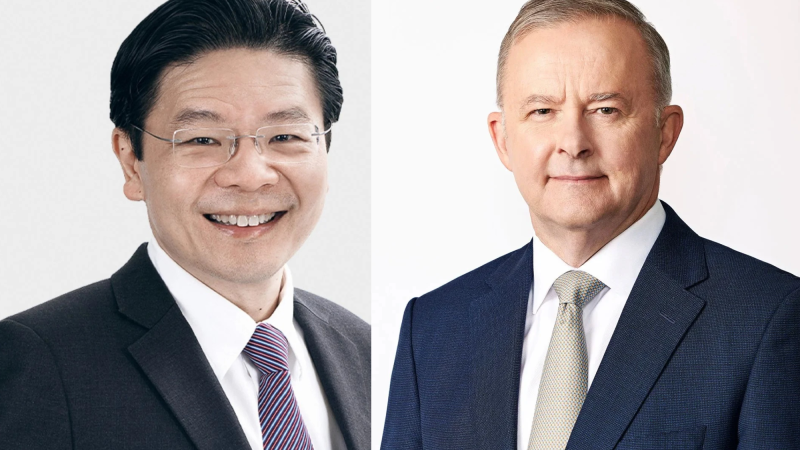
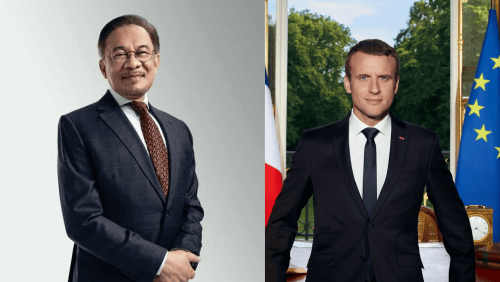
L-R ( Prime Minister Lawrence Wong, Prime Minister Anthony Albanese)
Opinions expressed by Entrepreneur contributors are their own.
You're reading Entrepreneur Asia Pacific, an international franchise of Entrepreneur Media.
Singapore and Australia are expanding their economic security partnership to cover goods from semiconductors and pharmaceuticals to fertilisers, and have laid the legal groundwork to ship Singapore’s captured carbon dioxide to Australia for permanent storage beneath the seabed.
Both agreements were signed in Canberra on Nov. 24 at the 11th Singapore–Australia Annual Leaders’ Meeting, the centrepiece of Singapore prime minister Lawrence Wong’s Nov. 23–25 official visit. The two governments also set out joint AI and green technology initiatives, and advanced co-operation in investment, digital infrastructure, aviation and defence.
Energy, though, is where the relationship is most exposed. On Nov. 27, two days after Wong’s visit ended, Australia’s parliament passed a law requiring LNG exporters to supply the home market with gas equivalent to up to 20% of their annual export volumes. Exporters can apply for licences from Jan. 1, 2027, and must start supplying the home market from Jan. 1, 2028.
The new law is meant to make gas cheaper and easier for Australian households and businesses to obtain. Ministers say it will also ensure Australia remains a reliable regional trading partner, while gas producers warn it could discourage investment in new supply.
For Singapore, a major buyer of Australian LNG, two features of the law matter most. Western Australia, which accounts for close to two-thirds of Australia’s LNG exports and runs its own 15% reservation policy, is exempt. The requirement can also be reduced to honour export contracts signed on or before Dec. 22, 2025.
Nothing so far suggests that the law will disrupt Singapore’s supplies, and Singapore has already acknowledged the policy. At the first Ministerial Dialogue on Energy in Sydney on July 28, it welcomed Australia’s commitment to remaining a reliable LNG supplier and acknowledged the intentions behind the reservation scheme. In their November statement, the leaders welcomed that dialogue, and both countries reaffirmed their commitment to remaining reliable energy suppliers to each other.
Keeping Essential Goods Flowing
The supplies agreement traces back to April, when disruption from the Middle East crisis prompted Wong and Australian prime minister Anthony Albanese to pledge to keep fuel and gas flowing between their countries.
The dependence runs both ways. Australia supplies about 32% of Singapore’s LNG, Albanese said during his April visit to the city-state. Singapore, in turn, provides 55% of Australia’s petrol, 15% of its diesel and 23% of its aviation fuel, according to Australian government figures released in July.
However, Singapore has almost no crude reserves of its own. Its three refineries can process up to 1.27 Mn barrels of imported crude a day, much of it from the Middle East, before shipping refined products across the region. Australia, by contrast, produces large volumes of gas but has only two refineries left, down from eight in 2005, and imports more than 80% of its refined fuel needs, according to Australian government data for FY24–25.
The pledge between Wong and Albanese became the Protocol on Economic Resilience and Essential Supplies, signed under the Singapore–Australia Free Trade Agreement (SAFTA) on July 27 and covering petroleum oils and LNG. The MoU signed in Canberra extends it to 10 categories of essential goods, including food, agricultural chemicals and fertilisers, construction materials, fuels, pharmaceuticals and medical products, semiconductors, renewable energy technologies, telecommunications and traffic signalling equipment and water treatment chemicals, reaching manufacturers, farm businesses, healthcare providers and infrastructure operators across both economies.
Under the protocol, each country promises to try not to restrict exports of essential goods bound for the other. A government that does restrict them must keep the curbs as limited as possible, take account of the effect on its partner’s supplies and review them as circumstances change.
Either side can request emergency consultations. Unless the two agree otherwise, talks must begin within 30 days of receiving a written request.
The protocol will be legally binding once it takes effect, which requires both countries to complete their approval processes at home. The MoU creates no additional legally binding obligations and takes effect when the protocol does.
For businesses, the arrangements give governments a channel to deal with shortages before they escalate. They do not guarantee access to set quantities of goods or protect anyone against rising commodity prices.
The leaders also welcomed the first Economic Resilience Dialogue, held in Singapore on Nov. 5, which covered supply chains, protecting research from interference, technology and vetting foreign investment.
Opening Up a Cross-Border Carbon Storage Market
The second agreement addresses a constraint Singapore faces in cutting emissions from its industry. It has little space to store carbon dioxide (CO₂) permanently underground.
The treaty sets out how CO₂ captured in Singapore can be shipped to Australia and stored in rock formations deep beneath the seabed. Refineries, petrochemical plants and other heavy industries, whose emissions are hard to eliminate by switching to electricity alone, have the most at stake.
Its most commercially significant provision spells out how captured carbon is accounted for, a key requirement for companies seeking carbon credits or tax relief. Singapore remains responsible for emissions before the handover point, where the CO₂ is first unloaded from a ship within Australia’s jurisdiction. Australia takes responsibility at and after that point. The same split applies to any gas that leaks along the way.
The quantity and make-up of the CO₂ measured at the handover point determine how much CO₂ Singapore can count as cut from its own emissions in its reports under the Paris Agreement and the UN climate convention. A joint management committee will oversee the arrangement, including where handover points sit, how measurement works and how the two countries line up their regulations.
Industrial emitters, specialised shipping companies, engineering firms and Australian storage operators could all find a role in the chain. But the treaty enables projects; it does not approve them. Each project will still need regulatory permits, and developers must show that capturing, shipping and permanently storing CO₂ makes financial sense.
The treaty will take effect 30 days after the last notification confirming that both countries have completed their approval processes. It gives Singapore another route to a cross-border carbon storage industry it was pursuing well before the agreement.
Grants for Green Technology Businesses
The two countries also announced the Getting to Zero Co-Innovation Programme under the Singapore–Australia Green Economy Agreement. It will support businesses from both countries that jointly develop and sell low-emission products and services.
Priority goes to renewable and clean energy technologies, critical minerals processing, green metals and low-carbon liquid fuels. Other potential areas include sustainable agribusiness and food; buildings and infrastructure; advanced manufacturing and sustainable materials; waste management and recycling; green transport and logistics; energy-efficient technology and products; and environmental monitoring, analysis and assessment.
Eligible Australian applicants can receive grants of up to A$500,000 from the Department of Foreign Affairs and Trade, with up to two years to complete a project. Singapore-based partners can seek funding from Enterprise Singapore, the government agency for enterprise development, subject to its eligibility and assessment requirements.
For smaller technology companies, the programme pairs research capability with an overseas industry partner and a possible route to market.
Beyond bilateral grants, the leaders reaffirmed the Australia–Singapore Green and Digital Shipping Corridor, under which maritime and port authorities are testing and adopting cleaner fuels and technologies, while work on linking the two countries’ electricity supply will continue under their Cross-Border Electricity Trade Framework.
Building Compatible AI Ecosystems
A separate joint statement issued on Nov. 24 builds on the countries’ 2024 MoU on AI co-operation. The governments plan to work more closely on testing and evaluating AI systems, building workforce skills and helping businesses adopt the technology. They will also look for ways to align their digital infrastructure and cross-border data rules, and expand research partnerships that turn new ideas into commercial products.
For AI developers selling into both markets, matching testing methods and technical standards could eventually spare them doing the same checks twice. However, the statement stopped short of each country accepting the other’s AI assessments, or of common rules.
AI that works across languages is another strand. The countries will explore support for AI capabilities led by Pacific nations, drawing on Singapore’s experience with SEA-LION and Project Atlas, so that the technology better reflects local languages, cultures and needs.
The leaders acknowledged progress on cybersecurity since the first Cyber and Digital Senior Officials’ Dialogue in July, including work on the security of undersea cables, which carry the bulk of digital services, international communications and growing energy links.
In healthcare, they welcomed a recently signed MoU between Genomics Australia and Precision Health Research Singapore to share knowledge and bring genetic medicine into healthcare systems. They also recognised progress in space co-operation.
Expanding Commercial Links across ASEAN
Singapore’s role as a launchpad for Australian companies in Southeast Asia also featured prominently in the talks. The leaders welcomed the work of Australia’s Investment Deal Team in Singapore, which brings together diplomatic, trade and export finance specialists to help Australian companies invest across the region.
They also welcomed Australian investment in Singapore’s Financing Asia’s Transition Partnership (FAST-P), which pools public, private and philanthropic money and aims to raise up to US$5 Bn for green and low-carbon projects in Asia. Australia’s support includes an A$75 Mn government equity investment announced in December 2024 and an A$100 Mn loan from Export Finance Australia, the government’s export credit agency, in September 2025. The November statement announced no new money.
Food offers another channel. The two sides are working on simpler procedures for moving Australian red meat through Singapore to the wider region, which could deepen Singapore’s role in regional food logistics and help Australian exporters reach new buyers.
Aviation received a more immediate lift. Wong arrived on Nov. 23 aboard Singapore Airlines’ first flight to Western Sydney International Airport. The daily non-stop service adds to the airline’s four daily flights to Sydney Kingsford Smith International Airport, and the two governments will continue talks on reviewing their Air Services Agreement.
On defence, the leaders welcomed news that talks to renew the Oakey Treaty, which has supported Singapore’s military helicopter training in Queensland for more than 25 years, had largely concluded. They also noted progress on giving each other’s armed forces access to defence facilities and on co-operation in defence capability, industry, science and technology.
Singapore takes over the ASEAN chairmanship in 2027 with Australia’s backing. Wong said the two countries could act as forerunners, and that their co-operation on energy, supply chains and AI could later be scaled across ASEAN.
The agreements signed in Canberra give them the means to try. The more immediate task is to turn the new arrangements into working trade, technology and industrial partnerships.
Singapore and Australia are expanding their economic security partnership to cover goods from semiconductors and pharmaceuticals to fertilisers, and have laid the legal groundwork to ship Singapore’s captured carbon dioxide to Australia for permanent storage beneath the seabed.
Both agreements were signed in Canberra on Nov. 24 at the 11th Singapore–Australia Annual Leaders’ Meeting, the centrepiece of Singapore prime minister Lawrence Wong’s Nov. 23–25 official visit. The two governments also set out joint AI and green technology initiatives, and advanced co-operation in investment, digital infrastructure, aviation and defence.
Energy, though, is where the relationship is most exposed. On Nov. 27, two days after Wong’s visit ended, Australia’s parliament passed a law requiring LNG exporters to supply the home market with gas equivalent to up to 20% of their annual export volumes. Exporters can apply for licences from Jan. 1, 2027, and must start supplying the home market from Jan. 1, 2028.