Singapore’s S$150 Mn AI Materials Bet Faces the Factory Test
MARVEL-AI can speed up some experiments by hundreds of times. Whether it creates commercially viable companies will depend on what happens after discovery in terms of ownership, validation and manufacturing.
Magnific
Opinions expressed by Entrepreneur contributors are their own.
You're reading Entrepreneur Asia Pacific, an international franchise of Entrepreneur Media.
AI models can predict promising new materials, but they cannot show whether factories can make them. Singapore is spending S$150 Mn to find out by testing whether AI-predicted materials can be synthesised and manufactured at industrial scale.
Deputy prime minister Gan Kim Yong announced the Materials Accelerator for Research and Venture Enterprise Launchpad, or MARVEL-AI, at the Singapore Week of Innovation and Technology on Oct. 27. Led by the Agency for Science, Technology and Research (A*STAR), the platform will connect advanced AI models with automated “self-driving” laboratories. Enterprise Singapore, the Economic Development Board (EDB), the National Research Foundation and the ministry of energy, trade and industry are supporting the programme, which is funded under Singapore’s S$37 Bn Research, Innovation and Enterprise 2030 plan.
The ambition goes beyond speeding up laboratory work. Singapore wants to build shared infrastructure through which researchers, start-ups, SMEs and large industrial companies can discover and validate materials for semiconductors, advanced manufacturing, energy and chemicals.
Big technology companies have already shown what the prediction side can do, and Gan cited Google’s Project GNoME and Microsoft’s MatterGen as examples. AI models can screen enormous numbers of possible compounds and predict which candidates may have useful properties. But a digital prediction does not establish whether the material can be produced consistently, withstand industrial conditions or be manufactured economically. MARVEL-AI is designed to test exactly that.
MARVEL-AI at a Glance
| Metric | Detail |
| Funding | Initial S$150 Mn government investment |
| Funding Source | Research, Innovation and Enterprise 2030 plan |
| Lead Agency | A*STAR, anchored by its Institute of Materials Research and Engineering |
| Supporting Agencies | Ministry of Energy, Trade and Industry; Enterprise Singapore; Economic Development Board; National Research Foundation |
| Material Classes | Metal alloys; polymers and organics; ceramics; composites |
| Target Sectors | Semiconductors; advanced manufacturing; energy; chemicals |
| Throughput Claims | 75 polymer samples in 24 hours, about 25 times a manual workflow; up to 470 alloys screened a day, more than 400 times the conventional rate |
| Industry Partners Named | ST Engineering; Heraeus Electronics; Dura-Metal; Foxconn Industrial Internet; Suntar Research |
| Technology Partners Named | CuspAI; Google Cloud; XtalPi; Shimadzu |
| Intended Users | Start-ups; SMEs; local enterprises; multinationals; investors |
Sources: Ministry of Energy, Trade and Industry; A*STAR; The Edge Singapore; CuspAI and XtalPi announcements
Note: Throughput figures are A*STAR estimates for existing workflows, not results achieved under MARVEL-AI. No breakdown of the S$150 Mn has been disclosed.
From Prediction to Physical Proof
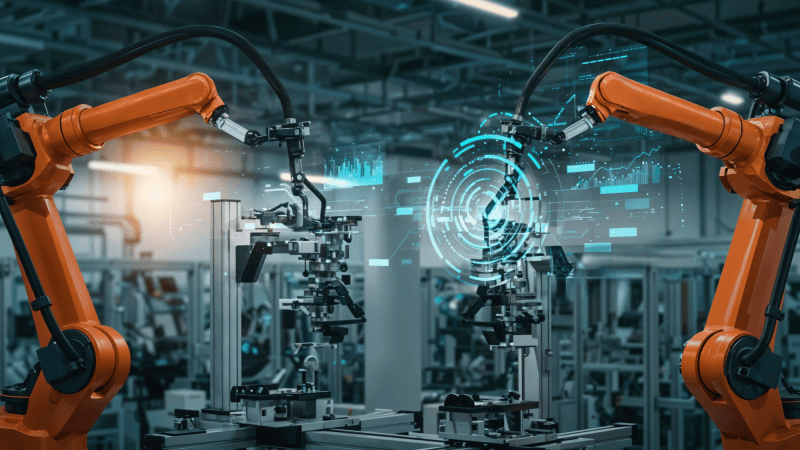
The platform will cover four broad material classes: metal alloys, polymers and organic materials, ceramics and composites. AI models will identify candidates and design experiments. Automated laboratories will then synthesise and test the materials, feeding the results back into the models to determine the next experiment.
According to A*STAR, one polymer workflow can produce 75 samples in a day, about 25 times what human researchers manage. Another can screen up to 470 alloy compositions in the same time, more than 400 times the usual rate. These figures reflect how fast experiments run, not their commercial output.
Professor Loh Xian Jun, executive director of A*STAR’s Institute of Materials Research and Engineering, told CNA that AI-assisted systems could cut discovery time by up to tenfold. But he also identified the real bottleneck. “Maybe I can produce five grams of materials today, [but] can I produce a tonne of it?”
Moving from grammes to tonnes changes the underlying science and economics. Heat transfer, production consistency, equipment design, safety requirements and raw-material costs can invalidate a material that performed well in a laboratory.
A*STAR has pointed to a hydrogen-storage prototype as an early example. Loh said on LinkedIn that the team took a composite hydrogen tank from resin to prototype in nine months, although A*STAR has not published test data on its performance. It is a single project, not a MARVEL-AI programme outcome, but it shows the type of industrial problem the platform is meant to address.
Where Public Infrastructure Meets Venture Capital
MARVEL-AI also places Singapore inside a global investment race around AI-driven science. One of its technology partners is CuspAI, the Cambridge-based materials discovery company backed by Temasek. CuspAI raised $450 Mn at a $2.6 Bn valuation in July and opened a Singapore office as part of its expansion.
That month, it also entered a five-year partnership with A*STAR, covering semiconductors, carbon capture, advanced electronics and other industrial applications.
The division of labour is revealing. CuspAI’s models can propose candidate materials, while A*STAR’s laboratories can synthesise and test them. That creates a feedback loop between software and physical experimentation, producing experimental data that can sharpen the next round of predictions.
Industrial partners revealed at the programme launch include ST Engineering and Foxconn Industrial Internet. Their participation gives MARVEL-AI access to real manufacturing requirements, not purely academic research questions.
According to launch details reported by The Edge Singapore, ST Engineering is working on high-performance alloys for aerospace, defence and infrastructure, while Foxconn Industrial Internet is exploring sustainable materials and printable alloys that could reduce dependence on critical raw materials.
Singapore’s model differs from the venture-backed approach being pursued by privately financed AI-science companies. Instead of expecting each start-up to fund its own robotics, scientific instruments, researchers and testing facilities, the government is underwriting a shared platform that companies can access.
That could materially lower the barrier to entry for deeptech founders. Materials start-ups require far more than software engineers and cloud computing. They need equipment, specialist researchers, repeatable experiments, safety processes and years of validation before customers will incorporate a new material into a chip, aircraft or industrial plant.
A*STAR already has a commercialisation apparatus around its research infrastructure. Its separate AStartCentral programme has supported more than 100 ventures over the past decade. Those companies have collectively raised more than S$1.6 Bn and created over 1,800 jobs, the agency says. MARVEL-AI could strengthen that pipeline by giving founders access to capabilities they could not finance on their own.
The Commercialisation Test
Nevertheless, the announcement leaves the programme’s most important commercial terms unanswered. The government has not disclosed how the S$150 Mn will be split between equipment, researchers, AI development and company support. It has not publicly said how long the initial funding will last, what companies will pay to use the facilities or how laboratory capacity will be allocated between multinational partners, local SMEs and start-ups.
Intellectual-property ownership will be equally consequential. MARVEL-AI will combine government-funded laboratories, external AI models, industrial problem statements and experimental data. The commercial value of a discovery will depend on who owns the resulting material, patents, process knowledge and training data, and whether start-ups receive exclusive rights capable of supporting venture investment.
Access alone does not create an investable company. Founders will need defensible IP, manufacturing partners, customers willing to run qualification tests and capital for pilot production. Large industrial partners may find it easier to absorb the technology because they already control factories, supply chains and customer relationships.
MARVEL-AI has also not published targets for commercial products, licensing revenue, corporate contracts or new ventures. Experimental speed is easier to demonstrate than economic impact, but the latter will determine whether the programme produces a new generation of Singapore materials companies or functions principally as an advanced public research facility.
The S$150 Mn investment represents a bet on the difficult middle of deeptech commercialisation. Singapore is not merely financing AI predictions. It is underwriting the laboratories, validation systems and industrial relationships needed to turn those predictions into physical products.
The decisive measure will not be how many materials its robots can screen in a day. It will be how many discoveries reach factories, generate revenue and become companies that can scale beyond Singapore.
AI models can predict promising new materials, but they cannot show whether factories can make them. Singapore is spending S$150 Mn to find out by testing whether AI-predicted materials can be synthesised and manufactured at industrial scale.
Deputy prime minister Gan Kim Yong announced the Materials Accelerator for Research and Venture Enterprise Launchpad, or MARVEL-AI, at the Singapore Week of Innovation and Technology on Oct. 27. Led by the Agency for Science, Technology and Research (A*STAR), the platform will connect advanced AI models with automated “self-driving” laboratories. Enterprise Singapore, the Economic Development Board (EDB), the National Research Foundation and the ministry of energy, trade and industry are supporting the programme, which is funded under Singapore’s S$37 Bn Research, Innovation and Enterprise 2030 plan.
The ambition goes beyond speeding up laboratory work. Singapore wants to build shared infrastructure through which researchers, start-ups, SMEs and large industrial companies can discover and validate materials for semiconductors, advanced manufacturing, energy and chemicals.