Singapore’s TacnIQ Raises $1.5 Mn to Build AI That Learns From Touch
Investment firm In Group Holdings is backing a bid to turn data from workplace wearables and robotic sensors into reusable AI models, as Singapore expands its robotics capabilities.

TacnIQ
You're reading Entrepreneur Asia Pacific, an international franchise of Entrepreneur Media.
TacnIQ.ai, a start-up developing touch sensors and artificial intelligence software in Singapore and California, said it secured $1.5 Mn from Singapore investment firm In Group Holdings to help machines interpret physical contact.
The investment was recently announced as part of a $3 Mn pre-seed round. TacnIQ said the money would support engineering hires, model development and more commercial deployments.
The announcement did not disclose a valuation, identify other investors or clarify whether the bigger round had closed. In Group separately lists TacnIQ in its investment portfolio.
The potential savings would come from reducing the work needed to adapt software for each customer. TacnIQ wants to collect data through its devices to help train AI models for multiple applications.
If it can reuse what those models learn, it could reduce the training needed for a new task. That would help businesses adapt their robots as products, equipment or working conditions change.
According to its corporate profile, In Group invests its own capital in emerging technology companies and established businesses. Its stated interests include intelligent systems.
In TacnIQ’s announcement, In Group chief executive Liu Song highlighted the start-up’s proprietary data and commercial deployments. He said the attraction was a combination of data and products already in use.
The start-up is also working with Synaptics, the US-listed semiconductor company specialising in touch, display and edge-AI technologies, on turning tactile AI research into commercially deployable hardware. Mahesh Srinivasan, Synaptics’ vice-president and general manager for touch and display, said the work was focussed on enabling systems to interpret complex physical signals reliably and in real time.
Sensors for People and Robots
The problem is familiar to anyone handling a fragile object. A robot needs to locate it, apply enough pressure to hold it and respond if its grip starts to slip.
Cameras and touch sensors supply different information for those decisions. Software that interprets contact reliably could help automate work involving objects that vary in shape, texture or firmness.
TacnIQ’s products are meant for both human movement and robotic handling. Backy, a wearable intended for workplace safety, uses pressure and tilt sensors and vibration alerts to prompt workers to adjust their movement. The TAC-02 robotic finger development kit includes 64 touch-sensing elements and software to record contact signals, according to the company’s specifications.
The start-up says it has collected more than 5,000 hours of tactile interactions through experiments and commercial deployments. It also reports paying customers across logistics, construction, e-commerce, hospitality and healthcare. However, its announcement does not disclose customer numbers, revenue or how much of the dataset comes from each product.
These omissions limit what the 5,000-hour figure could have established. TacnIQ has not disclosed how the dataset is divided between controlled experiments and commercial deployments, or across sensor types. Signals captured by a wearable on a person’s body also describe a different physical interaction from pressure recorded at a robot’s fingertip.
Their value for a shared model depends on whether useful learning can transfer between those settings. TacnIQ describes a model spanning wearables and robotics as part of its ambition. But its announcement provides no independent evaluation showing how broadly that transfer works.
This is a research challenge across the field. A June preprint on FTP-1, an experimental AI model designed to learn from different touch sensors, described training with data from 21 sensor types.
Its authors identified differences between sensor hardware as an obstacle to transferring learned skills. Their work helps explain why a large collection of readings alone cannot establish that a model will perform reliably on unfamiliar equipment.
From Research to Commercial Products
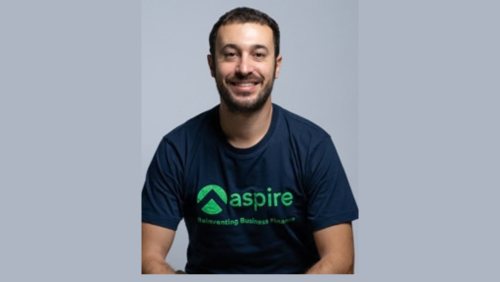
TacnIQ’s founding team has links to Singapore’s research base. Chief executive and co-founder Aashish Mehta works alongside co-founders and technology advisors Benjamin Tee and Harold Soh.
The National University of Singapore (NUS) identifies Soh as a co-founder and the head of its Collaborative Learning and Adaptive Robots laboratory. The university has also documented research by Soh, Tee and colleagues on enabling robots to interpret vibrations passing through tools and objects they hold.
NUS’s Institute for Health Innovation and Technology reported that TacnIQ was selected in 2025 for a 10-week accelerator programme backed by the university’s BLOCK71 start-up initiative and the US technology giant Microsoft. The programme supports early-stage businesses using generative AI, giving TacnIQ access to business development support alongside its academic network.
Singapore’s Wider Robotics Push
In May this year, the Infocomm Media Development Authority, Singapore’s digital development agency, announced plans for a robotics testbed at Punggol Digital District later in 2026. It is working with industrial developer JTC Corporation and the Singapore Institute of Technology. Participants included logistics group DHL and ride-hailing and delivery company Grab, with proposed services ranging from deliveries to cleaning and security patrols.
Singapore-based robot developer Sharpa has separately announced partnerships with JTC, Grab and the Agency for Science, Technology and Research on robotics applications. TacnIQ was not named in those programmes.
These programmes are intended to give companies access to settings where they can test reliability and whether their systems fit existing work. TacnIQ’s funding addresses another deployment requirement. It needs software that can interpret the signals machines collect.
Interestingly, China’s 2026 government work report also identified embodied AI, or AI built into physical machines such as robots, as an industry it intends to develop. For specialised suppliers, the potential market includes companies building those machines.
TacnIQ markets its technology to sensor and robotics manufacturers, offering a potential route to supply components and software across national markets. But its public disclosures do not identify Chinese customers.
Its immediate sales priorities appear in its recruitment material. A Singapore business development role involves guiding customers through trials, securing orders and encouraging further purchases and larger installations.
In fact, its repeat business will determine whether its initial deployments support sustained growth. Longer-term returns on the data will depend on how readily its models can adapt when another customer’s equipment or task differs.
TacnIQ.ai, a start-up developing touch sensors and artificial intelligence software in Singapore and California, said it secured $1.5 Mn from Singapore investment firm In Group Holdings to help machines interpret physical contact.
The investment was recently announced as part of a $3 Mn pre-seed round. TacnIQ said the money would support engineering hires, model development and more commercial deployments.
The announcement did not disclose a valuation, identify other investors or clarify whether the bigger round had closed. In Group separately lists TacnIQ in its investment portfolio.
Paromita Gupta • Former Features Writer
Entrepreneur Staff
Covered news and trends in AI and Metaverse segments. An avid book reader running her... Read more