Standard Chartered’s Sebastian Hia on Credit, Cross-Border Growth and the Changing Face of SME Banking in ASEAN
As supply chains diversify, the China-ASEAN corridor
and Johor-Singapore Special Economic Zone could
redraw the region’s growth map.
Disclosure: Our goal is to feature products and services that we think you'll find interesting and useful. If you purchase them, Entrepreneur may get a small share of the revenue from the sale from our commerce partners.
You're reading Entrepreneur Asia Pacific, an international franchise of Entrepreneur Media.
Small businesses dominate Asia’s enterprise landscape, but they produce far less than they should and still lack access to credit. Across 26 Asia-Pacific economies, micro, small and medium-sized enterprises (MSMEs) make up 99.8% of all businesses and employ 67.6% of the workforce, but generate just 38.7% of national economic output, according to the Asian Development Bank’s latest SME Monitor. The region faces a staggering $2.5 trillion credit gap, with nearly half of its MSMEs either unserved or underserved by financial institutions.
This mismatch is a global problem. The International Finance Corporation (IFC) puts the global small business financing gap at $5.7 trillion, a figure that jumps to $8 trillion when it includes informal enterprises.
This systemic failure is forcing banks to rewrite their strategy for smaller companies, and Standard Chartered is pursuing this opportunity from a position of strength. The bank entered 2026 after reporting $20.9 billion in operating income for 2025, up 6%, and an 18% jump in underlying pre-tax profit to $7.9 billion. Its strategy combines cross-border capabilities with wealth-management expertise to help SMEs expand across markets and manage complex financial needs.
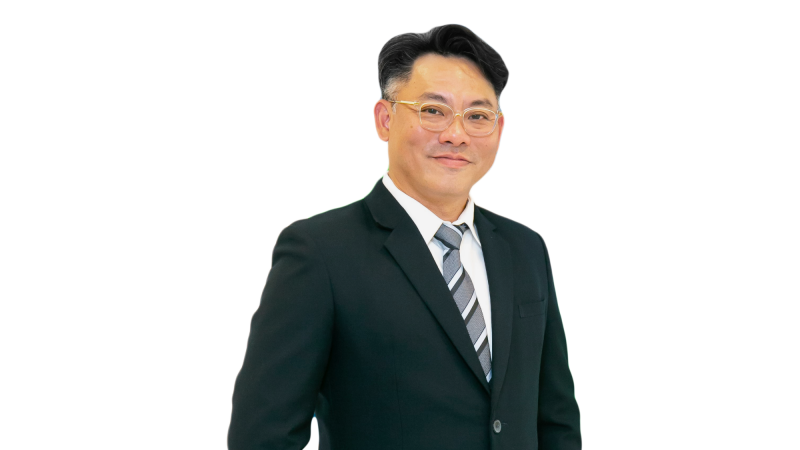
To achieve this goal, Sebastian Hia, head of SME banking for Singapore and global head of SME banking sales, draws on more than 25 years of financial-services experience, including leadership roles in Singapore, Malaysia and China. He previously served as chief executive officer and head of wealth & retail banking in Taiwan, where he was also a board member of Standard Chartered Taiwan. In a written interaction with Entrepreneur Media Asia Pacific, Hia breaks down how the bank assesses small business credit risk, when an international network actually matters and how automation is reshaping relationship banking.
How does Standard Chartered price SME risk while continuing to support fundamentally viable businesses facing temporary cash-flow pressure?
We assess risk through a combination of factors, including financial performance, cash flow, industry outlook and cross-border exposure. This multi-layered approach helps us identify SMEs that are fundamentally resilient but facing shortterm cash constraints, as well as those needing capital to capture growth opportunities. Ultimately, it enables us to back viable businesses while pricing risk appropriately.
In Singapore, we participate in state-backed initiatives such as the Enterprise Financing Scheme, which uses a risk-sharing model to help SMEs secure trade financing and working capital loans. More recently, we became an MoU partner to the Centre for Enterprise Financing Advisory (CEFA) to better connect with small businesses seeking financing advice and growth resources.
How does your cross-border network help largely domestic regional SMEs?
We do not view SMEs through a simplistic domestic-versus-cross-border lens. Many businesses that primarily serve local clients in Singapore still maintain as supply chains diversify, the China-ASEAN corridor and Johor-Singapore Special Economic Zone could redraw the region’s growth map. international touchpoints— whether through overseas suppliers, cross-border payments or plans for future regional expansion.
For SMEs focussed on anchoring their domestic position, our role is to provide a seamless continuum of capabilities such as reliable credit, digital banking and robust cash management. When they are ready to scale cross-border, our network across 14 markets—including Malaysia, Vietnam, Mainland China, Hong Kong, India and more—provides vital banking connectivity and on-theground execution.
The real value lies in having a banking partner that adapts to different stages of growth. We can manage dayto-day working capital in one market, ensure smooth entry into a new jurisdiction and support both the corporate treasury and the personal wealth priorities of the entrepreneur through an integrated relationship.
As fintechs handle more SME workflow, how is Standard Chartered’s role changing? Where do your ecosystem partners fit in?
We differentiate ourselves by offering a broad range of banking solutions, from lending and cash management to risk mitigation and network expertise. By working with a trusted partner like Standard Chartered, SMEs save time and effort searching for solutions and can focus more on growing their businesses. Our role is evolving from simply moving money to helping SMEs manage risk, access capital and connect to growth opportunities.
This is also why we continue to invest heavily in digitalisation and ecosystem partnerships. For example, through Straight2Bank, our online banking platform, SMEs can access and manage their finances anytime, anywhere. It gives them greater efficiency, visibility and control over their day-to-day banking needs.
We also work with a network of strategic partners to help our SME clients establish an overseas business presence. As the bank does not offer direct corporate advisory services, our specialised partners step in to handle those needs. Our partnerships with Altios and Ascentium are prime examples. They extend our offerings beyond banking by streamlining processes for clients entering new markets and delivering convenience.
What trends do you see as SMEs rethink supply chains?
There has been a shift from China+1 to China+N, as companies are building multi-country supply-chain ecosystems across ASEAN and beyond to improve resilience and reduce concentration risk. We are closely watching two specific corridors. One is the China-ASEAN trade corridor, as Chinese mainland businesses relocate production to tap into Southeast Asia. The second is the Johor-Singapore Special Economic Zone (JS-SEZ).
This can emerge as an incredibly powerful integrated economic corridor, allowing businesses to combine Singapore’s strengths as a premier financial, trade and innovation hub with Johor’s deep talent pool, cost advantages and growing middle-class consumption. As Standard Chartered maintains a strong footprint in Singapore and Malaysia, our clients can seamlessly operate on both sides of the Causeway using a single digital banking platform, backed by a range of ecosystem partners for local incorporation and business growth.
We are currently building distinct value propositions for our SMEs to help them scale faster and capture opportunities in the JS-SEZ. For example, we supported Yuancang, a Chinese logistics and e-commerce player, as it expanded into Singapore and Malaysia. Similarly, we teamed up with Altios to help Total Facility Engineering, a semiconductor engineering specialist, enter the Indian market.
SME banking straddles the corporate & investment and wealth & retail banking segments. How do you ensure an entrepreneur’s personal wealth does not influence corporate credit decisions?
Our model’s strength is that we can support both an entrepreneur’s business and personal wealth needs through a single banking relationship. Our SME Banking serves small businesses and medium enterprises and acts as a critical bridge between our CIB and WRB. We work closely with our CIB trade and cash teams to help small businesses manage day-to-day operations.
As companies grow, they can move up [to the corporate banking franchise] and stay at the same bank with minimal disruption. When businesses scale, owners’ personal wealth requirements also evolve, and we are well placed to support those through our affluent and private-banking propositions, including wealth management, succession planning and international banking solutions.
The relationship may seem integrated from a client-experience perspective. But credit decisions remain independent and are assessed against established risk and regulatory standards. This ensures we deliver the benefits of a holistic proposition without compromising credit discipline.
As credit assessment becomes more automated, where does human judgement still come in?
Algorithms are highly effective at identifying baseline risk, but they cannot replace human judgment. When our data flags signs of corporate stress, we prioritise engaging the client early to understand the broader context behind the numbers. This allows us to co-create viable restructuring or financing solutions while maintaining our regulatory and risk management responsibilities.
How is automation changing the role of relationship managers?
Strategic investment in automation streamlines routine processes, accelerates turnaround times and gives SME clients greater transparency and self-service capabilities. We continue to recruit more relationship managers, drive product innovation and refine digital and client touchpoints.
Small businesses dominate Asia’s enterprise landscape, but they produce far less than they should and still lack access to credit. Across 26 Asia-Pacific economies, micro, small and medium-sized enterprises (MSMEs) make up 99.8% of all businesses and employ 67.6% of the workforce, but generate just 38.7% of national economic output, according to the Asian Development Bank’s latest SME Monitor. The region faces a staggering $2.5 trillion credit gap, with nearly half of its MSMEs either unserved or underserved by financial institutions.
This mismatch is a global problem. The International Finance Corporation (IFC) puts the global small business financing gap at $5.7 trillion, a figure that jumps to $8 trillion when it includes informal enterprises.
This systemic failure is forcing banks to rewrite their strategy for smaller companies, and Standard Chartered is pursuing this opportunity from a position of strength. The bank entered 2026 after reporting $20.9 billion in operating income for 2025, up 6%, and an 18% jump in underlying pre-tax profit to $7.9 billion. Its strategy combines cross-border capabilities with wealth-management expertise to help SMEs expand across markets and manage complex financial needs.
To achieve this goal, Sebastian Hia, head of SME banking for Singapore and global head of SME banking sales, draws on more than 25 years of financial-services experience, including leadership roles in Singapore, Malaysia and China. He previously served as chief executive officer and head of wealth & retail banking in Taiwan, where he was also a board member of Standard Chartered Taiwan. In a written interaction with Entrepreneur Media Asia Pacific, Hia breaks down how the bank assesses small business credit risk, when an international network actually matters and how automation is reshaping relationship banking.
How does Standard Chartered price SME risk while continuing to support fundamentally viable businesses facing temporary cash-flow pressure?
We assess risk through a combination of factors, including financial performance, cash flow, industry outlook and cross-border exposure. This multi-layered approach helps us identify SMEs that are fundamentally resilient but facing shortterm cash constraints, as well as those needing capital to capture growth opportunities. Ultimately, it enables us to back viable businesses while pricing risk appropriately.
In Singapore, we participate in state-backed initiatives such as the Enterprise Financing Scheme, which uses a risk-sharing model to help SMEs secure trade financing and working capital loans. More recently, we became an MoU partner to the Centre for Enterprise Financing Advisory (CEFA) to better connect with small businesses seeking financing advice and growth resources.
How does your cross-border network help largely domestic regional SMEs?
We do not view SMEs through a simplistic domestic-versus-cross-border lens. Many businesses that primarily serve local clients in Singapore still maintain as supply chains diversify, the China-ASEAN corridor and Johor-Singapore Special Economic Zone could redraw the region’s growth map. international touchpoints— whether through overseas suppliers, cross-border payments or plans for future regional expansion.
For SMEs focussed on anchoring their domestic position, our role is to provide a seamless continuum of capabilities such as reliable credit, digital banking and robust cash management. When they are ready to scale cross-border, our network across 14 markets—including Malaysia, Vietnam, Mainland China, Hong Kong, India and more—provides vital banking connectivity and on-theground execution.
The real value lies in having a banking partner that adapts to different stages of growth. We can manage dayto-day working capital in one market, ensure smooth entry into a new jurisdiction and support both the corporate treasury and the personal wealth priorities of the entrepreneur through an integrated relationship.
As fintechs handle more SME workflow, how is Standard Chartered’s role changing? Where do your ecosystem partners fit in?
We differentiate ourselves by offering a broad range of banking solutions, from lending and cash management to risk mitigation and network expertise. By working with a trusted partner like Standard Chartered, SMEs save time and effort searching for solutions and can focus more on growing their businesses. Our role is evolving from simply moving money to helping SMEs manage risk, access capital and connect to growth opportunities.
This is also why we continue to invest heavily in digitalisation and ecosystem partnerships. For example, through Straight2Bank, our online banking platform, SMEs can access and manage their finances anytime, anywhere. It gives them greater efficiency, visibility and control over their day-to-day banking needs.
We also work with a network of strategic partners to help our SME clients establish an overseas business presence. As the bank does not offer direct corporate advisory services, our specialised partners step in to handle those needs. Our partnerships with Altios and Ascentium are prime examples. They extend our offerings beyond banking by streamlining processes for clients entering new markets and delivering convenience.
What trends do you see as SMEs rethink supply chains?
There has been a shift from China+1 to China+N, as companies are building multi-country supply-chain ecosystems across ASEAN and beyond to improve resilience and reduce concentration risk. We are closely watching two specific corridors. One is the China-ASEAN trade corridor, as Chinese mainland businesses relocate production to tap into Southeast Asia. The second is the Johor-Singapore Special Economic Zone (JS-SEZ).
This can emerge as an incredibly powerful integrated economic corridor, allowing businesses to combine Singapore’s strengths as a premier financial, trade and innovation hub with Johor’s deep talent pool, cost advantages and growing middle-class consumption. As Standard Chartered maintains a strong footprint in Singapore and Malaysia, our clients can seamlessly operate on both sides of the Causeway using a single digital banking platform, backed by a range of ecosystem partners for local incorporation and business growth.
We are currently building distinct value propositions for our SMEs to help them scale faster and capture opportunities in the JS-SEZ. For example, we supported Yuancang, a Chinese logistics and e-commerce player, as it expanded into Singapore and Malaysia. Similarly, we teamed up with Altios to help Total Facility Engineering, a semiconductor engineering specialist, enter the Indian market.
SME banking straddles the corporate & investment and wealth & retail banking segments. How do you ensure an entrepreneur’s personal wealth does not influence corporate credit decisions?
Our model’s strength is that we can support both an entrepreneur’s business and personal wealth needs through a single banking relationship. Our SME Banking serves small businesses and medium enterprises and acts as a critical bridge between our CIB and WRB. We work closely with our CIB trade and cash teams to help small businesses manage day-to-day operations.
As companies grow, they can move up [to the corporate banking franchise] and stay at the same bank with minimal disruption. When businesses scale, owners’ personal wealth requirements also evolve, and we are well placed to support those through our affluent and private-banking propositions, including wealth management, succession planning and international banking solutions.
The relationship may seem integrated from a client-experience perspective. But credit decisions remain independent and are assessed against established risk and regulatory standards. This ensures we deliver the benefits of a holistic proposition without compromising credit discipline.
As credit assessment becomes more automated, where does human judgement still come in?
Algorithms are highly effective at identifying baseline risk, but they cannot replace human judgment. When our data flags signs of corporate stress, we prioritise engaging the client early to understand the broader context behind the numbers. This allows us to co-create viable restructuring or financing solutions while maintaining our regulatory and risk management responsibilities.
How is automation changing the role of relationship managers?
Strategic investment in automation streamlines routine processes, accelerates turnaround times and gives SME clients greater transparency and self-service capabilities. We continue to recruit more relationship managers, drive product innovation and refine digital and client touchpoints.