The IIT Founder Building AI’s Missing Memory Layer
Sai Vamshi Batchu, a 24-year-old IIT Kharagpur graduate who spent three years in high-frequency trading, argues the limit on those agents is memory and not intelligence.

.
Opinions expressed by Entrepreneur contributors are their own.
You're reading Entrepreneur Asia Pacific, an international franchise of Entrepreneur Media.
AI coding agents have become capable enough to write production code with little supervision. What they struggle to do is account for why any of it was written, because the reasoning behind a task sits in the engineer’s head and often isn’t recorded in one place.
Sai Vamshi Batchu, a 24-year-old IIT Kharagpur graduate who spent three years in high-frequency trading, argues the limit on those agents is memory and not intelligence. He and co-founder Aditya Bommakanti, an IIT Delhi graduate who worked on the same trading floor, run GodHands, a company building a system that records how engineers move through their applications and feeds that history back to the agent.
Three Years Of Finding Signals In Market Data
While studying at IIT Kharagpur, Sai Vamshi Batchu split his time between the campus entrepreneurship club and the math club. He treated both as serious interests and kept up with both through his degree.
He picked the quantitative track for its financial potential. “Initially, I pursued the math side because it was very high-paying,” he says. That took him into high-frequency trading, where he spent the first three years of his career working on low-latency infrastructure alongside Aditya Bommakanti, a colleague who later became his co-founder.
The role was narrow and research-heavy. Every firm had access to the same market data, so the job wasn’t to find better information, but to find a signal inside data everyone already held, test whether it held up, and then tune it until it was reliable enough to trade on.
“My everyday work involved finding new signals, testing those signals, and fine-tuning them as much as possible,” Vamshi says.
The purpose was prediction. A signal that survived testing became a way to anticipate patterns in how a stock would move.
Despite his work in this field, he says he never stopped thinking about building something. “I was always inclined toward building something new,” he recalls. By his account the interest was postponed, which is why he describes leaving trading as returning to something he had put off for three years while the quantitative work paid well.
Realizing The Context That Never Gets Written Down
The problem that became GodHands showed up in Batchu’s own working day before it was a company. One task would move him across Slack, Gmail, Cursor and GitHub, and the thread connecting those moves stayed in his head. Why a piece of code was written the way it was, which approach had already been tried and dropped, what a teammate had ruled out in a message three weeks earlier: none of it was written down in one place, and most of it was never written down at all.
He traces the frustration to his previous employer. “I felt this problem strongly at my previous company. A lot of context was missing, and there was no proper solution for it,” he says.
His diagnosis wasn’t that the agents were too weak; they were capable of the work. Rather, the issue was that each session started from nothing. An agent would carry out an instruction competently while knowing none of the reasoning behind it, which in practice meant it would propose approaches the team had already rejected, or produce code that ignored constraints nobody had thought to restate.
“I understand what I’m doing and why I’m doing it,” he explains, “but the coding agent doesn’t have that context. It only knows the task I gave it.”
The fix of having the engineer supply the missing background each time struck him as unreliable. The person holding the context forgets it too. The further a project runs, the more of its early reasoning is gone from both the agent and the engineer.
That gap became the company’s stated purpose: give a coding agent the same working context that currently exists only inside a person’s head.
Inside GodHands: An Agent That Watches The Screen
Batchu’s solution, GodHands, works by installing an agent on the user’s machine. “You install our agent on your laptop. It observes your screen and sees which applications you’re using,” he explains. It doesn’t file away isolated documents; it records the sequence of actions a person takes, in the order they took them.
The difference matters to how he describes the output. He calls it a knowledge base for companies that stores the resolution alongside the context: which applications were opened, what was consulted in each of them, and which design decision finally closed the problem. A record of the fix on its own explains little. A record of the path to it explains why the fix was the one chosen.
That is also how he separates GodHands from other indexing tools. Those products search across pre-existing material to surface the relevant piece. But GodHands goes deeper. In his words, “Similar solutions generally index your memory and retrieve information that already exists. We don’t just retrieve memories: we create them.”
He’s equally unconvinced that larger context windows solve the problem. Models handle long contexts unevenly, he argues, which is a pattern published research has found even in systems built for them, where accuracy falls off for information buried in the middle of a long input. Compaction, which shortens the history to fit, then discards the specific details a given task turns out to need.
Frequency decides what the system keeps. Work a developer repeats accumulates richer context over time, while one-off tasks stay thin. The constraint driving that choice is practical: “A knowledge base is only useful when it remains compact. If the knowledge base expands infinitely and stores everything you do every day, it becomes irrelevant again.” A system that retains everything becomes as slow to search as the applications it was meant to replace.
The Memory Layer And The Trust Problem
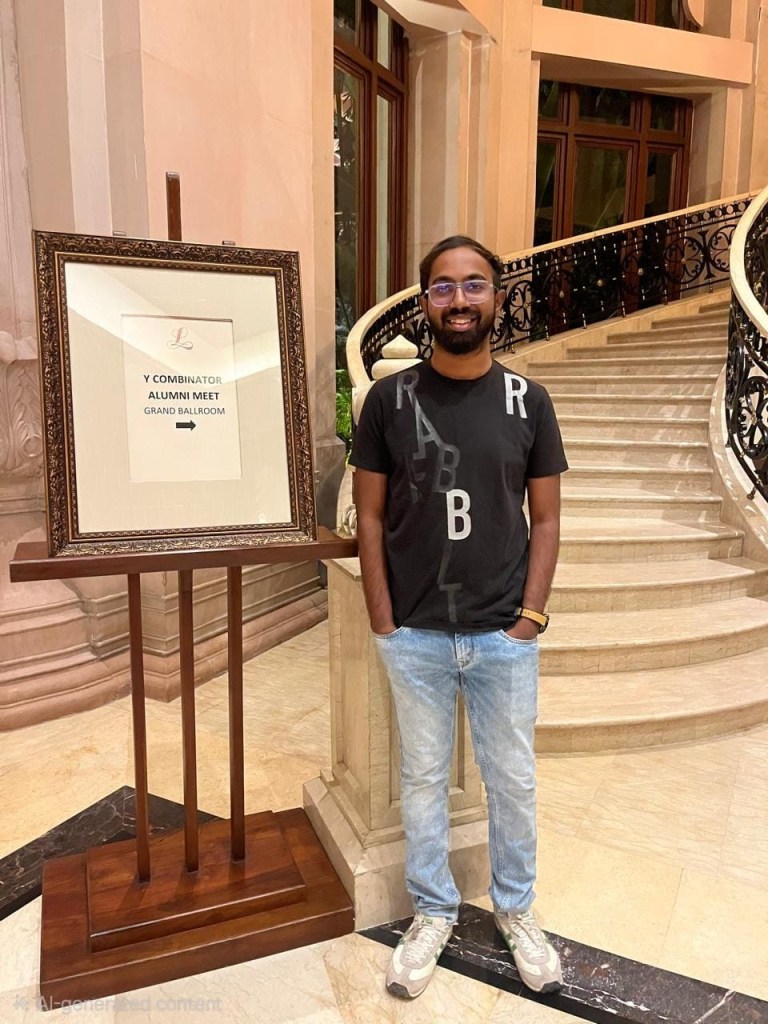
GodHands is currently pre-launch and validating with a variety of design partners. It was accepted into Y Combinator’s Fall batch, which begins in October. Run by its two founders, the responsibilities are cleanly divided: Bommakanti leads technology and product, while Batchu handles operations, hiring, and conversations with customers and investors.
Batchu’s current view of the market puts the frontier labs on one side and his own company on the other, working on separate parts of the same stack. “OpenAI and Anthropic are handling the intelligence layer. We want to handle the memory layer for everyone,” he says. The labs make the models better at reasoning. GodHands supplies what the reasoning operates on.
The three-year ambition goes further than assistance. Batchu expects to automate significant portions of manual coding, including the design decisions engineers still make themselves.
He considers trust to be the harder obstacle. “Initially, I think the biggest challenge is the trust factor. People generally don’t want to be replaced,” he says. The first reaction he gets from prospective users is rarely a technical question. It’s a question about their own position: if the system captures the record of how an engineer works, they want to know what is left for the engineer to do.
He treats that as a question about timing. The shift is underway, in his account, and the useful response is to build for where it ends up. “After some time, I think it will become inevitable,” he says. “If everyone else is using something like this, you can’t be the only person who isn’t.”
A Founder With A Repeatable Method
The method Sai Vamshi Batchu describes learning in high-frequency trading was simple: identify a pattern inside data everyone already has, research it until it holds, and convert it into something of value. He’s since applied the same approach to a problem he first hit as an engineer, which is that the reasoning behind a piece of work is rarely written down anywhere and never reaches the coding agent doing the work. GodHands is the result of that effort, and its premise is that the record of how an engineer arrives at a decision is worth as much as the decision itself.
AI coding agents have become capable enough to write production code with little supervision. What they struggle to do is account for why any of it was written, because the reasoning behind a task sits in the engineer’s head and often isn’t recorded in one place.
Sai Vamshi Batchu, a 24-year-old IIT Kharagpur graduate who spent three years in high-frequency trading, argues the limit on those agents is memory and not intelligence. He and co-founder Aditya Bommakanti, an IIT Delhi graduate who worked on the same trading floor, run GodHands, a company building a system that records how engineers move through their applications and feeds that history back to the agent.
Three Years Of Finding Signals In Market Data
While studying at IIT Kharagpur, Sai Vamshi Batchu split his time between the campus entrepreneurship club and the math club. He treated both as serious interests and kept up with both through his degree.
Writes on advanced manufacturing, automation, and the commercial impact of deep technology.