Why DALI’s Cap Table Gets Curiouser and Curiouser
ALDI SÜD has acquired an undisclosed minority stake in DALI Everyday Grocery. But seven share-allotment filings, a Venturi top-up and investments made through different entities leave the Philippines-based hard-discount retailer’s current ownership unresolved in freely accessible records.
Dali
Disclosure: Our goal is to feature products and services that we think you'll find interesting and useful. If you purchase them, Entrepreneur may get a small share of the revenue from the sale from our commerce partners.
You're reading Entrepreneur Asia Pacific, an international franchise of Entrepreneur Media.
German discount retailer ALDI SÜD has recently acquired an undisclosed minority stake in the Philippine hard-discount retailer DALI. Days after the announcement, HDPM Sin, DALI’s Singapore holding company, lodged five returns of allotment with Singapore’s corporate registry. DealStreetAsia (DSA) subsequently reported that HDPM Sin had issued $28.4 Mn of ordinary shares to existing investor Venturi Partners.
The identities of DALI’s principal institutional backers are no longer a mystery. At least seven had been publicly named before ALDI SÜD arrived. What remains unavailable is a consolidated cap table showing what each owns, which group entity received its capital and how the latest investments and share allotments changed those holdings.
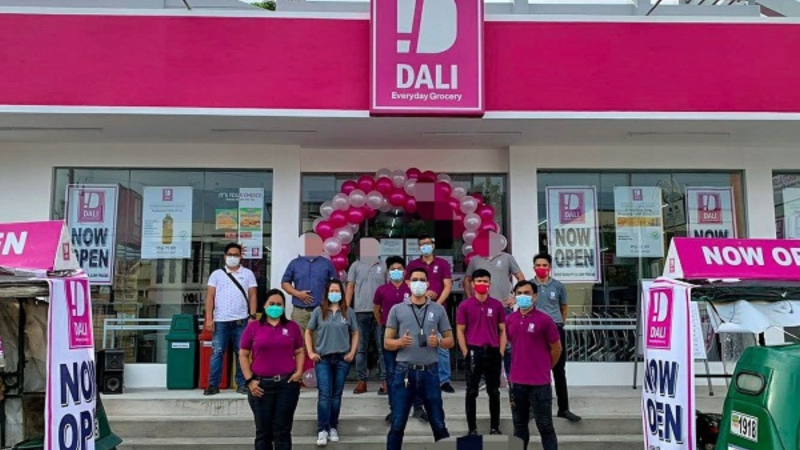
Founded in 2020, DALI follows a hard-discount model for small, no-frills stores offering a limited range of essential goods and private-label products. Hard Discount Philippines, held through Singapore-incorporated HDPM Sin Pte Ltd, operates DALI’s Philippine stores. The group’s ultimate parent is Switzerland-based Dali Discount AG.
A Clean Start
The Philippines-based private equity firm Navegar invested in DALI as early as 2022. Malaysia-headquartered private equity firm Creador also identifies DALI as a 2022 investment, while DSA reported a $55 Mn commitment in a transaction announced in 2023. The Asian Development Bank invested $15 Mn in 2023 to finance new stores, distribution centres and cold-chain infrastructure, ADB had said in an announcement.
The investments were publicly identified, but the available disclosures did not show the investors’ resulting stakes or combine them into a group-wide ownership table.
The First Gap
The cap table became more difficult to follow in 2024. German development finance institution DEG (Deutsche Investitions- und Entwicklungsgesellschaft), within the KfW group, invested $8.4 Mn in Dali Discount AG, the Swiss parent, to support the rollout of stores and distribution centres. ADB also approved a $10 Mn equity investment in HDPM Sin, the Singapore holding company, to expand DALI’s supplier network for private-label goods.
Singapore-based growth equity firm Venturi Partners also invested $25 Mn through its $180 Mn debut consumer-focussed fund, a deal it described as its second in the Philippines after grab-and-go chain Pickup Coffee. Venturi identified Navegar, Creador and ADB as fellow investors, while referring more broadly to other institutional investors and family offices. But it did not name them or disclose their stakes.
A Fuller Roster
In August 2025, reports on DALI’s widened 2024 net loss and its auditor’s going-concern warning described ADB, Creador, Navegar and Venturi as shareholders, without consistently identifying the group entity in which their interests were held. Hard Discount Philippines was wholly owned by HDPM Sin, meaning those references did not establish direct ownership of the Philippine operating company. The lists were also not presented as exhaustive. So, DEG’s omission did not show that it had exited or that the accounts conflicted with its disclosed investment.
A disclosure published by the International Finance Corporation (IFC) in September 2025 supplied a fuller roster. It identified DALI’s management team, ADB, Creador, DEG, Navegar, Pavilion Capital and Venturi among the shareholders of Dali Discount AG. This established Pavilion Capital’s presence and showed that the earlier media lists were incomplete, not necessarily contradictory. IFC still did not disclose the investors’ stakes or publish a complete cap table.
A Seventh Name and A Different Question
Last year, IFC became the seventh publicly named institutional capital provider. It proposed up to $10.07 Mn in quasi-equity financing for DALI, which its board approved in October 2025. IFC’s project database records that the financing was signed in November and invested in December.
But the instrument details matter. IFC’s product table records the financing under its loan category, while the project narrative describes it as quasi-equity, and elsewhere, as own-account equity. The public disclosure, therefore, confirms that IFC provided capital, but does not establish whether it immediately received ordinary shares, conversion rights or voting rights.
The financing went into Dali Discount AG, the Swiss parent. It was not the first disclosed investment made at that level: DEG’s investment database also identifies Dali Discount AG as the recipient of its $8.4 Mn investment.
By January 2026, DSA had named all seven institutional backers in one report: ADB, Creador, DEG, IFC, Navegar, Pavilion Capital and Venturi. That resolved the question of which institutions had supplied capital by then. However, it did not show the legal entity through which every investor held its interest, how ownership at the Swiss parent related to that of the Singapore holding company or what percentage each investor owned.
The Year the Filings Outran the Disclosure
DALI operated more than 1,300 stores across the Philippines when ALDI SÜD announced its investment. That expansion coincided with more share-issuance activity than DALI’s public announcements explain.
The public filing index of Singapore’s Accounting and Corporate Regulatory Authority shows that HDPM Sin lodged two allotment returns on April 1, 2026 and five more on September 14, along with an ordinary resolution. That amounts to seven allotment returns and one related resolution during the year.
The free index discloses the filing dates and document types, but not the allottees, share counts, issue prices, consideration or resulting stakes. DSA’s Data Vantage report linked at least part of the activity to the $28.4 Mn issuance of ordinary shares to Venturi. But it did not publicly establish whether that investment corresponded to one allotment return or several, or what Venturi owned after the issuance.
The filing also followed months of reporting on a broader fundraising process. DSA reported in June that ALDI SÜD was in advanced discussions for an investment likely to exceed $100 Mn. Its July coverage said General Atlantic was also circling a DALI raise.
No company or investor disclosure has reconciled the seven allotment returns with Venturi’s investment, ALDI SÜD’s stake acquisition or the broader fundraising process. The registry established that HDPM Sin issued shares more frequently than the companies’ announcements explain, but its freely accessible index does not identify the allottee or terms behind each return.
Curiouser Still
The five September allotment returns were lodged about a week after ALDI SÜD announced its investment. The German retailer said it would contribute its international discount-retailing expertise, while DALI would continue to be managed independently by its local team. The transaction also extends ALDI SÜD’s presence in Asia beyond China.
Neither company has said what ALDI SÜD paid, what stake it holds or whether its investment completed the fundraising process DSA had tracked since June. Its arrival makes it at least the eighth publicly named institutional backer. IFC’s quasi-equity financing also shows why a list of capital providers cannot automatically be treated as DALI’s cap table.
DALI is privately held, and its transaction announcements do not provide a complete ownership table. After seven allotment returns, a $28.4 Mn Venturi follow-on and ALDI SÜD’s entry, the names behind the capital are no longer the central mystery. What each owns, and where that ownership sits within DALI’s three-tier corporate structure, remains unresolved.
German discount retailer ALDI SÜD has recently acquired an undisclosed minority stake in the Philippine hard-discount retailer DALI. Days after the announcement, HDPM Sin, DALI’s Singapore holding company, lodged five returns of allotment with Singapore’s corporate registry. DealStreetAsia (DSA) subsequently reported that HDPM Sin had issued $28.4 Mn of ordinary shares to existing investor Venturi Partners.
The identities of DALI’s principal institutional backers are no longer a mystery. At least seven had been publicly named before ALDI SÜD arrived. What remains unavailable is a consolidated cap table showing what each owns, which group entity received its capital and how the latest investments and share allotments changed those holdings.
Founded in 2020, DALI follows a hard-discount model for small, no-frills stores offering a limited range of essential goods and private-label products. Hard Discount Philippines, held through Singapore-incorporated HDPM Sin Pte Ltd, operates DALI’s Philippine stores. The group’s ultimate parent is Switzerland-based Dali Discount AG.