Farming Doesn’t Need Another Chatbot. It Needs an Intelligence System
With agricultural data trapped in incompatible silos, Agmatix is positioning itself as what some have dubbed the “Palantir of agriculture” – an infrastructure layer built to turn fragmented field data into enterprise-grade intelligence.
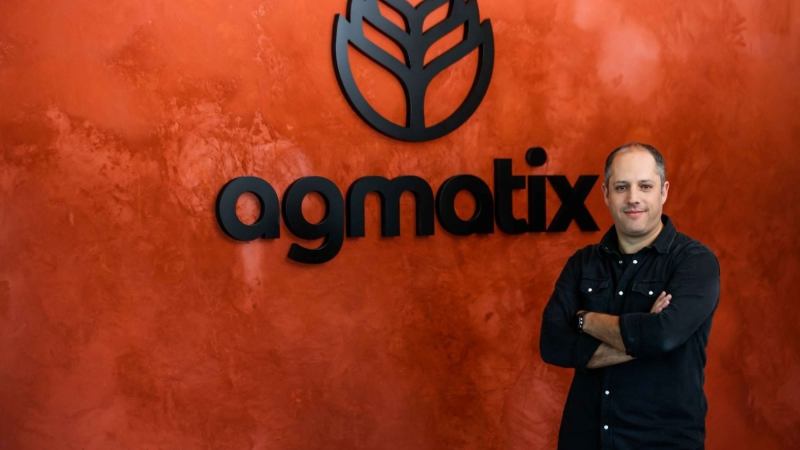
Agmatix
Opinions expressed by Entrepreneur contributors are their own.
You're reading Entrepreneur Asia Pacific, an international franchise of Entrepreneur Media.
In most industries, data becomes valuable the moment it can travel. A transaction leaves a footprint, that footprint flows into a system of record, and that system becomes the foundation for analytics, automation and eventually AI. Agriculture never got that clean handoff.
Farms generate enormous amounts of information, yet the sector still behaves like a marketplace where every participant speaks a slightly different dialect. One company’s product name is another’s shorthand. Research trials are published in inconsistent formats. Field observations are recorded in local terminology. Retail purchasing data lives in one system, agronomic outcomes in another, and the biological context connecting them often lives only in someone’s experience.
This is why so much agricultural AI underdelivers. Not because models can’t detect patterns, but because the patterns don’t translate into reliable decisions when the underlying data cannot be reconciled into shared meaning.
Why Agriculture Breaks General AI
The market continues to treat farming like a prompt-and-answer problem. Ask a system what’s happening, get a recommendation, repeat. That logic works when the domain is largely linguistic. Agriculture is not.
Farming is biological, seasonal and intensely local. Two fields that look identical on a dashboard may require opposite actions because their soil history, crop rotation or microclimate differ. A model trained on generalized information might know that nitrogen increases yield. It won’t automatically understand how timing, soil composition, previous crops and weather volatility reshape the optimal decision in a specific field.
In agriculture, context is not a refinement. It is the decision.
That is the gap one Israeli startup called Agmatix is attempting to close. Rather than building another interface that generates smooth answers, the company is focused on creating the missing intelligence layer that agriculture never standardized for itself.
The Palantir Playbook: Building A Shared Intelligence Layer
If you want a mental model, think less about chatbots and more about operating systems. The companies that endure in enterprise software are often those that standardize how information is represented and connected, not those that simply visualize it.
In defense and intelligence, Palantir built its reputation by creating an abstraction layer that made fragmented data usable inside a single decision workflow. It didn’t replace analysts. It standardized how information connected.
Agriculture has never had that layer. Agmatix is betting that the same infrastructure logic applies – but in a sector where the fragmentation is biological and cultural, not just technical.
Agmatix describes its core as “pre-trained ontologies.” Stripped of technical language, that means agricultural relationships are encoded before customer data ever enters the system. The platform does not begin by guessing what a spreadsheet column means. Agronomists and domain experts define how fertilizers interact with soils, how crop needs shift through growth stages and how past seasons influence present outcomes. Those relationships are validated against field data and refined over time.
The result is not just data integration, but semantic interoperability. The system can connect datasets because it understands the concepts behind them, not just their labels. In agriculture, that distinction matters. Two databases can technically connect and still produce misleading outputs if the system cannot interpret what each variable truly represents.
This approach also addresses the industry’s long-standing trust barrier. A recommendation engine that is “mostly right” does not survive in farming. A mistimed fungicide application or incorrect input recommendation can erase margin for an entire season. Black-box predictions may impress in demos, but they struggle in environments where consequences are immediate and visible.
From Farm Tools to Value Chain Intelligence
Agmatix does not primarily target individual farmers. Instead, it works with the organizations that shape decisions at scale: crop input manufacturers, agronomy advisors, retailers, cooperatives, food companies and, in some cases, public agencies. These actors sit at the chokepoints of agricultural decision-making. They manage data, influence practices and have clear incentives to link inputs to outcomes.
Viewed through that lens, the use cases look less like “AI for farmers” and more like intelligence for the agricultural value chain. A crop protection company can combine field history, weather patterns and trial data to refine disease risk modeling. A government agency can simulate policy impacts using structured agronomic relationships instead of disconnected datasets. A food company can move beyond broad sustainability pledges and identify which regenerative practices produce measurable improvements under specific local conditions.
The timing is not accidental. Climate volatility is increasing the cost of wrong decisions. Major food companies face mounting pressure to demonstrate real decarbonization progress. At the same time, agriculture’s earlier wave of overhyped technology has made buyers more disciplined about ROI and usability.
Across the broader AI market, there is a visible shift from horizontal tools toward vertical systems built for reliability in specific domains. Agriculture may be one of the clearest examples of why that shift is necessary. When edge cases are the norm rather than the exception, generic intelligence reaches its limits quickly.
Farming does not need more answers that sound confident. It needs systems that can align fragmented data into shared understanding. The companies that solve that infrastructure problem may not look like consumer AI stars, but they stand to shape one of the world’s most fundamental industries in far more durable ways.
In most industries, data becomes valuable the moment it can travel. A transaction leaves a footprint, that footprint flows into a system of record, and that system becomes the foundation for analytics, automation and eventually AI. Agriculture never got that clean handoff.
Farms generate enormous amounts of information, yet the sector still behaves like a marketplace where every participant speaks a slightly different dialect. One company’s product name is another’s shorthand. Research trials are published in inconsistent formats. Field observations are recorded in local terminology. Retail purchasing data lives in one system, agronomic outcomes in another, and the biological context connecting them often lives only in someone’s experience.
This is why so much agricultural AI underdelivers. Not because models can’t detect patterns, but because the patterns don’t translate into reliable decisions when the underlying data cannot be reconciled into shared meaning.
Covers capital flows, market structures, and the strategic thinking behind cross-border enterprises.