This Company Provides Innovative Opportunities to Become Part of an Eco-Friendly Future for the Maritime Industry
13 Mari, a shipping industry startup dedicated to ship tuning solutions, is constantly looking for ways to increase the fuel efficiency of marine vessels, reducing harmful greenhouse gas emissions and bringing savings for vessel owners and operators.
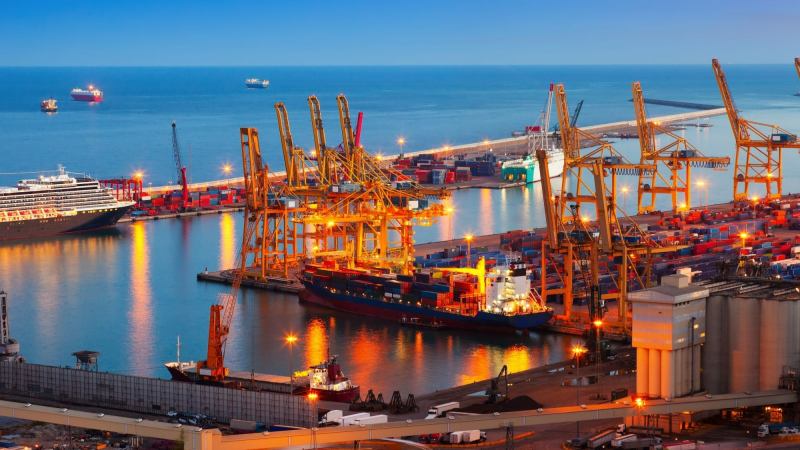
Freepik
Opinions expressed by Entrepreneur contributors are their own.
You're reading Entrepreneur Asia Pacific, an international franchise of Entrepreneur Media.
The international shipping industry is under pressure to reduce its environmental impact, with container ships and bulk carriers emitting an annual average of 140 million metric tons and 440 million metric tons of CO2, respectively, contributing 3% of all greenhouse gas emissions globally. With the International Maritime Organization (IMO) setting decarbonization targets of 20% by 2030, 70% by 2040, and 100% by 2050 for the industry, there is a need to limit greenhouse gas emissions via improving the efficiency of marine vessels, resulting in decreasing the amount of fuel burned.
13 Mari, a shipping industry startup, dedicated to ship tuning solutions, is constantly looking for ways to increase the fuel efficiency of marine vessels, reducing harmful greenhouse gas emissions and bringing savings for vessel owners and operators. The company has created a process of retrofitting the vessel’s hull with passive elements, reducing the drag experienced by the vessel’s hull, and resulting in better fuel efficiency. The shape and arrangement of these elements are inspired by natural processes, such as water ripples and the texture and movement of dunes in the desert.
In testing the first generation of elements, 13 Mari’s team noticed a 10% faster fluid flow and an estimated 20% reduction in drag. According to 13 Mari, academic estimations have established a theoretical maximum of 24% efficiency gain, and the company’s method has already achieved a 7% drag reduction in the towing tank. To get closer to this limit, 13 Mari is studying the optimal placement of the elements and is testing the second generation of its solution, which will be released in the coming months.
Since being founded by physicist and entrepreneur Krassi Fotev in 2019, 13 Mari has partnered with various leading organizations in the maritime and shipping industries. These include Fuyo Kaiun, a vessel fleet owner based in Japan that was the first company to provide vessels for 13 Mari to retrofit, as well as its biggest investor to date. Nihon Shipyard is conducting a technical evaluation to determine whether to proceed to the real-world sea Trials by providing 13 Mari with their vessel on which to install the elements. Swire Shipping was the first company to place commercial orders with 13 Mari, and the two companies are working together to optimize different types of vessels, including container ships and bulk carriers.
Njord, a subsidiary of Maersk Tankers, is the independent evaluator of the performance of 13 Mari’s elements. Njord’s Accelerator program assists vessel owners in selecting various solutions to improve their fleets’ efficiencies and environmental regulation compliance. Upon the completion of Njord’s evaluation of the elements’ performance, it will be able to include 13 Mari’s solutions in the efficiency proposals that Njord provides to vessel owners.
As one of the leaders in improving ship efficiency in the maritime industry, 13 Mari recognizes the importance of having robust scientific capabilities and a solid theoretical framework behind its innovations. It has established a scientific advisory board, composed of nine PhD holders from leading institutions around the world, such as Princeton University, Strathclyde University in Scotland, and Nanyang Technological University in Singapore. These individuals are specialists in fluid dynamics and have additional expertise in various fields, such as biophysics, technology, and naval architecture.
According to Fotev, 13 Mari aims to integrate its elements into the hull design of new vessel builds. To accomplish this, the company is raising funds that will allow it to scale up its design and simulation capabilities as well as bring on additional experts. With vessels reaching up to 400 meters in length, hull simulations place enormous pressure on computational resources. However, with recent theoretical advancements, 13 Mari is looking to build a hybrid model that will allow it to optimize vessels without going into the towing tank.
“Science has shown that there is still much room for improvement in the fuel efficiency of marine shipping vessels,” Fotev says. “Improved efficiency brings a lot of benefits for fleet owners, allowing them to meet environmental regulations while waiting for suitable alternatives for hydrocarbon fuels to arrive on the market. 13 Mari is looking to work with future-minded investors and companies in the maritime and technology industries, creating strong partnerships that strive towards a greener future of the shipping industry.”
The international shipping industry is under pressure to reduce its environmental impact, with container ships and bulk carriers emitting an annual average of 140 million metric tons and 440 million metric tons of CO2, respectively, contributing 3% of all greenhouse gas emissions globally. With the International Maritime Organization (IMO) setting decarbonization targets of 20% by 2030, 70% by 2040, and 100% by 2050 for the industry, there is a need to limit greenhouse gas emissions via improving the efficiency of marine vessels, resulting in decreasing the amount of fuel burned.
13 Mari, a shipping industry startup, dedicated to ship tuning solutions, is constantly looking for ways to increase the fuel efficiency of marine vessels, reducing harmful greenhouse gas emissions and bringing savings for vessel owners and operators. The company has created a process of retrofitting the vessel’s hull with passive elements, reducing the drag experienced by the vessel’s hull, and resulting in better fuel efficiency. The shape and arrangement of these elements are inspired by natural processes, such as water ripples and the texture and movement of dunes in the desert.
In testing the first generation of elements, 13 Mari’s team noticed a 10% faster fluid flow and an estimated 20% reduction in drag. According to 13 Mari, academic estimations have established a theoretical maximum of 24% efficiency gain, and the company’s method has already achieved a 7% drag reduction in the towing tank. To get closer to this limit, 13 Mari is studying the optimal placement of the elements and is testing the second generation of its solution, which will be released in the coming months.
Joe Richmond writes on business and entrepreneurship. He has been an avid observer of the... Read more