Sygnum Co-Founder Gerald Goh: “The Long-Term Trajectory of Digital Assets is Intact”
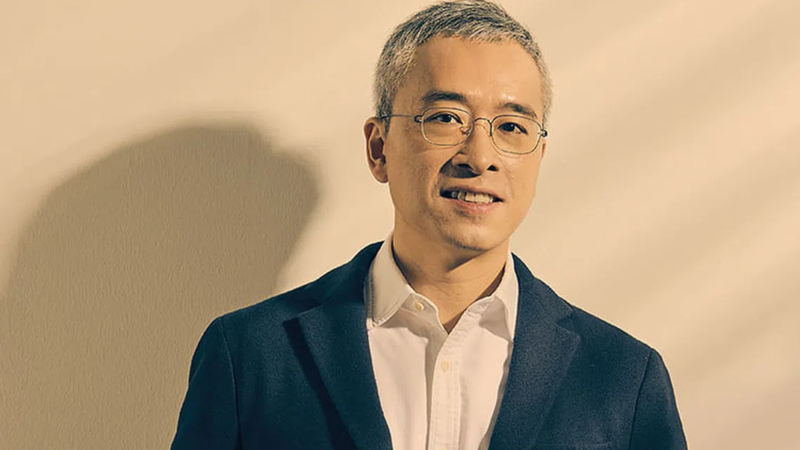
Gerald Goh
You're reading Entrepreneur Asia Pacific, an international franchise of Entrepreneur Media.
Sygnum, the regulated digital asset bank bridging Asia and Europe, reports strong momentum in institutional crypto adoption across Asia, driven by recent regulatory clarity in the United States. Gerald Goh, Co-Founder of Sygnum and CEO of Sygnum Asia-Pacific, highlights growing confidence among high-net-worth investors, with double-digit allocations to digital assets becoming increasingly common.
Founded in 2017 in Singapore and Switzerland, Sygnum was designed as a fully regulated digital asset bank connecting two of the world’s leading financial hubs. “Our vision from the start was to empower everyone everywhere to own digital assets with complete trust,” said Mr. Goh. By establishing operations in both Singapore and Switzerland, Sygnum strategically positioned itself to serve Europe via Switzerland and Asia-Pacific via Singapore, leveraging the regulatory foresight of both jurisdictions.
Despite crypto market volatility, demand from Asian high-net-worth individuals remains strong. Sygnum’s latest survey of over 200 Asian HNWIs reveals that the majority now hold digital assets, with typical allocations ranging from 10% to 20% of their portfolios. “For the first time, non-adopters are in the minority. Investors who already hold crypto intend to maintain or increase their allocations,” said Goh.
The report also highlights a shift in investor priorities: custody, security, and counterparty risk now rank above return expectations, reflecting lessons learned from past exchange failures. Many respondents view Bitcoin as a store of value and a hedge against currency debasement, while still recognizing market volatility.
Mr. Goh emphasized the long-term potential of digital assets: “While volatility will remain, the long-term trajectory of digital assets remains intact. The tokenization of real-world assets and the broader application of distributed ledger technology will drive a multi-decade trend in financial services.”
Sygnum serves high-net-worth individuals, family offices, institutional investors, and corporates across Asia, while also partnering with regulated financial institutions for B2B and B2B2C offerings. Singapore functions as Sygnum’s regional hub, with clients also located in Malaysia, Indonesia, Hong Kong, and other parts of Asia.
About Sygnum
Sygnum is a fully regulated digital asset bank with operations in Switzerland and Singapore. It provides innovative solutions for digital asset investment, custody, and tokenization, serving both institutional and high-net-worth clients. Sygnum bridges the gap between traditional finance and the digital asset ecosystem, offering trust, security, and global connectivity.
Sygnum, the regulated digital asset bank bridging Asia and Europe, reports strong momentum in institutional crypto adoption across Asia, driven by recent regulatory clarity in the United States. Gerald Goh, Co-Founder of Sygnum and CEO of Sygnum Asia-Pacific, highlights growing confidence among high-net-worth investors, with double-digit allocations to digital assets becoming increasingly common.
Founded in 2017 in Singapore and Switzerland, Sygnum was designed as a fully regulated digital asset bank connecting two of the world’s leading financial hubs. “Our vision from the start was to empower everyone everywhere to own digital assets with complete trust,” said Mr. Goh. By establishing operations in both Singapore and Switzerland, Sygnum strategically positioned itself to serve Europe via Switzerland and Asia-Pacific via Singapore, leveraging the regulatory foresight of both jurisdictions.
Despite crypto market volatility, demand from Asian high-net-worth individuals remains strong. Sygnum’s latest survey of over 200 Asian HNWIs reveals that the majority now hold digital assets, with typical allocations ranging from 10% to 20% of their portfolios. “For the first time, non-adopters are in the minority. Investors who already hold crypto intend to maintain or increase their allocations,” said Goh.

Entrepreneur Staff • Editor
Entrepreneur Staff
For more than 30 years, Entrepreneur has set the course for success for millions of... Read more