What Tech Founders Must Know About the Sachet Economy in Asia
For years, products packaged in bite-sizes have been marketed as a strategy to increase trials and actual market penetration, especially among the underprivileged in emerging markets
Pixabay
Opinions expressed by Entrepreneur contributors are their own.
You're reading Entrepreneur Asia Pacific, an international franchise of Entrepreneur Media.
In the Philippine capital Manila, high-rise construction workers, on their break, troop to a sari-sari store (usually a roadside shack and the last mile in the distribution of commodities) to buy their favorite energy tonic, accompanied by literally two cents (or 1 Peso) worth of HAPPY peanuts, a colorful small plastic sachet containing just enough nuts to go from hand to mouth.
Meanwhile, Indonesian travellers, out of a survivalist instinct likely, carry anything from sacheted sambal (chili sauce) to sacheted three-in-one coffee everywhere they would go around the globe. From Sumatra to Irian Jaya, everything, from shampoo to jamu (herbal medicinals) to those aromatic kretek (clove) cigarettes, everything can be bought on single-use terms or packets.
In India, one can keep his pre-paid mobile phone service going by topping up even 10 Rupees (15 US cents). Single serve shampoo sachets in India makes up more than 95 per cent of industry sales in units and constitute 60 per cent of sales value.
Sacheted products have long been part of Indian culture, which is also believed to have pioneered the bite-sizing of consumers products and commodities some 70 years ago, beginning with tea, of course, in small paper pouches tucking precious leaves just enough to make tea for two.
With sacheted coffee, teas, cellphone credits, detergent, toothpaste, spices and snacks everywhere, one wonders whether the sachetisation of the emerging markets is a matter of lifestyle or necessity.
For several decades now, products packaged in bite-sizes have been marketed by firms as a strategy to increase trials and actual market penetration and distribution, especially among the masses of underprivileged in emerging markets.
The sachet has become an important delivery device for reaching untapped markets, but according to research by India Institute of Management Calcutta’s Professor Ramendra Singh together with University of Macau’s Joseph Sy-Changco and Rodolfo Ang, there are many other factors apart from affordability that has made “Buying Less, More Often” pervasive in India and other developing economies across Asia:
Affordability and Low Transaction Costs
Surely availing of products in sachets comes at the lowest price points for consumers, allowing them to purchase just enough quantities of the products at a time they need it most. When, for example, they need the sugar rush for example from a 200ml bottle of Cola.
Greater Economy, Savings
While there are perils of buying products on a sacheted basis, consumers are well aware of this anyhow and easily do the math — products in single-serve packs will have higher unit cost compared to large pack sizes. This actually results in reducing their usage volumes or consumption.
Wiser Use, Less Waste
Large-size packs, on the other hand, are more difficult to control and more prone to spillage and notoriously expiration. These reduced wastages further reduce the unit cost of the sachet.
Greater Control, Right Amounts
How strong should coffee be? What’s the right mix of sugar and creamer? Sacheted coffee gives us just the perfect portions. There are also, of course, the real benefits of consuming less of a product, especially when a product poses serious risks to one’s health. Like cigarettes. And so people are able to purchase their cigarettes in packs of fewer sticks or even by the stick, on the advice of either the surgeon general or the taxman.
Portability, Storage, Lifestyle
Large packs take up the precious little space left in a small household or apartment. But also, the sachets are lighter and therefore, greater portability makes it just a very attractive proposition not just for the lower classes but to most people, especially the young, active and mobile generation. It is no wonder sachet packaging is made extremely eye-catching, attractive, and compelling to carry.
The Sachetisation of Banking and Finance
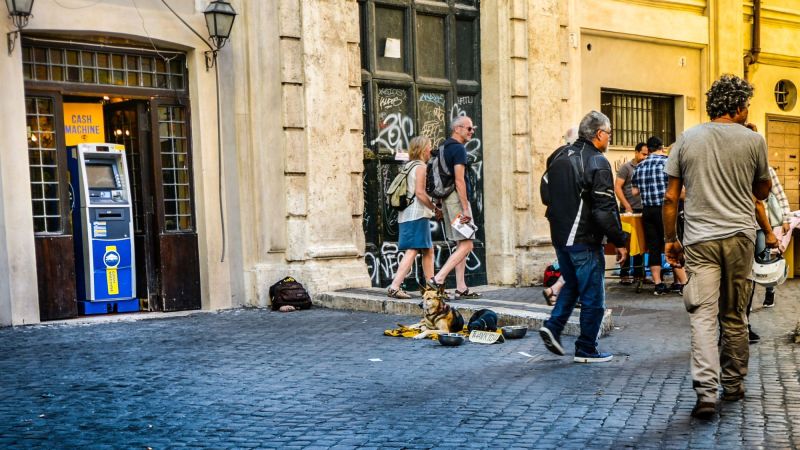
When you think about it, it actually began with ATMs. Those robot tellers that allow us to skip both a trip and the long lines at a bank, eliminating transaction costs in withdrawing small amounts of cash, more often.
While sachet banking may sound like an awkward term (an oxymoron even, considering how delicate the balance is between ultra convenience and the necessary consideration of risks in banking), and while it may not be as evident, the sachetisation of financial products is already happening it would seem, given the rise of fintech firms providing insurance protection.
Insurance protection that even daily-wage construction workers, risking life and limb high atop towering building sites, may troop down to the neighborhood sari-sari store for. In this view, the region’s founders ought to take note: Fin-tech is the future because it is now increasingly rooted in the sachet economy of the past, offering value to Asian consumers in just the right size.
In the Philippine capital Manila, high-rise construction workers, on their break, troop to a sari-sari store (usually a roadside shack and the last mile in the distribution of commodities) to buy their favorite energy tonic, accompanied by literally two cents (or 1 Peso) worth of HAPPY peanuts, a colorful small plastic sachet containing just enough nuts to go from hand to mouth.
Meanwhile, Indonesian travellers, out of a survivalist instinct likely, carry anything from sacheted sambal (chili sauce) to sacheted three-in-one coffee everywhere they would go around the globe. From Sumatra to Irian Jaya, everything, from shampoo to jamu (herbal medicinals) to those aromatic kretek (clove) cigarettes, everything can be bought on single-use terms or packets.
In India, one can keep his pre-paid mobile phone service going by topping up even 10 Rupees (15 US cents). Single serve shampoo sachets in India makes up more than 95 per cent of industry sales in units and constitute 60 per cent of sales value.

Jeanlie Añonuevo • Financial Planner, FWD Life Philippines
Jeanlie is a financial planner at FWD Life Philippines and an independent real estate agent... Read more