Built In Crisis: Why Some Companies Learn to Thrive In Uncertainty
While crises derail many established businesses, they can also teach young companies how to adapt and thrive. The real challenge is turning early survival lessons into a lasting advantage.
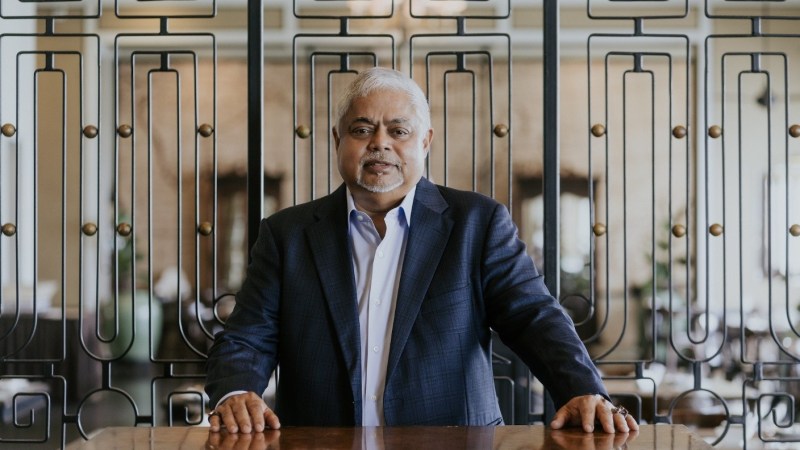
Vijay Eswaran
Opinions expressed by Entrepreneur contributors are their own.
You're reading Entrepreneur Asia Pacific, an international franchise of Entrepreneur Media.
Companies born during economic upheaval face an unforgiving test from the start. But the habits they develop to survive during those early stages may leave them better prepared when the next disruption arrives.
Vijay Eswaran and his partners founded what became QI Group in 1998, in the aftermath of the Asian financial crisis. Regional currencies had collapsed, credit was scarce and confidence across Southeast Asia had been badly shaken. “There were times, when we first started, when we couldn’t pay salaries,” Eswaran recalls.
Nearly three decades later, QI has grown into a multinational group with more than 2,000 employees across 30 countries and businesses spanning social commerce, education, travel and leisure and luxury products.
Along the way, it has weathered the dot-com collapse, the 2008 global financial crisis, geopolitical disruption in various markets and the COVID-19 pandemic. Its experience raises a broader question: do companies built in uncertainty learn to approach the next crisis differently?
Turning adaptability into a way to thrive
There is no simple relationship between adversity and success. Surviving one crisis provides no guarantee of surviving another. But prolonged uncertainty can force organizations to learn something that businesses born in easier times may not realize until much later: stability cannot be assumed.
For Eswaran, that idea is captured in three words: adapt, adjust and accommodate. It is a deceptively simple philosophy. Adaptability requires leaders to recognize when circumstances have changed enough to challenge assumptions that once seemed certain. It means knowing what to preserve, what to abandon and where to keep investing when the instinctive response may be to retreat.
Some of QI’s development reflects that thinking.
Its move into Swiss watchmaking, for example, grew from a vulnerability. The Group’s direct-selling business had introduced watches that incorporated commemorative coins, but dependence on external suppliers for critical components became increasingly risky. QI responded through backward integration, acquiring Swiss watchmaker Cimier in 2006.
The decision illustrates a tension confronting many businesses. Companies spend years pursuing efficiency through leaner operations, concentrated suppliers and tighter systems. In stable conditions, that can create significant advantages. But efficiency and resilience are not always the same thing.
A business optimized around the assumption that tomorrow will resemble yesterday can become vulnerable when unexpected changes occur. Sometimes resilience requires accepting greater complexity today in exchange for greater control tomorrow.
Taking a long-term view
QI’s move into education involved a different calculation.
In 2011, Quest International University was established in Ipoh, Malaysia. As Eswaran recalls, the investment faced resistance from half of his board because of the financial commitment involved. He proceeded nevertheless, viewing education as a long-term investment.
The lesson is not that leaders should ignore opposition or pursue every contrarian idea. Rather, difficult periods make the distinction between cost and investment especially consequential. Protect too little and a company may not survive the present. Protect too much and it may compromise its future.
Research into corporate performance during downturns reinforces the point. Ranjay Gulati, Nitin Nohria and Franz Wohlgezogen of the Harvard Business School studied 4,700 public companies across three recessions. Only around 9% emerged from these downturns in stronger shape. The strongest performers did not simply make the most cuts. Instead, they combined operational discipline with continued investment in areas capable of producing future growth.
Managing perceptions
Not every crisis arrives through financial markets.
QNET, QI’s social commerce business based on the direct-selling business model, operates in an industry that has long faced challenges around public understanding and perception. Eswaran has spoken openly about the controversies and reputational challenges the business has encountered.
That experience demonstrates another dimension of resilience. Sometimes the challenge is not a recession, pandemic or supply shock, but reputation, regulation or the gap between how an organization sees itself and how others perceive it. Leadership in those circumstances requires more than defending an established position. It requires listening, adapting and recognizing that credibility ultimately depends on behavior.
Sharing the load
As organizations grow, adaptability cannot remain the founder’s responsibility alone. Because of this, Eswaran has consistently emphasized developing leaders from within and building teams around trust, loyalty and integrity. “People make companies, not buildings,” he says.
This becomes especially critical during disruptions. The people closest to customers, regulators and individual markets may recognize change before executives at headquarters. If every significant decision has to go all the way up the chain of command before action begins, an organization can identify a problem correctly and still respond too slowly.
Resilience therefore depends not only on decisive leadership at the top, but on whether leaders have built an organization capable of responding when they themselves do not have all the answers.
Making repeated disruption an advantage
There is a danger in romanticizing adversity. Crises destroy viable companies, jobs and livelihoods. Being founded during difficult conditions doesn’t provide immunity against failure.
But repeated disruption can expose weaknesses that periods of stability allow organizations to ignore. It reveals when decision-making is too concentrated, tests whether people have genuinely been empowered and forces businesses to distinguish between fundamental principles and practices that have simply become familiar.
Markets will shift, technologies will innovate and political events will disrupt operations. Another crisis will eventually arrive, probably in a form few executives predicted. The companies best prepared for it may simply be the ones that used previous disruptions to learn how to change.
Companies born during economic upheaval face an unforgiving test from the start. But the habits they develop to survive during those early stages may leave them better prepared when the next disruption arrives.
Vijay Eswaran and his partners founded what became QI Group in 1998, in the aftermath of the Asian financial crisis. Regional currencies had collapsed, credit was scarce and confidence across Southeast Asia had been badly shaken. “There were times, when we first started, when we couldn’t pay salaries,” Eswaran recalls.
Nearly three decades later, QI has grown into a multinational group with more than 2,000 employees across 30 countries and businesses spanning social commerce, education, travel and leisure and luxury products.
Covers capital flows, market structures, and the strategic thinking behind cross-border enterprises.