The Yen’s Slide: Boon for Exporters, Burden for Japan and a Ripple Across Asia
For Japan’s export-driven industries — cars, semiconductors, and machinery — the weaker yen is delivering a clear boost.
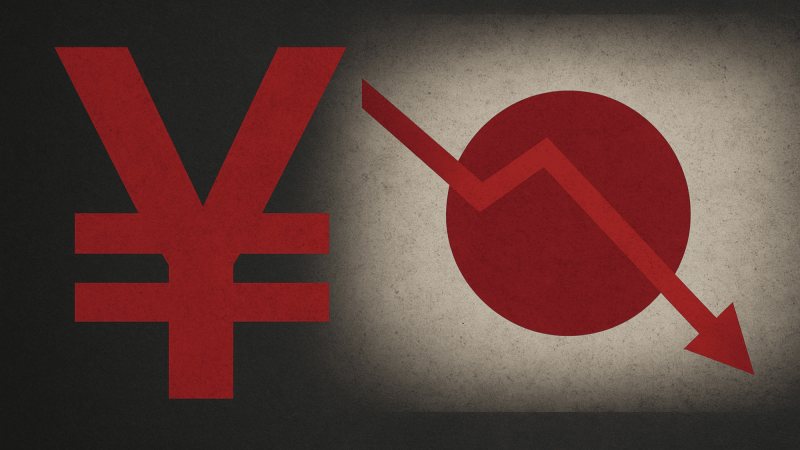
Representative Image
You're reading Entrepreneur Asia Pacific, an international franchise of Entrepreneur Media.
Japan’s currency has been in free fall, and the impact is echoing across Asia. While a weaker yen is proving a windfall for exporters, it’s also eroding household spending power and complicating policymaking in the world’s fourth-largest economy.
A Currency in Crisis
Japanese yen has lost nearly 15% against the U.S. dollar this year, trading around ¥160 per dollar — levels unseen since the late 1980s. The fall is driven by a yawning interest-rate gap between Japan and the U.S., where the Federal Reserve’s benchmark rate stands above 5%, while the Bank of Japan (BoJ) still clings to near-zero policy.
Japan’s trade data reflects the currency’s double-edged impact. In April 2025, the country logged a ¥462.5 billion ($3 billion) trade deficit, with imports surging 8.3% year-on-year to ¥9.44 trillion, while exports rose at the same pace to ¥8.98 trillion, according to Kyodo News.
Exporters Cheer, Importers Groan
For Japan’s export-driven industries — cars, semiconductors, and machinery — the weaker yen is delivering a clear boost. Exports jumped 13.5% year-on-year in May, the fastest growth since late 2022, The Japan Times reported.
“A weaker yen is a plus for exporters,” said Ryotaro Tsuchiya, economist at Mizuho Securities, in a note quoted by AJOT. “The translation gains for automakers and precision-tool producers are significant.”
Yet that gain is someone else’s pain. Importers and domestic manufacturers dependent on foreign raw materials and energy are facing severe margin pressure. “We have been unable to pass on higher prices of imported materials and energy to customers,” one manufacturer told Japan News in a recent survey.
Policy Headache for the Bank of Japan
The IMF recently noted that on balance, the weak yen benefits Japan’s growth, given its export-oriented economy. “Japan is a very outward-oriented and open economy … the yen depreciation on net benefits growth,” said Nada Choueiri, head of the IMF’s Japan mission, in an interview with Reuters.
However, she cautioned that the side effects — especially imported inflation — must be monitored closely. Japan’s core inflation is hovering near 2.8%, slightly above the BoJ’s target, as imported fuel and food costs surge.
The central bank’s dilemma is stark: raising rates could stem the yen’s fall but also risk stalling Japan’s fragile recovery from recession. The country slipped behind Germany earlier this year to become the world’s fourth-largest economy, according to The Guardian.
Not All Gains Are Real
Economists warn that while export values look strong, volumes tell a weaker story. The Development Bank of Japan found that export volume fell 1.7% year-on-year for three straight months earlier this year, suggesting much of the export growth is price-driven rather than volume-led.
“Japan’s exports are bound to struggle as the global economy fails to pick up momentum,” said Takeshi Minami, chief economist at Norinchukin Research Institute, in a note quoted by CNBC.
Ripple Effects Across Asia
The yen’s slump is rippling across Asia, especially in export-competitive markets. Indian auto-part suppliers and Korean electronics firms are watching closely as Japan’s cheaper exports threaten to undercut regional peers.
For India, the yen’s decline is a double-edged trend: it could help curb import costs of Japanese machinery and capital goods, but also heighten competition for its exporters in global markets.
The Balancing Act Ahead
Japan’s policymakers now face a delicate balance — nurturing export-led growth without letting the currency collapse further. Analysts expect the BoJ to allow modest policy normalization later this year if inflation stays sticky.
“The yen’s weakness gives Japan a short-term trade edge but long-term vulnerabilities,” said Mariko Suga, senior economist at Nomura Research Institute. “If households lose purchasing power faster than exporters gain, the economy will feel the pinch.”
Bottom Line
The yen’s fall is a paradox: it’s helping Japan’s big exporters thrive while straining its domestic economy and households. Unless the BoJ can carefully steer between inflation and growth, Asia’s oldest industrial powerhouse risks trading one imbalance for another.
Japan’s currency has been in free fall, and the impact is echoing across Asia. While a weaker yen is proving a windfall for exporters, it’s also eroding household spending power and complicating policymaking in the world’s fourth-largest economy.
A Currency in Crisis
Japanese yen has lost nearly 15% against the U.S. dollar this year, trading around ¥160 per dollar — levels unseen since the late 1980s. The fall is driven by a yawning interest-rate gap between Japan and the U.S., where the Federal Reserve’s benchmark rate stands above 5%, while the Bank of Japan (BoJ) still clings to near-zero policy.
Japan’s trade data reflects the currency’s double-edged impact. In April 2025, the country logged a ¥462.5 billion ($3 billion) trade deficit, with imports surging 8.3% year-on-year to ¥9.44 trillion, while exports rose at the same pace to ¥8.98 trillion, according to Kyodo News.

Entrepreneur Staff • Editor
Entrepreneur Staff
For more than 30 years, Entrepreneur has set the course for success for millions of... Read more