DBS Group’s Wealth Push Crosses Half-Trillion Mark as Record Profit Lifts Outlook
Singapore’s largest bank raised its 2026 income forecast after fees, treasury sales and trading income offset the pressure from lower lending margins.
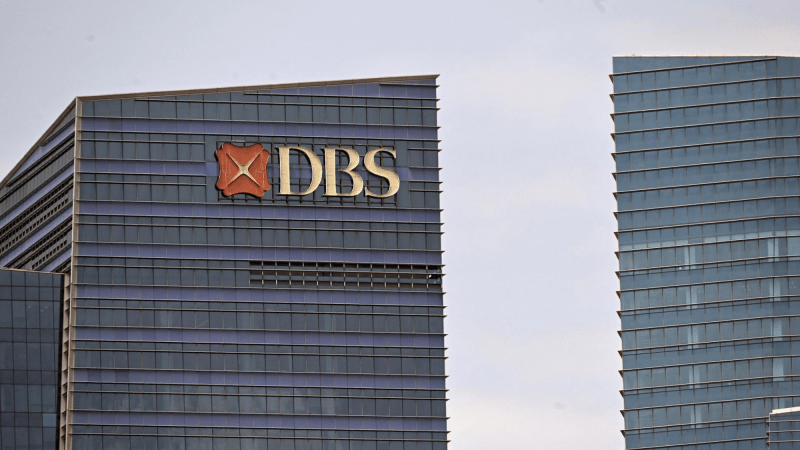
DBS
Disclosure: Our goal is to feature products and services that we think you'll find interesting and useful. If you purchase them, Entrepreneur may get a small share of the revenue from the sale from our commerce partners.
You're reading Entrepreneur Asia Pacific, an international franchise of Entrepreneur Media.
DBS Group raised its full-year income outlook after delivering its strongest quarterly profit, as the wealth strategy it has been building around existing customers began to show more clearly in group earnings.
The Singapore bank posted net profit of S$3.08 Bn for the three months ended June 2026, up 9% from a year earlier, while total income rose 6% to S$6.09 Bn. It was the first time DBS crossed S$6 Bn in quarterly revenue, giving the bank room to improve guidance even as the interest rate backdrop turned less favourable.
That rate pressure remains the central test. DBS’s net interest margin narrowed to 1.87% from 2.05% a year earlier, reducing what the bank earns from the spread between loans and funding costs. Net interest income fell 2% to S$3.58 Bn, a reminder that the earnings tailwind from higher rates is fading.
The quarter mattered because DBS did not need lending margins to widen in order to grow. Customers were investing more through the bank, buying more bancassurance products, using more treasury services and trading through volatile markets. Those activities lifted non-interest income enough to turn what could have been a margin-squeeze quarter into a record result.
Wealth management was the strongest signal. Fees from the business rose 42% to a record S$919 Mn, while assets under management (AUM) in the wealth segment climbed to S$516 Bn, crossing the half-trillion mark for the first time.
That milestone gives new weight to DBS’s broader ambition to manage more than S$1 Tn across its retail and wealth businesses by 2030.
The plan is not simply to win more ultra-rich clients from outside the bank. It also depends on identifying rising wealth inside DBS’s own customer base and then moving retail, affluent and private-banking customers into deeper investment, insurance, advisory and treasury relationships as their financial needs become more complex.
The most recent quarter indicates that the pipeline is starting to have a real impact. A customer who previously earned income primarily through deposits, credit cards, or a mortgage can now become an investment client. A business owner may borrow from DBS, maintain operating balances with the bank, hedge against currency exposure, utilise transaction services and later seek advice on wealth management or succession planning.
DBS refers to this as its “One Bank” approach, as a single customer relationship encompasses lending, transaction banking, treasury services and wealth advice, creating multiple income streams rather than relying on just one.
The effect extended beyond wealth fees. Treasury sales to wealth and corporate customers rose 30% to S$681 Mn, while markets trading income increased 12% to S$469 Mn. The markets business also recorded its strongest first-half performance in five years, helped by volatility and lower funding costs.
DBS still used the balance sheet to cushion the rate cycle. Loans grew 8% in constant-currency terms to S$469 Bn, led by large corporate borrowers, while deposits rose 11% to S$638 Bn. Current and savings account balances accounted for about three-quarters of the deposit increase, helping the bank preserve a lower-cost funding base as margins narrowed.
The stronger earnings mix allowed DBS to lift its outlook. The bank now expects 2026 total income to exceed last year’s record S$22.9 Bn, instead of staying broadly in line with 2025. It also raised its forecast for commercial-book non-interest income growth to the mid-teens, led by wealth management, and expects group net interest income to close more of the gap with last year’s level than previously indicated.
Chief executive officer Tan Su Shan said the first-half performance was anchored by the strength of the wealth franchise, which pushed wealth AUM past S$500 Bn for the first time. She also pointed to institutional banking, markets trading and balance-sheet management as contributors to the record result.
For the first six months, DBS reported net profit of S$6.01 Bn, up 5%, while total income rose 3% to S$12.04 Bn. Net interest income declined over the period, but fee income and treasury customer sales grew 20% each, suggesting the second-quarter result reflected a broader shift in revenue composition rather than a single strong line item.
The bank’s operating metrics remained steady. Expenses rose 3.4% in the quarter to S$2.35 Bn, slower than income growth, keeping the cost-income ratio at 39%. Return on equity improved to 17.9% from 16.7% a year earlier.
Credit quality showed little strain. Its non-performing loan ratio stayed at 1%, while specific allowances stood at S$188 Mn, or 16 basis points of loans. DBS expects specific allowances to run between 17 and 20 basis points in the second half, with general-provision reserves providing a buffer against economic and geopolitical risks.
Capital remained above regulatory requirements. DBS reported a common equity Tier 1 ratio of 16.6% under transitional arrangements, or 14.6% on a fully phased-in basis. The board declared an ordinary dividend of 66 Singapore cents a share and a capital-return dividend of 15 cents, taking the second-quarter payout to 81 cents.
The upgraded outlook gives DBS momentum for the rest of the year, but it also sharpens the test. The bank’s record quarter was not built on wider lending spreads. It came from a broader earnings engine that now has to keep expanding as the rate cycle becomes less generous.
DBS Group raised its full-year income outlook after delivering its strongest quarterly profit, as the wealth strategy it has been building around existing customers began to show more clearly in group earnings.
The Singapore bank posted net profit of S$3.08 Bn for the three months ended June 2026, up 9% from a year earlier, while total income rose 6% to S$6.09 Bn. It was the first time DBS crossed S$6 Bn in quarterly revenue, giving the bank room to improve guidance even as the interest rate backdrop turned less favourable.
That rate pressure remains the central test. DBS’s net interest margin narrowed to 1.87% from 2.05% a year earlier, reducing what the bank earns from the spread between loans and funding costs. Net interest income fell 2% to S$3.58 Bn, a reminder that the earnings tailwind from higher rates is fading.