ASEAN in the age of China +1
ASEAN’s next phase of growth will depend on how it navigates supply-chain shifts, investment flows, and superpower competition
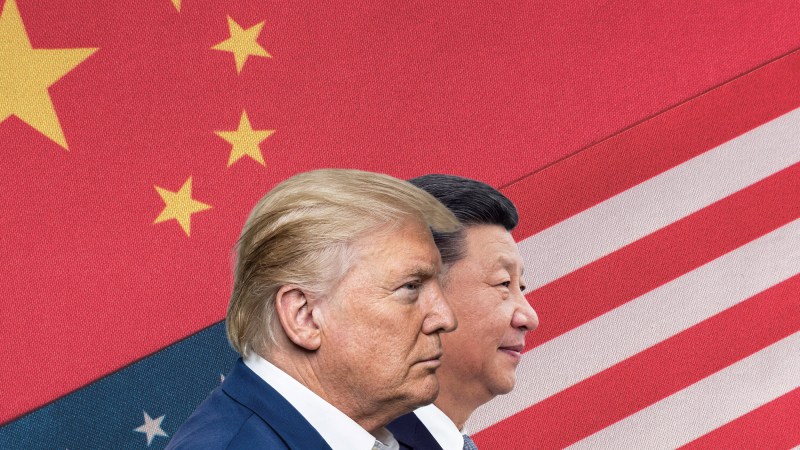
US President Donald Trump and Chinese President Xi Jinping
Disclosure: Our goal is to feature products and services that we think you'll find interesting and useful. If you purchase them, Entrepreneur may get a small share of the revenue from the sale from our commerce partners.
You're reading Entrepreneur Asia Pacific, an international franchise of Entrepreneur Media.
The summit between US President Donald Trump and China’s Premier Xi Jinping, held over two days – May 14, 15, 2026, in Beijing was held under intense scrutiny. A powerhouse of US companies’ CEO attended the crucial summit along with Trump in the backdrop of a series of tariffs and counter-tariffs.
The question is – what did this summit achieve?
JP Morgan in its recent commentary on the meeting said that the United States-China summit is not about a reset; it is about whether the world’s two largest economies can make a fragile relationship more manageable.
The strong undercurrents of the strains, most recently on the tariff war, was felt. The global equity markets bubbled up – anywhere 0.6% to 1.8% – anticipating healthy commentary during a time when the multilateral ties and trade is being roiled by US-Israel war against Iran. The markets expected concrete steps on easing global trade barriers, but there was little to cheer and markets recoiled.
The most important aspect of the summit was that the strategic rivalry did not fray the fragile fabric further, but maintained the canvas, to a large extent.
This calibrated summit was closely watched by the ASEAN bloc and it was a sigh of relief when there were no major disruptions, at least not yet. The summit produced very modest substance, but it also did not damage Southeast Asian exporters by the two giants making a trade deal that cut out Southeast Asian states. Prior to the summit, that was one of Southeast Asian states’ biggest worries about what might happen, a global think-tank ‘Council on Foreign Relations’ said.
Managing Rivalry, Not Resolving It
Federico Cuevas, Global Investment Strategist, JP Morgan wrote that the key question is what a new U.S.-China equilibrium looks like. “Engagement for the sake of engagement brings few benefits. Even during the Cold War, rivals cooperated when the cost of no cooperation was too high. For markets, less policy uncertainty would be a constructive signal – especially for global trade, China and broader emerging markets,” he noted.
Looking forward, HSBC pointed to Xi’s confirmed state visit to Washington on 24 September as a key expectations anchor between now and the autumn, alongside APEC in November and the G-20 in December. The firm said this sequence of engagements could translate into a relatively supportive backdrop for Chinese equities through Q3 2026, with Beijing’s invitation to the U.S. setting the stage for more positive bilateral engagements throughout the year.
ASEAN’s Stake in the US-China Chessboard
The Association of Southeast Nations, ASEAN bloc, – comprising of 11 nations are growing in prominence on the world map and it is imperative that the US- China trade is stable and grows. A key aspect of how ASEAN will be influenced in the overall picture is that China’s Belt and Road Initiative, has immense importance across ASEAN and any disruption will be harmful to the ongoing projects.
HSBC Private Bank‘s Investment Strategist for China Lulu Jiang and Chief Investment Officer Desmond Kuang characterised the Beijing summit as an event mixing symbolism with selective progress. The overarching message from both sides, in their assessment, was one of managed rivalry — what Xi framed as “constructive strategic stability” — rather than any structural breakthrough. Even so, they noted the summit appeared to reinforce market expectations that both countries remain focused on preventing renewed escalation in trade and technology competition, which they said would help limit downside sentiment.
Cuevas further added that U.S.-China tensions no longer stop at the bilateral trade channel. “China’s Belt and Road Initiative spans roughly 150 countries, giving Beijing a broad platform for trade, infrastructure and influence across emerging markets. “Recent activity underscores the scale: Chinese engagement across Belt and Road countries reached record levels in 2025, including $128.4 billion in construction contracts and $85.2 billion in investment,” wrote Cuevas.
ASEAN accounts for a good 36% of China’s Belt and Road initiative and so far close to $950 billion has been funnelled towards this bloc and growing.
It is this aspect which can threaten any swings in the US-China relations. “The U.S. is responding through its own strategic lens. The competition is increasingly about infrastructure, supply chains, commodities, technology standards and strategic alignment. For many countries, the challenge is not choosing one side on every issue; it is managing the costs of operating in a more fragmented global system, where investment, trade access and security relationships are increasingly linked. The U.S.-China equilibrium will be felt well beyond the U.S. and China,” Cuevas added.
Cumulatively, ASEAN weighs in with around $4 trillion GDP, spanning a population of 690 million. Its mutual trade with China is tipping over at $1 trillion and its relationship with US has crossed that halfway mark at $570 billion.
The China+1 Opportunity — And Its Limits
According to a recent United Nations’ ‘ASEAN Investment Report 2025’, this bloc has become a major global hub for trade, investment and production. In 2020–2023, it accounted for about 3 per cent of global GDP, more than 9 per cent of merchandise exports and 14 per cent of global FDI inflows, and it hosted more than 80 per cent of the world’s 500 largest multinational enterprises.
“ASEAN’s shares of exports and FDI far exceed its GDP share, underscoring its strong role in global value chains, but also its dependence on international markets and production networks and its vulnerability to supply chain shocks,” the UN report noted.
The ASEAN bloc has been executing a tight rope walk with the US and China. It has benefitted substantially from the famed ‘China+1’ strategy by global manufacturers as the trade war between the US and China ripped through the global markets.
While Vietnam leveraged on electronics assembly, Malaysia strengthened semiconductor positioning; Indonesia jostled on its nickel dominance and Thailand consolidated on its automotive manufacturing. Singapore continued to reign on its financial and logistics expertise. With so much at stake, any disruptions in this tightly choreographed tapestry are bound to feel the strains.
“Southeast Asian and South Asian states had not been sitting still, waiting for the world’s giants to decide their future. Long before Trump’s plane landed in Beijing, governments across the region had been rapidly diversifying their trade and investment partners,” Council on Foreign Relations said.
The European Union recently signed a new pact with Indonesia and is planning to finalize deals with Thailand, Malaysia, and the Philippines by next year. Vietnam, meanwhile, has been pursuing exploratory trade alignments with Mercosur, the South American bloc, as part of a deliberate push to build a massive portfolio of free trade agreements (FTAs). And there is renewed momentum around expanding the number of Southeast Asian states in the Comprehensive and Progressive Agreement for Trans-Pacific Partnership.
But even this diversification will not be enough, given the energy crisis, rare earths shortages, disconnects over AI—and the possibility that the U.S.-China trade truce could break down again. While a truce between the two sides over escalating tariffs remains in place until November 2026, there is no guarantee that a tariff war will not resume, especially with unpredictable leadership in Washington, Council on Foreign Relations noted.
BlackRock, one of largest global asset management majors, said recently that ASEAN stands out for its scale, diversity, and long-term growth potential, and is one of the most dynamic growth engines globally. “At the heart of this opportunity sits Singapore, a pivotal financial hub and strategic gateway to the region,” the fund manager detailed when launching its ASEAN fund during April 2026. BlackRock Chairman and CEO Larry Fink happened to be part of Donald Trump’s delegation to China.
ASEAN’s trade with the US is heavily dependent on Chinese upstream inputs, machinery, industrial components and intermediate goods. What is pertinent here is that ASEAN is not an alternate to China, but an extension of a broader China-linked production architecture.
Navigating the Headwinds Ahead
However, it is certainly not business as usual. “Recent developments in the Middle East are figuring more prominently in conversations than in the US or Europe,” wrote Henry H. McVey, Changchun Hua, Richard Bullock, Allen Liu from another global asset manager KKR. “Rising commodity prices and renewed pressure on supply chains are beginning to create more immediate friction across parts of the region, especially in some of the smaller countries in Southeast Asia,” they added.
The UN report on ASEAN as well highlighted that worldwide, tariff escalations and geopolitical tensions have led to downward revisions of key indicators of FDI prospects, including growth in gross domestic product, capital formation, exports of goods and services, foreign exchange and financial market volatility, and investor sentiment. “Although tariffs have led to some project announcements aimed at restructuring supply chains in manufacturing sectors – a trend with both positive and negative consequences for ASEAN – their main effect has been a dramatic increase in investor uncertainty,” UN noted.
The Foreign Policy Research Institute (FPRI), a think-tank based in the US said the outcomes from the Trump-Xi summit are mixed for Southeast Asia.
“On the one hand, much of the region will hope leader-level engagement can extend a period of temporary stability between the superpowers—as opposed to undesirable extremes of conflict or a G2 condominium—which in turn gives Southeast Asian states space to engage Beijing and Washington while also hedging their bets across wider multi-alignment approaches,” said Prashanth Parameswaran, Senior Fellow at the Foreign Policy Research Institute.
The think-tank further noted that the region can expect to hear more about this dynamic in the next few weeks across major regional engagements including the Shangri-La Dialogue in Singapore and the Association of Southeast Asian Nations (ASEAN) Future Forum in Vietnam.
It may be noted that at the recent ASEAN summit meeting convened by the Philippines, leaders called for urgent measures to strengthen regional resilience, including in energy, supply chains, and macroeconomic policy.
On the other hand, much of the region will also keep the development in perspective given that it is unlikely to change the long-term structural competitive dynamics between China and the United States. Singapore Prime Minister Lawrence Wong captured a sentiment often heard from officials in the region when he said that the Trump-Xi engagements dominating 2026 ought to be viewed at best as part of a “temporary truce” to establish “guardrails” around the relationship even as “the rivalry” remains.
“Looking ahead, Southeast Asian states will also be assessing how evolving US-China summitry is affecting US China policy, US–Southeast Asia ties, and implications for regional economic prospects. Some Southeast Asian countries have already been included in the Trump administration’s economic initiatives, be they Malaysia and Thailand, which signed critical mineral pacts with Washington, or the Philippines and Singapore, which are part of the “Pax Silica” umbrella,” Parameswaran added.
But the region has also seen the more coercive side of US policies, including tariff imposition and scam center sanctions. As such, much of Southeast Asia will be carefully assessing datapoints during the second half of 2026 including US-China engagement at the next round of ASEAN summitry as well as US-China twin hosting of the G-20 and the Asia-Pacific Economic Cooperation, respectively, the think-tank noted.
The summit between US President Donald Trump and China’s Premier Xi Jinping, held over two days – May 14, 15, 2026, in Beijing was held under intense scrutiny. A powerhouse of US companies’ CEO attended the crucial summit along with Trump in the backdrop of a series of tariffs and counter-tariffs.
The question is – what did this summit achieve?
JP Morgan in its recent commentary on the meeting said that the United States-China summit is not about a reset; it is about whether the world’s two largest economies can make a fragile relationship more manageable.