Brendan Gow on Why Southeast Asia Matters to the Next Chapter of Capital Haus
Capital Haus is looking closely at Southeast Asia through the lens of investment management, funds management, and media, rather than positioning the region as a straightforward advisory expansion.
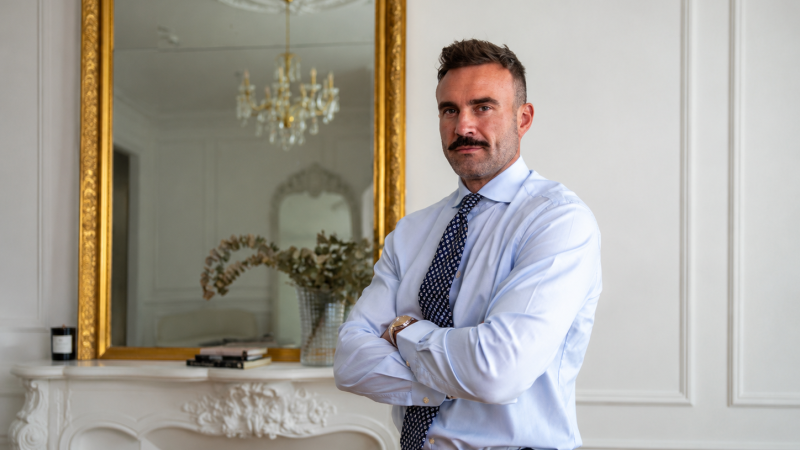
Brendan Gow
Opinions expressed by Entrepreneur contributors are their own.
You're reading Entrepreneur Asia Pacific, an international franchise of Entrepreneur Media.
Financial services expansion is often discussed as though geography alone creates opportunity. It does not. A firm can study a region, open conversations, and identify commercial potential, but the real test is whether it understands the market well enough to earn relevance before seeking scale.
For Brendan Gow, Southeast Asia represents that kind of opportunity for Capital Haus. It is not a market to rush into with loud claims. It is a region to approach with patience, respect, and a clear understanding of how investment management, funds management, and media are changing across Asia-Pacific.
Southeast Asia is not one market with one investor profile. Singapore, Thailand, Indonesia, Vietnam, Malaysia, the Philippines, and the wider region each carry their own regulatory expectations, capital flows, family structures, and commercial rhythms. What connects them is momentum. Private capital is becoming more sophisticated, wealth is becoming more mobile, and business owners are increasingly thinking beyond domestic structures when considering investment, succession, and long-term growth.
Brendan’s interest in the region is shaped by the way he has built Capital Haus from Australia. Founded in Sydney in 2019, the firm began with 15 clients and about $5 million in assets under management. It has since grown to approximately $1.2 billion across roughly 7,000 clients and 65 staff. The company now spans stockbroking, private wealth management, financial advice, portfolio management, funds management, accounting, corporate advisory, corporate finance, research, media, and philanthropy.
The Australian foundation matters. Australia is a mature financial services market with deep professional standards, active capital markets, and a strong base of entrepreneurs, family wealth, and internationally minded investors. For Capital Haus, Southeast Asia is not separate from that story. It sits naturally beside Australia as part of a broader regional conversation about capital, investment access, business growth, and financial education.

For Brendan, the opportunity is not only about extending Capital Haus’s footprint. It is about understanding where the firm may be able to contribute over time. Capital Haus is looking closely at Southeast Asia through the lens of investment management, funds management, and media, rather than positioning the region as a straightforward advisory expansion. This distinction is important. It keeps the focus on long-term market participation, not premature claims.
Capital Haus is also careful about how it approaches regulatory environments. In financial services, ambition means very little without process, patience, and respect for local frameworks. Southeast Asia has earned global attention because many of its markets have developed stronger financial ecosystems, more sophisticated investor communities, and increasingly important roles in regional capital formation. A serious firm entering conversations in the region must recognise that strength rather than speak as though it is arriving to fill a gap.
This is where Capital Haus believes its broader model may become relevant. Its philosophy, Global Vision, Local Insight, reflects the idea that financial services should understand global movement while respecting local context. In Southeast Asia, that balance is essential. A firm cannot credibly discuss regional growth while ignoring the differences between markets, regulators, investors, and institutions.
The media element is also becoming more important. Through IHM, its in-house media division, Capital Haus has built a capability that sits beyond traditional advice. In modern finance, communication is not simply branding. It can shape investor understanding, support education, and explain complex market themes with greater clarity. For Brendan, media can support trust when it is backed by substance, consistency, and responsibility.
This gives the Southeast Asia conversation a different shape from previous chapters in the Capital Haus story. This is not a story about a completed launch or a licence announcement. It is about how an Australian financial services group is studying where the region is heading and how it may participate in a way that is useful, respectful, and commercially disciplined.
For Brendan Gow, Southeast Asia matters because it reflects the future of wealth in Asia-Pacific. Capital, families, founders, and institutions are moving across borders with more complexity than traditional financial models were built to serve. Australia remains central to the Capital Haus identity, but the next phase of the business is increasingly regional in its thinking.
The next chapter of financial services in Asia-Pacific will likely favour firms that combine technical capability with cultural awareness, regulatory patience, and long-term commitment. Southeast Asia does not need louder outsiders. It deserves serious participants who understand the quality of the market they are engaging with.
Capital Haus is still assessing how best to approach that future. Its interest in Southeast Asia reveals a measured strategic direction: build from Australia, respect the region, study opportunities in investment management, funds management, and media, and earn the right to grow before trying to claim it.
Financial services expansion is often discussed as though geography alone creates opportunity. It does not. A firm can study a region, open conversations, and identify commercial potential, but the real test is whether it understands the market well enough to earn relevance before seeking scale.
For Brendan Gow, Southeast Asia represents that kind of opportunity for Capital Haus. It is not a market to rush into with loud claims. It is a region to approach with patience, respect, and a clear understanding of how investment management, funds management, and media are changing across Asia-Pacific.
Southeast Asia is not one market with one investor profile. Singapore, Thailand, Indonesia, Vietnam, Malaysia, the Philippines, and the wider region each carry their own regulatory expectations, capital flows, family structures, and commercial rhythms. What connects them is momentum. Private capital is becoming more sophisticated, wealth is becoming more mobile, and business owners are increasingly thinking beyond domestic structures when considering investment, succession, and long-term growth.
Writes on advanced manufacturing, automation, and the commercial impact of deep technology.