Daily Update: CtrlS Secures ₹7,000 Crore CPP Backing; Gero Reaches $34M Funding; Paladin-Daeheung Rare Earth Pact; Gemstar Plans $422M Debt Raise
Strategic investments, capital raises, critical minerals initiatives, and digital infrastructure expansion continue to drive activity across global markets.

Freepik
Opinions expressed by Entrepreneur contributors are their own.
You're reading Entrepreneur Asia Pacific, an international franchise of Entrepreneur Media.

CTRLS SECURES ₹7,000 CRORE COMMITMENT FROM CPP INVESTMENTS TO SCALE DATACENTER INFRASTRUCTURE IN INDIA
CtrlS Datacenters Wednesday said it has signed a strategic partnership with Canada Pension Plan Investment Board to raise up to INR 7,000 crore (C$1 billion) to help fund CtrlS’ upcoming growth in India’s fast-growing digital infrastructure sector.
As part of the partnership, CPP Investments will invest INR 4,000 crore (C$588 million) to acquire an 8.2% stake in CtrlS.
In addition, CPP Investments and CtrlS will form a joint venture to develop hyperscale datacenter campuses across India. CPP Investments has committed up to INR 3,000 crore (C$441 million) to the joint venture and will hold 48% equity ownership, with CtrlS owning 52%.
The partnership aims to speed up the development of next-generation datacenter infrastructure to meet rising demand from hyperscalers, cloud services, AI applications, and India’s rapidly expanding digital economy.
CtrlS Datacenters, founded in 2007, operates 19 datacenters across nine key markets in India with over 370 MW of capacity and a 4.4 GW of projects at various stages of execution.
Commenting on the partnership, Sridhar Pinnapureddy, Founder & CEO, CtrlS Datacenters, said, “India’s AI moment is not on the horizon, it is already here. The demand signals from hyperscalers, cloud service providers, and enterprises are clear and unmistakable. Over the years, CtrlS has focused on reliability, sustainability, and long-term growth. Our partnership with CPP Investments reinforces these values. Together, we are not merely expanding capacity but also establishing the benchmark for AI-ready infrastructure in one of the world’s most significant digital markets.”
Sridhar added, “This investment reflects the confidence global investors have in CtrlS’ leadership position, execution capabilities, and the significant opportunity ahead.”
“As one of the world’s fastest growing digital markets, India represents an important pillar of our global datacenter strategy,” said Max Biagosch, Senior Managing Director and Global Head of Real Assets at CPP Investments.
“Demand for datacenter infrastructure in India continues to accelerate, driven by hyperscale expansion, strong domestic cloud growth and emerging AI-led demand. This partnership with CtrlS positions us to scale high-quality infrastructure and deliver long-term value for CPP contributors and beneficiaries.”
Biagosch added, “This investment builds on more than a decade of investing in India and the strength of our local platform. With an established presence on the ground, we continue to focus on investing alongside high-quality partners such as CtrlS and executing with discipline over the long term.”
Since making its first direct investment in 2017, CPP Investments has actively invested in the global datacenter sector, building a diversified portfolio of datacenter assets and joint ventures across major international hubs, including Asia Pacific.
CPP Investments made its first investment in India in 2009 and opened its Mumbai office in 2015. As of March 31, 2026, CPP Investments held over INR 1,850 billion (C$27 billion) in net assets in India, making it one of the country’s largest international institutional investors.

SINGAPORE-BASED GERO REACHES $34M IN EQUITY FUNDING
Singapore-based Gero, which previously secured a collaboration with Chugai Pharmaceutical, a member of the Roche Group, including an upfront payment and up to $250M in milestones in addition to royalties, Wednesday announced $17 Million in new financing, bringing total equity funding to $34M.
Gero combines longitudinal human data, AI, and a physics-based aging framework for therapeutic target identification and drug design. Gero’s approach was born from a crucial but underappreciated observation: nature has already achieved dramatic slowing of aging and extremely long healthy life in several complex mammals. While in humans the risk of death roughly doubles every eight years after early adulthood, naked mole-rats, for example, can live about five times longer than expected for their size while showing essentially no increase in mortality risk with age. This observation led Gero to develop a physics-based framework that decodes the underlying physical laws of aging from human data to discover new medicines.
While most of aging-focused biotech pursues reversing or reprogramming aging to restore youthful cell function, Gero’s framework identifies slowing aging itself as a more durable lever on healthspan, functional decline, and lifespan.
The financing included participation from Melnichek Investments, an AI-focused investment firm whose founder was behind AIMatter, acquired by Google and multiple other AI startups acquired by major tech companies; an early backer of a company acquired by Facebook, now Meta; the co-founder of NYSE-listed EPAM Systems; and senior operators from the pharmaceutical and technology sectors.
“Target selection is the critical bottleneck in translating aging biology into medicines, and the field has not lacked ideas, it has lacked human-evidence-grounded targets that pharma is ready to develop,” said Brian K. Kennedy, PhD, Distinguished Professor at the National University of Singapore, former President and CEO of the Buck Institute for Research on Aging, and Independent Director of Gero. “Gero is one of the few groups bringing published aging theory, longitudinal human data, and pharmaceutical-partner validation into a single discovery engine.”
“Gero stands out for grounding discovery in a published, physics-based framework and real human data, and for turning that science into a working platform, which is why I invested,” said Anita Cosgrove, former Senior Vice-President, Strategic Business Development at Human Longevity, Inc., and an investor in Gero.
“Countless molecular events happen every second, both in a naked mole-rat and in us — yet over decades our risk of death doubles every eight years while theirs stays almost flat. That gap is a physics problem. We’ve spent a decade building the theory. What’s changed is that we now have the data — tens of millions of longitudinal health records — and generative AI that can extract the mathematics of aging directly from that data, the way physics has always worked but at a scale and complexity no analytical theory could reach. In aerospace, that level of modelling transformed engineering outcomes. We expect the same in medicine. And aging is the place to start: it’s the shared engine behind virtually every chronic disease, which means slowing it is the highest-leverage intervention in human health,” said Peter Fedichev, PhD, Co-Founder and CEO of Gero.

PALADIN IN STRATEGIC INVESTMENT PACT WITH SOUTH KOREA’S DAEHEUNG FOR RARE EARTH ELEMENTS SUPPLY CHAIN
Paladin Envirotech Wednesday said it has signed a strategic initiative with investor and strategic partner Daeheung M&T, headquartered in Suwon, South Korea, and the expansion of its European operations in Helmond, Netherlands following the acquisition of R&L Recycling, to shore up allied and ex-China rare earth element supply chains.
The announcement marks a step in Paladin’s international growth strategy, bringing total investment in global expansion to $85 million to date
“Globally, there is a clear shift beyond extraction towards building end-to-end, resilient supply chains capable of withstanding geopolitical disruption,” said Luke Wray, VP of Critical Minerals & Defense at Paladin.
“Through our partnerships in South Korea and the Netherlands, we are extending that control across allied markets, ensuring that critical materials are captured, retained, and reintegrated within trusted supply chains. By 2035, demand for magnetic rare earth elements is projected to triple, making this work increasingly urgent.”
The announcements come amid accelerating global alignment on critical materials security. The EU’s Critical Raw Materials Act sets a 2030 target to limit reliance on any single third country to 65% of supply; while US-led partnerships are advancing regional processing, “friend-shored” supply chains and more resilient allied industrial bases.
At the same time, South Korea is advancing a national strategy to reduce import dependence and scale recycling of key materials—including rare earths—through new infrastructure and a strengthened resource security framework.
The strategic initiative with Daeheung M&T directly supports this effort, marking a first-of-its-kind deployment of rare earth magnet recycling capabilities in the country. The partnership will enable the domestic sourcing, aggregation and processing of end-of-life magnet materials—building the logistics and feedstock systems needed to support local refining, an area where South Korea has historically relied on external markets.
“South Korea has long been a leader in advanced manufacturing, but like many nations, it has depended on external supply chains for critical materials,” said Jaehyun Han, Chairman and CEO of Daeheung M&T. “By partnering with Paladin, we are introducing a capability proven through US operations into the Korean market—one that enables domestic recovery and refining of rare earth materials while reducing reliance on imports.”
Daeheung M&T, a 30-year leader in hydrometallurgical processing of precious metal-bearing materials, will work alongside Paladin and CMR to deploy rare earth recycling capabilities into its existing operations, including Paladin and CMR’s proprietary processing technology, technical training, and the development of localized facilities and equipment to support rare earth magnet recovery and recycling at scale.
Beyond initial deployment, the companies will explore commercialization pathways for recovered materials—including processing, refining and distribution within South Korea and into broader allied markets—while collaborating on regulatory engagement, permitting and industry partnerships.
In parallel, Paladin is expanding its European footprint in Helmond, Netherlands, which will serve as a strategic hub for recovering and processing critical materials within the European market, supporting both commercial and defense-aligned supply chains across the region.
“Circular supply chains are a global strategic imperative,” said Brian Diesselhorst, Chief Executive Officer at Paladin Envirotech. “What we are building is an integrated system that keeps high-value materials within allied economies, reduces dependency on adversarial supply chains, and provides a secure, auditable pathway from end-of-life assets back into manufacturing.”
The expansion into South Korea and the Netherlands reflects a broader strategy to establish distributed recovery and processing hubs across the United States and allied nations, aligned with growing demand from hyperscalers, manufacturers and defense contractors seeking secure, closed-loop supply chains at the behest of government and policy initiatives.
SINGAPORE-BASED GIC PLATFORM GEMSTAR INFRA PLANS TO RAISE $422 MILLION DEBT FOR SMART METERS IN INDIA
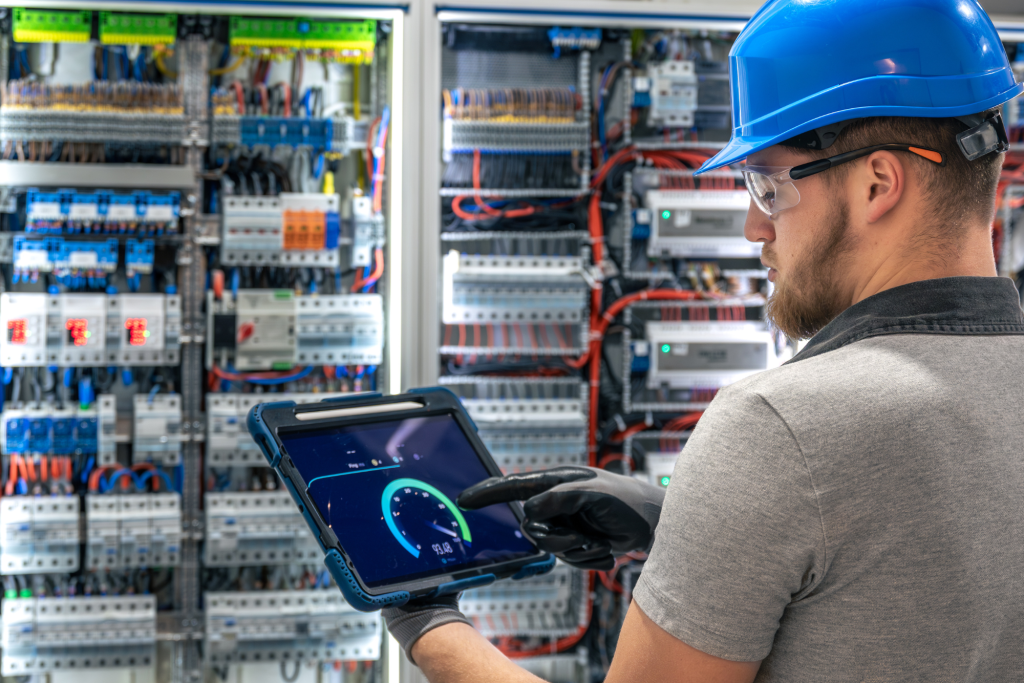
Gemstar Infra is planning to raise $422 million debt for deploying smart meters in Rajasthan.
Gemstar Infra India is a wholly owned subsidiary of Gemstar Infra, a Singapore based company which is a platform between Singapore-sovereign fund GIC and Genus Power Infrastructures Limited.
According to disclosures by the company it will use the funds for installation, operation and maintenance of 13.6 million smart meters across three distribution companies in the state of Rajasthan.
Each concession will be implemented separately by each Project SPV and financed individually, with no cross collateralization. The proposed transaction is expected to improve electricity service quality, reduce Aggregate Technical & Commercial losses, advance digitalization of the power sector, and strengthen private sector participation in India’s distribution network.
In 2023, Gemstar Infra was set to own and operate smart meter concessions in India, under the Revamped Distribution Sector Scheme, a reforms-based and results-linked scheme by Government of India to improve the distribution system in India.
The total cost for the project is approximately US$800 million. IFC envisages a proposed debt investment of up to US$ 200 million and it will also mobilize parallel lenders for up to US$222 million.
CTRLS SECURES ₹7,000 CRORE COMMITMENT FROM CPP INVESTMENTS TO SCALE DATACENTER INFRASTRUCTURE IN INDIA
CtrlS Datacenters Wednesday said it has signed a strategic partnership with Canada Pension Plan Investment Board to raise up to INR 7,000 crore (C$1 billion) to help fund CtrlS’ upcoming growth in India’s fast-growing digital infrastructure sector.
As part of the partnership, CPP Investments will invest INR 4,000 crore (C$588 million) to acquire an 8.2% stake in CtrlS.