Engineering Legacies & Rethinking Global Estate Planning
The firm’s decades-long history also provides an advantage that newer entrants cannot easily replicate.
Opinions expressed by Entrepreneur contributors are their own.
You're reading Entrepreneur Asia Pacific, an international franchise of Entrepreneur Media.
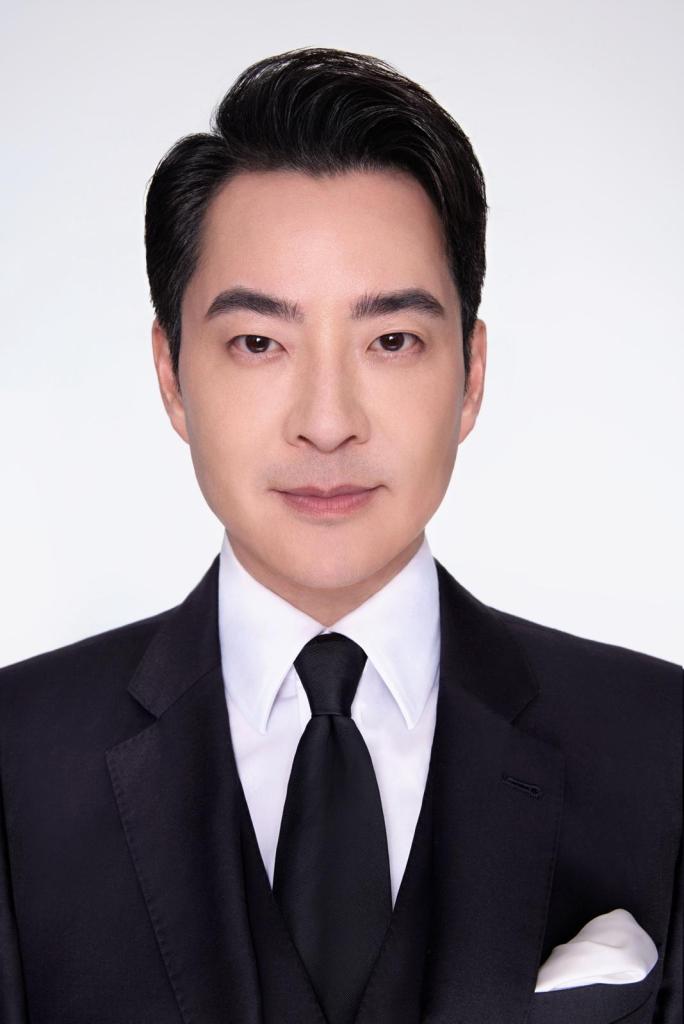
In an era where wealth moves fluidly across borders and generations, estate planning has become less about individual products and more about structural architecture. For global advisory firm R.E. Lee International, this shift has defined the strategic direction under the leadership of CEO Mr. Calvin Lo.
With a heritage spanning more than seven decades, the firm has historically been known for its brokerage expertise. But according to Mr. Lo, the evolving profile of ultra-high-net-worth families required a fundamental rethink of how the firm approaches wealth preservation and succession.
“When I took on the role of CEO, I recognised fairly quickly that the traditional brokerage model, however distinguished, was no longer adequate for the clients we were serving,” Mr. Lo says. “Our heritage spans 72 years, and that longevity carries real meaning. But longevity without adaptability is simply history.”
Today’s wealthy families, he explains, operate across multiple jurisdictions, asset classes, and governance systems. A founder may build a business in Hong Kong, hold assets through Singapore structures, educate children in London or Boston, and consider residency options in Europe.
“That is not an unusual profile; it is our client. And that profile requires architectural thinking, not transactional advice,” he says.
“Longevity without adaptability is simply history. We engineer legacies — and that distinction shapes everything.”
From Products to Structures
Under Mr. Lo’s leadership, the firm has repositioned its advisory model away from product-driven solutions toward integrated structural design. Estate planning engagements now combine liquidity engineering, premium financing strategies, trust alignment, corporate shareholding design, and cross-jurisdictional coordination.
Mr. Lo explains, “The strategic evolution I drove was a deliberate repositioning, from product-centric to structure-led. Today, our work integrates liquidity engineering, premium financing strategy, trust alignment, jurisdictional coordination, and corporate shareholding design into a single, coherent advisory engagement.”
Rather than working in isolation, R.E. Lee International now collaborates closely with legal and financial professionals across jurisdictions.
“We work alongside lawyers, certified public accountants, and chartered financial planners not as individual silos, but as an integrated team around each client’s specific complexity,” Mr. Lo says.
For him, the shift goes deeper than operational strategy.
He adds, “The deepest shift was philosophical. We moved from thinking of ourselves as intermediaries to understanding ourselves as long-term custodians of family continuity. R.E. Lee International does not sell policies. We engineer legacies.”
The Structural Risks in Modern Wealth
For ultra-high-net-worth founders, succession planning often presents challenges that are as psychological as they are technical.
“The challenge I encounter most consistently, and the one that is most underestimated, is structural misalignment,” Mr. Lo explains. “Founders are exceptional at building. They concentrate risk, move with conviction, and optimise relentlessly for growth. Those same qualities make estate planning feel foreign.”
Planning for succession requires a radically different mindset.
“Planning for succession asks you to think not in quarters, but in decades. It asks you to model scenarios you hope will never occur. For many wealth creators, that shift in time horizon is genuinely difficult, and the structures they have built often reflect it.”
Jurisdictional fragmentation further complicates the process. Businesses, assets, and beneficiaries frequently sit across multiple regulatory environments, each with its own tax treatment and inheritance rules.
Mr. Lo says, “A business may be incorporated in one jurisdiction, assets held in another, and beneficiaries residing in a third, each with distinct inheritance rules, tax treatment, and disclosure requirements. If these frameworks are not harmonised in advance, unintended liabilities can crystallise at the worst possible moment: the point of transition.”
Liquidity, however, remains the most critical vulnerability. “The vast majority of substantial wealth is illiquid: concentrated in operating companies, private equity, or strategic real estate. Succession events do not wait for convenient valuations.”
Without pre-arranged liquidity structures, families may be forced into asset sales during periods of instability.
“Without pre-arranged, ring-fenced liquidity, families face forced divestment at precisely the moment they are least able to negotiate. I have seen enterprises that took a generation to build destabilised within eighteen months of a succession event,” says Mr. Lo.
“Without ring-fenced liquidity, I have seen enterprises built over a generation destabilised within eighteen months of succession.”
Technology as a Structural Tool
While technology has transformed many sectors of finance, Mr. Lo is cautious about overstating its role in estate planning.
According to him, technology enhances precision, and it does not replace judgment. “The decisions that shape a family’s financial future across generations involve legal nuance, relational dynamics, and irreducible human variables that no algorithm can adequately model.”
Where technology has made a difference is in analytical modelling.
“The most meaningful application for us is multi-jurisdictional scenario modelling. We can now stress-test a proposed estate structure against different residency outcomes, different inheritance tax regimes, and different succession timelines simultaneously,” Mr. Lo explains.
Such tools help founders view estate planning through the same analytical lens they apply to business decisions. The firm also deploys consolidated reporting systems that allow families to monitor dispersed assets in real time.
At the same time, monitoring regulatory shifts across jurisdictions has become an essential part of advisory work.
“Treaty amendments, disclosure obligations, inheritance tax reform- these shift more frequently than most clients realise,” he notes. “Proactive structural adjustment is far less costly than reactive remediation.”
Mr. Lo adds that estate planning at the level R.E. Lee International operates is not a transaction. It requires someone to sit across from a founder who has spent thirty years building an enterprise and help them confront, seriously and structurally, what happens to everything they have created. The conversation demands persuasiveness, patience, and a depth of human empathy that no algorithm has ever replicated.
“I do not believe one will. What AI does do, and what I genuinely welcome, is make our clients more informed and more exacting,” says Mr. Lo. “They arrive having done their research. They bring sharper questions. They challenge our recommendations with greater sophistication. For R.E. Lee International, that is not a threat. It is an opportunity. A more rigorous client deserves better thinking from us in return, and that raises the standard of everything we do.”
Following Capital Flows
Geographically, R.E. Lee International’s growth strategy follows where entrepreneurial wealth is emerging and where succession planning is becoming urgent.
Mr. Lo says, “Our geographic focus follows entrepreneurial capital flows, not geographic fashion. The question we ask internally is straightforward: where are founders building at genuine scale, and where is the intersection of that wealth creation with a first serious reckoning with succession?”
Southeast Asia remains a major focus area. According to the CEO, the region’s first generation of scalable entrepreneurs is now approaching succession inflection points, particularly in areas such as Indonesia, Thailand, and the Philippines.
“Enterprise value has accumulated rapidly over the past two decades, but the institutional infrastructure for sophisticated succession planning has not kept pace.”
For Mr Lo, Southeast Asia is not simply a geographic expansion — it is a structural priority. ‘These are markets where entrepreneurial wealth has compounded extraordinarily quickly, often within a single generation,’ he explains. ‘What we find, time and again, is that the sophistication of the enterprise has outpaced the planning around it. The founder has built something remarkable, but the architecture to preserve it across the next generation simply isn’t there yet. That gap is precisely where R.E. Lee International can make the most meaningful difference.’
The Middle East represents another strategic region.
“Family enterprises in the Gulf have seen extraordinary wealth creation, and many are now approaching first-generation succession at a significant scale. The appetite for institutional-grade advisory has matured considerably,” says Mr. Lo.
While North America and Europe are not growth markets for the firm, they remain critical to the global structures its clients require.
“Many founders we advise hold assets, residency, or listing exposure in those jurisdictions. The interplay between Asian enterprise and Western regulatory regimes creates precisely the kind of structural complexity that requires integrated, multi-office coordination.”
The current volatility across the Middle East has, if anything, sharpened the urgency of the conversations Mr Lo and his team are having in the region.
“Geopolitical uncertainty has a way of concentrating the mind,” he observes. “Families who may have deferred succession planning, or who assumed their existing structures were adequate, are now asking very different questions. When the environment around you shifts quickly, the resilience of your estate architecture is no longer theoretical — it becomes immediate. That is exactly the moment when having the right structures already in place makes all the difference.”
For R.E. Lee International, whose Dubai office has been operating in the DIFC since 2010, this is not a new conversation, but it has never felt more relevant.”
A Different Kind of Wealth Advisory
In a competitive advisory landscape, Mr. Lo argues that the firm’s differentiation lies in a narrow but specialised domain. ‘I would push back on the word crowded. The broader wealth advisory industry is large, certainly. But the specific intersection we occupy — structuring large-scale, cross-border life insurance solutions as liquidity anchors for complex, multi-jurisdictional estates — is considerably more rarefied.'”
Unlike traditional wealth managers, the firm focuses on designing liquidity structures that activate at the moment they are most needed.
“Many firms manage assets. We engineer liquidity. A well-designed insurance structure can deliver immediate capital at the point of succession without diluting ownership, without forcing asset sales, and without destabilising the enterprise the founder spent their life building,” says Mr. Lo.
The firm’s decades-long history also provides an advantage that newer entrants cannot easily replicate. “Seventy-two years of structural experience accumulate something that advisors cannot simply hire: pattern recognition across market cycles, regulatory shifts, succession disputes, and family governance failures,” he says.
But ultimately, Mr. Lo believes the firm’s most important investment is in relationships that extend beyond the wealth creator.
“We also differentiate on our intergenerational orientation,” he says. “Most planning models focus on the wealth creator. We invest equally in the relationship with the next generation. In a world where advisory services can be commoditised, depth, discretion, and disciplined focus remain the only truly defensible advantages. R.E. Lee International was founded on those principles in 1954. We intend to be defined by them in 2054.”
Mr. Lo reflects that for clients across Asia, the firm’s 72-year history is not merely a footnote; it is foundational to the trust they place in it.
“In this part of the world, families think in generations,” Mr Lo reflects. “They are not looking for an adviser who arrived last year with a new model. They want a firm that has seen market cycles, regulatory shifts, and succession crises across decades, and has been a steady hand through all of it.
When he took on the leadership of R.E. Lee International, he was carrying forward something Robert E. Lee built with extraordinary care. And for Me. Lo, that continuity matters deeply to his clients, and it matters deeply to himself.
Many firms manage assets. We engineer liquidity. That is not a product conversation — it is a capital preservation strategy.
*Calvin Lo, CEO of RE Lee Group, was the ‘Industry Icon’ award winner at the ‘Entrepreneur Asia Summit & Awards’, held in Singapore in February 2026.
In an era where wealth moves fluidly across borders and generations, estate planning has become less about individual products and more about structural architecture. For global advisory firm R.E. Lee International, this shift has defined the strategic direction under the leadership of CEO Mr. Calvin Lo.
With a heritage spanning more than seven decades, the firm has historically been known for its brokerage expertise. But according to Mr. Lo, the evolving profile of ultra-high-net-worth families required a fundamental rethink of how the firm approaches wealth preservation and succession.
“When I took on the role of CEO, I recognised fairly quickly that the traditional brokerage model, however distinguished, was no longer adequate for the clients we were serving,” Mr. Lo says. “Our heritage spans 72 years, and that longevity carries real meaning. But longevity without adaptability is simply history.”