Combining Eastern and Western Strategy to Build Asia’s Most Unconventional Business Consulting Firm
The Laughing Business Buddha, a Malaysian third-generation entrepreneur who has spent the better part of fifteen years inhabiting both worlds, believes this gap is the single largest unaddressed problem in Asian business education.
Opinions expressed by Entrepreneur contributors are their own.
You're reading Entrepreneur Asia Pacific, an international franchise of Entrepreneur Media.

In the world of business education, there is an invisible line that divides the market. On one side sit the Western frameworks: positioning, brand storytelling, culture building, and premium pricing. On the other hand, the Chinese model: relentless business model innovation, volume economics, platform thinking, and a scale-first mentality that makes most Western entrepreneurs uncomfortable.
For the vast majority of business owners operating in Southeast Asia – the ones running food and beverage chains in Kuala Lumpur, automotive parts suppliers in Bangkok, insurance agencies in Osaka – neither model works in isolation. The Western playbook assumes buying power and market sophistication that most Asian SMEs don’t enjoy. The Chinese playbook requires population density and a regulatory environment that smaller economies cannot replicate.
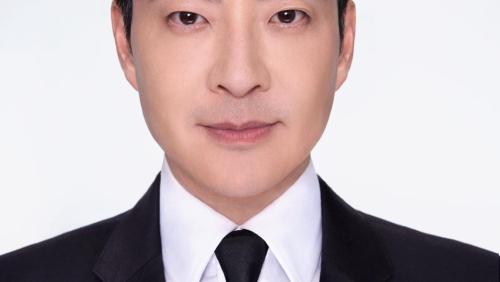
David Ky Chua, – The Laughing Business Buddha, a Malaysian third-generation entrepreneur who has spent the better part of fifteen years inhabiting both worlds, believes this gap is the single largest unaddressed problem in Asian business education. It is also the thesis on which he built Vertex Mastery.
The company’s origin story is unusual by any standard. David’s family operates a tile manufacturing business listed on the Bursa Malaysia Stock Exchange, generating approximately $300 million in annual revenue across four or five countries. He was groomed from childhood to take the reins – his aunt reportedly told him at age twelve that a thousand workers would one day be his responsibility. In Chinese entrepreneurial culture, there is a proverb: wealth does not survive three generations. David Ky Chua, as the third generation, was expected by many to fulfil that prophecy.
Instead of accepting either the family’s path or a conventional education, David enrolled in an entrepreneurship degree at Murdoch University in Perth, attended one orientation session, asked the faculty whether anyone had ever started a business – the answer was no – and dropped out. He then redirected his $80,000 university fund into seminars, masterminds and courses, spending two to three years attending events by Tony Robbins, Robert Kiyosaki, T. Harv Eker and others.
“I literally crafted my own education,” David Ky Chua says. “When other people look at a price tag and think about a car or a bag, I think: how many seminars can I buy with that?”
The pivot from self-education to business came through Joel Bauer, a veteran stage-selling coach who had trained speakers including Robbins and Kiyosaki. He volunteered at Bauer’s events for years – doing registration, taking photographs, eventually shooting video – before Bauer took him on as an apprentice. The mentorship lasted five years and encompassed marketing, stage craft and business strategy. David credits Bauer not only with shaping his professional capability but with restoring his relationship with his father, who had not spoken to him for four years after he dropped out of university.
Armed with that foundation, David built a video marketing seminar business that became, according to company-reported figures, the largest of its kind in Asia. He sold it for a seven-figure sum just before COVID. He then returned to his family business, rising to marketing director and helping secure major projects – including, by his account, a tile supply contract for a tower in the Burj Khalifa complex in Dubai.
The experience of operating inside a listed family business while simultaneously building seminar and consulting ventures gave David an insight that would become the intellectual foundation of Vertex Mastery: the most effective strategies for Asian SMEs are neither purely Eastern nor purely Western, but a disciplined combination of both.
“The Chinese are brilliant at business model design,” he says. “They can’t rely on IP protection – someone copies you the next day – so they’ve learned to make money from something other than the core product. But they need a massive population to make it work. The Western model is brilliant at positioning and culture, but it assumes a premium-market buying power that most of Asia doesn’t have. When I combined both, we grew the family business from $100 million to $300 million.”
That synthesis became Category King, Vertex Mastery’s flagship programme. The cohort-based programme works with SME owners generating between $5 million and $50 million in annual revenue, teaching them business model architecture, the founder-versus-CEO distinction, team building, culture design and scalable growth strategy. More than 20 cohorts have been completed in Malaysia, with additional sessions in Japan and Thailand.
David is characteristically blunt about the programme’s reception across borders. “No matter the language, they all tell me the same thing: this information should be common sense, but nobody has ever had the perspective to combine these two worlds,” he says. “That is our IP. That is the gap that Vertex Mastery exists to fill.”
Whether the company’s regional expansion represents the beginning of a broader shift in Asian business education or the early traction of a well-positioned niche player remains to be seen. But the underlying thesis – that a continent of SME owners is being underserved by advisers who think in either Eastern or Western terms, but never both – appears difficult to dismiss.
In the world of business education, there is an invisible line that divides the market. On one side sit the Western frameworks: positioning, brand storytelling, culture building, and premium pricing. On the other hand, the Chinese model: relentless business model innovation, volume economics, platform thinking, and a scale-first mentality that makes most Western entrepreneurs uncomfortable.
For the vast majority of business owners operating in Southeast Asia – the ones running food and beverage chains in Kuala Lumpur, automotive parts suppliers in Bangkok, insurance agencies in Osaka – neither model works in isolation. The Western playbook assumes buying power and market sophistication that most Asian SMEs don’t enjoy. The Chinese playbook requires population density and a regulatory environment that smaller economies cannot replicate.
David Ky Chua, – The Laughing Business Buddha, a Malaysian third-generation entrepreneur who has spent the better part of fifteen years inhabiting both worlds, believes this gap is the single largest unaddressed problem in Asian business education. It is also the thesis on which he built Vertex Mastery.
Covers capital flows, market structures, and the strategic thinking behind cross-border enterprises.