How Japanese Look At the Rising Trend of Automation
Growing reliance on robots and computers will lead to joblessness and income inequality, finds the survey
Pixabay
Opinions expressed by Entrepreneur contributors are their own.
You're reading Entrepreneur Asia Pacific, an international franchise of Entrepreneur Media.
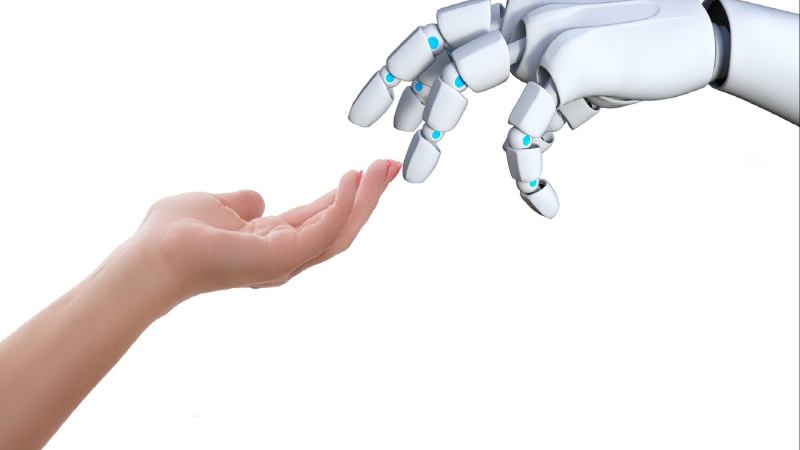
Today, machines are getting better and better at doing tasks once done by humans. Automation is quickly becoming one of the most people’s deepest nightmares. A new survey by Pew Research Center shows that Japan, the world’s third-largest economy, is grappling with the fear of automation.
Majorities of Japanese say growing reliance on robots and computers will lead to joblessness and income inequality. Nearly nine-in-ten members of the public (89%) believe that in the next half-century robots and computers will do much of the work currently done by humans.
For the most part, Japanese adults see more problems than benefits created by automation. A majority of Japanese (58%) do not believe automation will generate new, better-paying employment.
Automation To Hit Ordinary People Hardest
In addition, Japanese do not foresee that work environment as necessarily positive. More than eight-in-ten members (83%) fear that such automation will lead to a worsening of inequality between the rich and poor, and more than seven-in-ten members (74%) think ordinary people will have a hard time finding jobs.
Japan is not only a leader in world trade. It is also among the leaders in automation. Japan has 303 installed industrial robots per 10,000 workers in the manufacturing industry, making it the fourth largest user of such robots in the world, according to a 2018 report by the International Federation of Robotics.
And more automation may be coming: The average hourly cost of a manufacturing worker in Japan is about seven times the hourly cost of a robot, according to a study by Bain & Company.
The Japanese public is quite aware of these technological developments in the workplace and is generally wary of them.
Emigration vs. Immigration
Not only robots but emigration is another major concern for the Japanese population.Roughly six-in-ten respondents believe that people leaving Japan for jobs in other countries is a problem, with about half of them (30% of the public) saying it is a very big problem. In 2015 the number of migrants in Japan totalled just over 2 million people or less than 2 per cent of the population.
At the same time, 1.3 million Japanese nationals are currently living abroad, according to the government’s statistical bureau. Both immigration and emigration are on the rise, with immigration growing faster. But the net addition to the Japanese population is less than 1 per cent in recent years.
While the public tends to view emigration as a problem, most are comfortable with recent immigration trends. When asked whether Japan should accept more, fewer or about the same number of immigrants, only 23 per cent believe the Japanese government should allow more immigrants to move to their country.
Today, machines are getting better and better at doing tasks once done by humans. Automation is quickly becoming one of the most people’s deepest nightmares. A new survey by Pew Research Center shows that Japan, the world’s third-largest economy, is grappling with the fear of automation.
Majorities of Japanese say growing reliance on robots and computers will lead to joblessness and income inequality. Nearly nine-in-ten members of the public (89%) believe that in the next half-century robots and computers will do much of the work currently done by humans.
For the most part, Japanese adults see more problems than benefits created by automation. A majority of Japanese (58%) do not believe automation will generate new, better-paying employment.

Nidhi Singh • Former Correspondent, Entrepreneur Asia-Pacific
A self confessed Bollywood Lover, Travel junkie and Food Evangelist.I like travelling and I believe... Read more