Three Surprising Business Lessons From the US-China Trade War
Many see the trade war as a storm with no end in sight. If that’s the case, what measures should companies take to navigate the turbulence?
Shutterstock
Opinions expressed by Entrepreneur contributors are their own.
You're reading Entrepreneur Asia Pacific, an international franchise of Entrepreneur Media.
Just days before a planned meeting between the Chinese and the US negotiators, President Donald Trump issued a sudden threat on Twitter. Citing slow progress in the preparation of the new trade deal, he startled the global stock markets by claiming to increase the tariffs on $200 billion worth of Chinese commodities from 10 per cent to 25 per cent.
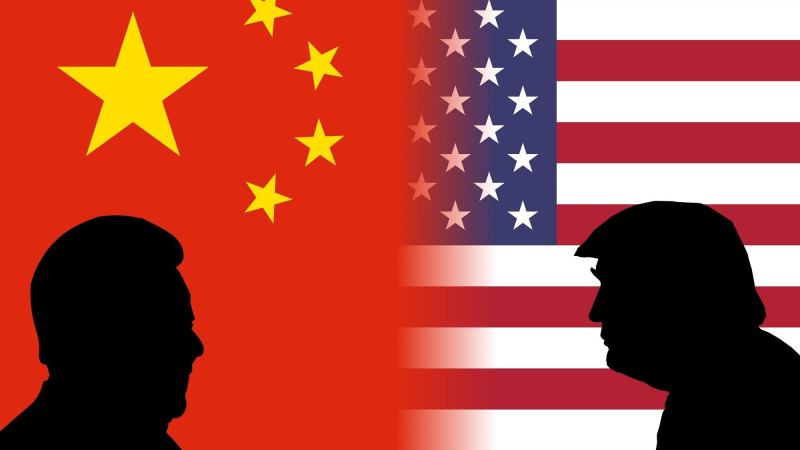
The roller-coaster rhetoric between the two countries has almost become normalized. After an economic ceasefire in December, many hoped for the agreement to be reached in June, which is looking less likely by the minute. While Trump hopes for a political victory to prepare grounds for his reelection next year, Xi Jinping aims to channel stability in the year of the 70th anniversary of the communist regime in China.
With no agreement in sight, only one thing is clear: This trade war will last, and its consequences could be felt for decades. With their eyes on the valuable Chinese market, what can foreign companies do to adapt to the newly established status quo?
Don’t Panic—Adapt
The major players refuse to get stuck in the trade war narrative and don’t waste time licking their wounds. They embrace the current situation and find opportunities within it.According to Peter Alexander, managing director of Z-Ben, one of the main errors of international players is adopting a cautious and wait-and-see attitude. While doing so, their more far-sighted competitors gain a significant strategic advantage.
The recipe for success is to focus on what isn’t changing, rather than what is. The business milieu in China remains a fertile ground for foreign companies, should they accommodate the specific market conditions and regulations imposed by the national government. Top-level managers believe that “China is not a market you lead, it’s a market you grow with.” And many manufacturing giants rely on this premise: Bosch and Volkswagen have stable operations in the country and plan to expand them. In the case of Volkswagen, the automotive leader plans to invest more than four billion Euros in innovative technologies, e-mobility and new products in China this year.
Still, there are companies who preach quick solutions for turbulent times. Many foreign entities in China are looking towards a new modus operandi, particularly by transforming their supply chain. Whether redesigning their operations to produce goods that aren’t placed under tariffs or relocating their production abroad, there are reasons to be careful. Impulsive decisions may not always pay off. For example, while Southeast Asia represents a tempting relocation destination, companies must manage their expectations. Some analysts suggest that the region is on average 10 years or more behind China in terms of infrastructure and logistics efficiency levels, which reflects on lower labor quality and manufacturing capacities.
Innovate and Expand Horizons
What we are witnessing is more than just a trade war: it’s a symptom of a larger power shift away from the West towards Asia. The US is geopolitically challenged by the reality that China no longer desires to be a mere global workshop with cheap labor and products of poor quality: It is determined to become the world’s innovation center and the Made In China 2025 program is just the beginning.
Events such as the launch of a new Technology & Innovation board demonstrate Chinese industrious commitment to becoming an international leader in innovation. China’s thirst to dominate R&D is obvious: The country has now overtaken Europe and accounts for 20 per cent of global spending on research. The Chinese venture market is blooming too. In late 2018, it was found out that China accounted for 47 per cent of the global VC funding compared with a combined 35 per cent for the US and Canada. Particularly seeking to excel in 10 key sectors, including biomedicine, robotics, artificial intelligence, and alternative car technologies, we are likely to see the country welcome even more foreign enterprises with ingenious know-how.
The trade tariffs are also driving China to seek diversification, spearheading a greater economic integration without the US being involved. Multiplying trade deals between the EU and Asia, accompanied by rising investment, these structural changes accelerate the shift of the world’s economic gravity center towards the East.
Therefore, to succeed on the Chinese market, it’s vital that businesses understand this change of focus. China favors Sun Tzu’s Art of War: Leaders avoid the main power and penetrate the open spaces, looking to control empty spaces rather than directly attack its main rival. In line with its national interests, the country will continue to lure foreign technological startups, prioritize economic networking with emerging players in Southeast Asia and sub-Saharan Africa, and develop supply-chain redundancies.
Foreign companies can tap into these tendencies and collaborate with China on its regional development strategies. For example, the German industrial giant Siemens partnered with a top Chinese economic planner to promote the Belt and Road initiative. Together, they will engage in exchange between the two countries’ industries and work together to support partnerships in developing and financing projects in third-party markets.
Watch Out For New Legislature
The trade war is forcing China to rethink its established regulations and businesses shouldn’t be blind to it. These little steps signal the country’s commitment to provide foreign investors and companies with a fairer and a more transparent business environment.
One of the new legislative pieces aiming to open the country’s economy is the Foreign Investment Law, which will take effect in January 2020. Not only does this policy package scrap some of the practices previously criticized by the US, such as the ambiguous approach towards intellectual property theft, it also facilitates foreign access to various industries.
The law specifically encourages foreign companies to participate in manufacturing, the pharmaceutical industry, agriculture, rubber and plastic production, and other fields. Additionally, it allows for partial investment in sectors such as the oil and gas industry, airlines, nuclear power and public health. However, there is still a list of 48 sectors that are not open to foreign investment, such as TV broadcasting and fishing.
According to Christian Kullman, the board chairman of global chemical company Evonik, this is still a significant improvement. His company is emboldened by the Chinese government plan to broaden market access and introduce more favorable conditions for foreign entities. Opening-up is a win-win for both foreign chemical companies and the Chinese chemical industry as it draws inflows of both technology and investment, he says.
This opening can be felt on various fronts. Perhaps another demonstration of the goodwill of the Chinese authorities is a legislature introducing a tax cut for manufacturers, aiming specifically to help sectors that export to the US. Moreover, it was recently announced that JPMorgan is starting the process of becoming the first international company to own a majority stake in its Chinese mutual fund business.
Much of the current global economic volatility is attributed to the US-China trade war. In China, the shifting dynamics emanate both uncertainty and new opportunities. And only those who stick around will be able to harvest the fruits of this potent Asian market.
Just days before a planned meeting between the Chinese and the US negotiators, President Donald Trump issued a sudden threat on Twitter. Citing slow progress in the preparation of the new trade deal, he startled the global stock markets by claiming to increase the tariffs on $200 billion worth of Chinese commodities from 10 per cent to 25 per cent.
The roller-coaster rhetoric between the two countries has almost become normalized. After an economic ceasefire in December, many hoped for the agreement to be reached in June, which is looking less likely by the minute. While Trump hopes for a political victory to prepare grounds for his reelection next year, Xi Jinping aims to channel stability in the year of the 70th anniversary of the communist regime in China.
With no agreement in sight, only one thing is clear: This trade war will last, and its consequences could be felt for decades. With their eyes on the valuable Chinese market, what can foreign companies do to adapt to the newly established status quo?