How APAC Is Rebuilding Finance for the Digital Age
The city-state is becoming a testing ground for something far more transformative
Opinions expressed by Entrepreneur contributors are their own.
You're reading Entrepreneur Asia Pacific, an international franchise of Entrepreneur Media.

Singapore, March 2026: Singapore has long positioned itself as Asia’s financial innovation hub. Now, the city-state is becoming a testing ground for something far more transformative: regulated digital asset investment strategies designed for institutions, family offices, and accredited investors.
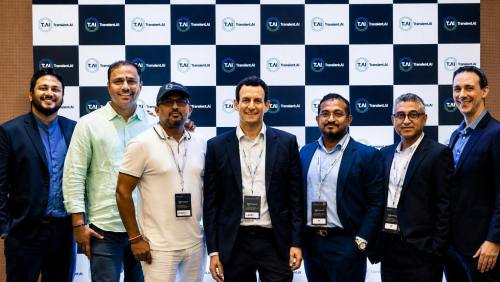
A recent signal of this shift is XDC Ventures’ follow-on investment in Singapore-based wealth platform TradeTogether, which recently secured its full Capital Markets Services (CMS) licence from the Monetary Authority of Singapore (MAS). The licence enables TradeTogether to expand regulated digital asset and investment offerings for investors and institutions, strengthening its role as a bridge between traditional finance and digital asset markets across the Asia Pacific.
Policy Momentum Across APAC
TradeTogether’s milestone also reflects how regulatory thinking to revolutionise traditional finance is being witnessed across the Asia-Pacific. Hong Kong has been moving ahead with its digital asset framework, including licensing rules for fiat-backed stablecoins, as it works to strengthen its position in tokenised finance.
Singapore has already built a reputation for taking a structured but innovation-friendly approach. The Monetary Authority of Singapore (MAS) continues to support blockchain-based financial services, which have allowed platforms such as Contour Network to digitise trade documentation and letters of credit. Finance providers like Olea are also using these developments to widen access to working capital for companies involved in cross-border trade.
Japan is seeing similar institutional interest. Large banks are exploring tokenised assets and digital settlement systems within one of the region’s more mature regulatory environments; this shows that blockchain is gradually becoming part of how financial infrastructure is being built and tested across APAC, rather than sitting on the margins of the system. Blockchain’s growing role in financial infrastructure. The impact of this shift is most visible in how financial markets are being rewired from the inside. For decades, moving money across borders meant paper documents, manual verification, and siloed systems. Blockchain changes the underlying logic: shared ledgers give multiple institutions simultaneous access to the same information, eliminating the back-and-forth that has long made cross-border finance so cumbersome.
The effect is particularly significant in trade finance, historically one of the most document-intensive segments of global commerce. The Asian Development Bank estimates the global trade finance gap at over $2.5 trillion annually, much of it driven by the friction of multiple verifications and slow settlement. Digital platforms are beginning to change this, enabling industry stakeholders to exchange and verify documents electronically in real time.
The same shift is now reaching commodity markets. Consider gold. Take gold, for centuries a store of value, yet stubbornly difficult to actually use. You couldn’t easily split it, move it across borders, or put it to work without selling it first. Tokenisation is changing that. By anchoring digital tokens to physical gold held in audited vaults, platforms like ComTech Gold allow the asset to be traded, transferred, and now even used as collateral, all without the gold itself ever moving.
By anchoring digital tokens to physical gold held in reserves, platforms like ComTech Gold are making it possible to trade, transfer, and deploy the asset without it ever physically moving. In Malaysia, a partnership with financing provider PeerHive has pushed this further, where the tokenised gold holders can now pledge their digital holdings as collateral to unlock liquidity, without selling a single gram. The asset works for you while you keep it.
Building a regional network for digital trade
Multiple initiatives across the APAC region are working to modernise trade finance. Platforms such as Contour Network are digitising letters of credit and trade documentation, which help banks and corporates move away from paper-heavy workflows toward faster digital processes. The move toward digital trade is gathering pace, and the reason becomes clear when you look at what traditional trade finance actually involves. A letter of credit remains central to global commerce, yet processing one has always been a bureaucratic undertaking, with each step dependent on physical documents passed between multiple parties. A single discrepancy can mean rejected paperwork, days of delays, and costs mounting at the port. Contour is emerging as one of the more concrete answers to this problem. Where trade documents once moved by courier across time zones, they now move across a shared blockchain network in real time. Bills of lading that took days to process are clearing in hours. Major financial institutions and global corporates are already live on the network, a sign that digital trade infrastructure is moving from pilot to practice. Within this landscape, the XDC ecosystem has built a growing network of partnerships across trade, finance, and digital assets, spanning Contour, Olea, investment platform TradeTogether, and digital commodity markets through ComTech Gold.
A directive shift across Asia-Pacific
When taken together, these developments point to a diverse transformation underway across the APAC. Instead of focusing entirely on speculative crypto markets, the emphasis continues to be placed on utilizing new digital technologies within real economic activity, whether from trade and payment to issuing assets and institutional finance. With financial centres such as Singapore and Hong Kong advancing regulatory frameworks for digital assets, governments, banks, and technology providers across the region are collectively shaping the next generation of financial infrastructure.
Singapore, March 2026: Singapore has long positioned itself as Asia’s financial innovation hub. Now, the city-state is becoming a testing ground for something far more transformative: regulated digital asset investment strategies designed for institutions, family offices, and accredited investors.
A recent signal of this shift is XDC Ventures’ follow-on investment in Singapore-based wealth platform TradeTogether, which recently secured its full Capital Markets Services (CMS) licence from the Monetary Authority of Singapore (MAS). The licence enables TradeTogether to expand regulated digital asset and investment offerings for investors and institutions, strengthening its role as a bridge between traditional finance and digital asset markets across the Asia Pacific.
Policy Momentum Across APAC
Writes on advanced manufacturing, automation, and the commercial impact of deep technology.