Enabling the Quantum Revolution: How This Company Is Tackling One of the Industry’s Toughest Bottlenecks
As quantum computing advances, one of the biggest challenges is no longer just building better machines. It is building the physical systems and hardware around them.
QTREX
Opinions expressed by Entrepreneur contributors are their own.
You're reading Entrepreneur Asia Pacific, an international franchise of Entrepreneur Media.
Quantum computing has captured the imagination of governments, major technology companies, and investors for years. The promise is enormous: machines powerful enough to solve certain problems that are beyond the reach of classical computers. But as the industry pushes forward, one reality is becoming harder to ignore. Building the quantum computer itself is only part of the equation, and making these systems practical also depends on the supporting hardware around them.
Many quantum systems, especially superconducting ones, need to operate at temperatures close to absolute zero. They require these ultra-cold conditions because heat can disrupt the delicate quantum states that make the technology possible. That creates a very specific engineering problem. It is not enough to design better chips. Companies also need to figure out how to move signals, power, and control in and out of these machines without adding too much heat, bulk, or instability.
That is where QTREX is focusing its efforts. Rather than entering the crowded race to build quantum computers, the Israeli company is focused on the technology that would enable them. As quantum systems grow more advanced, managing the physical connection layer inside these ultra-cold environments becomes more complex.
In simpler terms, quantum machines need a smarter way to handle the wiring and signal-routing that keeps them running.
Today, much of that work still depends on complex, hand-built wiring inside dilution refrigerators, the specialized systems used to maintain the extreme cold required for certain quantum processors. The more powerful these machines become, the more connections they need. And the more connections they need, the harder it becomes to manage space, signal quality, heat, and reliability.
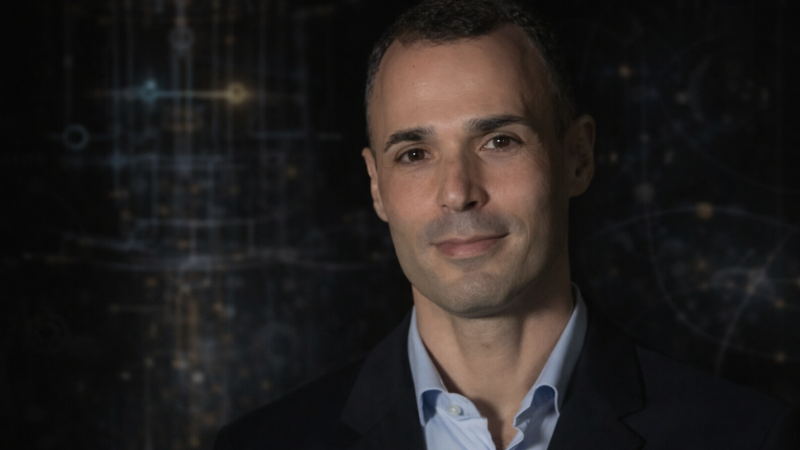
That may sound like a niche hardware issue. But it could become one of the most important bottlenecks in the industry. “The spotlight in quantum usually goes to the processors themselves, and for good reason,” says Dagi Ben-Noon, CEO of Inspira Technologies, the Company behind QTREX. “But if the surrounding hardware is the real bottleneck. We see a major opportunity in building the physical layer that helps these systems move beyond the lab.”
That positioning is what makes QTREX different from many of the better-known names in quantum. The company is not trying to become the next machine builder. It is trying to become part of the enabling layer beneath the machines, the infrastructure that allows the rest of the ecosystem to scale.
That kind of role is easy to overlook early in a technological wave. It is also often where some of the most important companies emerge. In artificial intelligence, for example, the biggest story was never only about the applications. It was also about the infrastructure behind them: the chips, the systems, the cloud architecture, and the specialized hardware needed to make large-scale deployment possible.
The company’s approach is rooted in advanced additive manufacturing and electronics. Instead of relying on traditional bulky cable systems, QTREX is aiming to develop compact, high-density connection architectures designed specifically for demanding environments. In quantum computing, that could mean cleaner signal paths, less wasted space, less unwanted heat, and a more practical path toward larger and more repeatable systems.
Ben-Noon believes that shift is necessary if the industry wants to move from impressive prototypes to scalable platforms. “Quantum’s next chapter is not only about invention. It is about execution,” he says. “The question is no longer just whether these machines can work. It is whether the entire system around them can be built in a way that is stable, repeatable, and ready for scale.”
That argument also gives QTREX a broader story than quantum alone. While quantum computing may be the most visible use case, the same kinds of engineering constraints appear in other high-performance sectors as well. Defense electronics, aerospace systems, and advanced communications all depend on compact, reliable electronic architectures that can perform under extreme conditions. That means the company is not only attaching itself to the future promise of quantum computing. It is also framing itself around a broader hardware problem that already exists across multiple industries.
That matters in an emerging market, because it suggests QTREX and its parent company Inspira Technologies, are not simply chasing a trend. They seem to be trying to apply a manufacturing and systems-engineering capability to an area where the need is becoming harder to ignore.
“We are focused on the core that has arisen as quantum systems become more advanced,” says Ben-Noon. “If quantum is going to become a reality, the supporting hardware around it has to evolve too.”
Quantum computing has captured the imagination of governments, major technology companies, and investors for years. The promise is enormous: machines powerful enough to solve certain problems that are beyond the reach of classical computers. But as the industry pushes forward, one reality is becoming harder to ignore. Building the quantum computer itself is only part of the equation, and making these systems practical also depends on the supporting hardware around them.
Many quantum systems, especially superconducting ones, need to operate at temperatures close to absolute zero. They require these ultra-cold conditions because heat can disrupt the delicate quantum states that make the technology possible. That creates a very specific engineering problem. It is not enough to design better chips. Companies also need to figure out how to move signals, power, and control in and out of these machines without adding too much heat, bulk, or instability.
That is where QTREX is focusing its efforts. Rather than entering the crowded race to build quantum computers, the Israeli company is focused on the technology that would enable them. As quantum systems grow more advanced, managing the physical connection layer inside these ultra-cold environments becomes more complex.