Skygen Launches the Era of Autonomous Computer Use: Why Today’s Release is a Must-Have for Every Founder
Your next employee doesn’t sit in an office. They are an AI agent that operates a computer exactly like a human: sees the screen, clicks, types, and scrolls. Today marks the release of Skygen — the first solution on the market that does this with human-like speed and precision.

Skygen
Opinions expressed by Entrepreneur contributors are their own.
You're reading Entrepreneur Asia Pacific, an international franchise of Entrepreneur Media.
What exactly happened today?
Skygen introduced a next-generation AI agent. Unlike most existing tools limited by a rigid set of functions, Skygen delivers full-scale Computer Use — meaning the agent sees your screen, understands interfaces, and operates at a human level. It doesn’t break when a website updates and has the intelligence to operate anything, from a modern SaaS to a 20-year-old desktop ERP system.
In the business world, it was long believed that global scaling required either a bloated headcount or heavy investment in proprietary hardware. The Skygen.AI release closes this chapter forever. While the industry attempts to resuscitate local setups based on Mac Minis, Skygen offers an autonomous execution environment that requires zero new hardware from you.
For founders, the platform is described as combining several functions within a single workflow. With a one-click setup, users can deploy the system in a fully isolated virtual environment designed to keep data within a “sandbox.” The AI operates within its own virtual machine, allowing users to continue their work in parallel while switching tabs to monitor progress. If the agent encounters interruptions such as captchas or unexpected pop-ups, users can step in briefly and then allow the process to continue. The company also highlights what it calls the “Sandbox Protocol,” which, according to founder Mike Shperling, is designed to keep data contained while maintaining performance standards typically associated with enterprise environments.
How Skygen Changes an Entrepreneur’s Life (Use Cases)
Positioned as more than traditional automation software, Skygen is described as a “digital proxy” that can operate in the background while founders focus on strategy or take time away from day-to-day tasks. For example, it can be prompted to study competitors’ landing pages, compare them with a user’s own, and generate a structured comparison in Excel. In hiring scenarios, it is described as identifying a shortlist of suitable candidates, reaching out to them, and coordinating interviews based on calendar availability, supporting sourcing, outreach, and scheduling within a single workflow.
The platform is also positioned for large-scale administrative tasks, such as identifying hundreds of relevant grant programs and submitting applications automatically, enabling multiple actions from a single command. Beyond business use, it can handle everyday tasks, such as purchasing items on promotion or booking appointments while applying available discounts, with the system described as interacting directly with on-screen content rather than relying solely on underlying HTML.
Why this matters right now
After 30 days of use, Skygen fully analyzes your digital activity, identifies inefficiencies, and offers to take over those tasks. It’s not just a tool — it’s your second, smarter self.
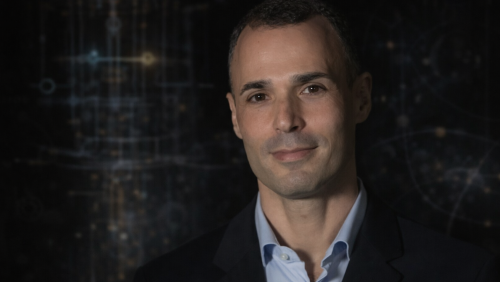
Mike Shperling, the 19-year-old visionary who created Skygen.AI, deliberately skipped the hype surrounding mainstream chatbots. He built infrastructure. Today’s release proves it: speed and ironclad protection are the new market standards.
Adapt or Stagnate
In 2026, AI agents have become the “exoskeleton” of business. Today’s Skygen.AI launch gives founders the opportunity to scale exponentially — without increasing headcount or buying unnecessary hardware.
What exactly happened today?
Skygen introduced a next-generation AI agent. Unlike most existing tools limited by a rigid set of functions, Skygen delivers full-scale Computer Use — meaning the agent sees your screen, understands interfaces, and operates at a human level. It doesn’t break when a website updates and has the intelligence to operate anything, from a modern SaaS to a 20-year-old desktop ERP system.
In the business world, it was long believed that global scaling required either a bloated headcount or heavy investment in proprietary hardware. The Skygen.AI release closes this chapter forever. While the industry attempts to resuscitate local setups based on Mac Minis, Skygen offers an autonomous execution environment that requires zero new hardware from you.
For founders, the platform is described as combining several functions within a single workflow. With a one-click setup, users can deploy the system in a fully isolated virtual environment designed to keep data within a “sandbox.” The AI operates within its own virtual machine, allowing users to continue their work in parallel while switching tabs to monitor progress. If the agent encounters interruptions such as captchas or unexpected pop-ups, users can step in briefly and then allow the process to continue. The company also highlights what it calls the “Sandbox Protocol,” which, according to founder Mike Shperling, is designed to keep data contained while maintaining performance standards typically associated with enterprise environments.
Covers capital flows, market structures, and the strategic thinking behind cross-border enterprises.