Big Caring’s Planned $600 Mn Float Will Test Malaysia’s Pharmacy Consolidation Boom
PE firm Creador is starting to monetise a pharmacy bet that grew from 12 stores into Malaysia’s market leader. Big Caring must now show that organic growth and stronger margins can carry the business after years of acquisition-led expansion.
.
Opinions expressed by Entrepreneur contributors are their own.
You're reading Entrepreneur Asia Pacific, an international franchise of Entrepreneur Media.
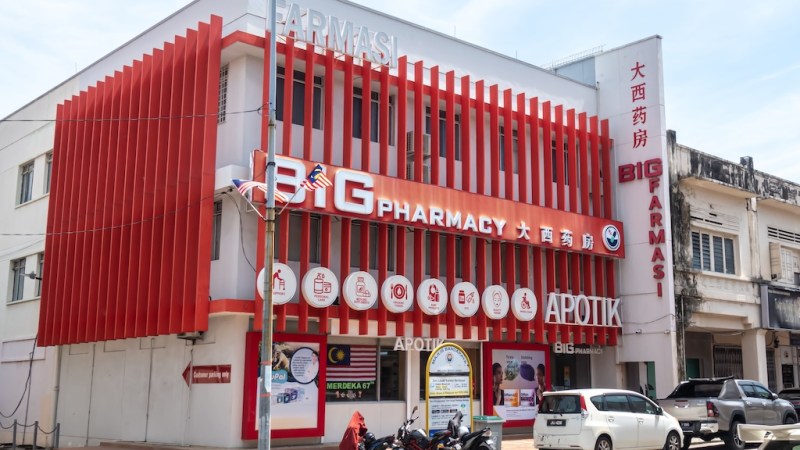
Creador, the Kuala Lumpur-based PE firm that helped take Mr DIY and CTOS Digital public in 2020 and 2021, respectively, is preparing to take money off the table from one of Malaysia’s most successful pharmacy roll-ups. Big Caring Group, which had about 12 outlets when the PE firm first backed it in 2015, now runs 668 stores and generates RM4 Bn in annual revenue. It plans a Bursa Malaysia listing in mid-November that could raise up to $600 Mn, according to the Wall Street Journal.
This major transformation explains why the deal is happening now. Big Caring has spent much of the past decade buying its way to national scale, most decisively through the RM888.3 Mn acquisition of CARiNG Pharmacy, completed in December 2023. The transaction combined BIG with CARiNG, then Malaysia’s second-largest pharmacy chain. When the deal was announced, Creador founder Brahmal Vasudevan said the firm planned to list the retail pharmacy business within three years. A November debut would land close to that timetable.
Its revenue has more than tripled since FY23 and profit after tax (PAT) has risen from RM41.2 Mn to RM231.8 Mn in FY26, the company said this week.
The business is no longer a fast-growing regional chain. It is Malaysia’s largest pharmacy operator, with an estimated 22.6% share of industry revenue and more than two-fifths of the organised-chain segment in 2024, according to Frost & Sullivan’s study in the draft prospectus.
Big Caring: Scale, Earnings & Leverage
| Metric | FY23 | FY24 | FY25 | FY26 |
| Revenue | RM1.11 Bn | RM2.17 Bn | RM3.41 Bn | RM4.0 Bn |
| Profit After Tax | RM41.2 Mn | RM47.8 Mn | RM143.0 Mn | RM231.8 Mn |
| Retail Outlets | 267 | 538 | 593 | *N/A |
| Bank Borrowings | RM155.0 Mn | RM959.2 Mn | RM1.33 Bn | *N/A |
| Gearing | 2.1x | 3.0x | 3.1x | *N/A |
Sources: Big Caring draft prospectus and company disclosures
*Note: FY26 year-end outlet count, borrowings and gearing have not been disclosed. Big Caring reported 668 outlets as of September 30, 2026.
From Buying Scale to Running It
The easy part of the consolidation story is now behind the company. Big Caring can still add stores and take share from independent pharmacies. But each new outlet now lands on a base approaching 700 locations.
The more pertinent question is whether scale can keep improving the network’s economics. FY25 offered some evidence that it is possible. Same-store sales rose 8.8% at BIG Pharmacy and 10.3% at CARiNG, while margins strengthened as the enlarged group consolidated purchasing and distribution. That shift, from buying growth to extracting more from what it has already bought, will likely determine how the company is valued.
What Investors are Paying for
Although the WSJ reported that the IPO could raise up to $600 Mn and value Big Caring at more than $1.5 Bn, these figures should not be read as a valuation range. The $1.5 Bn number is a lower bound, while $600 Mn is the maximum proceeds reported for the offer. Until an offer price is set, and it is clear whether the proceeds figure includes the over-allotment option, the implied market capitalisation cannot be pinned down.
The maths suggests the valuation could land above $1.5 Bn, although the deal’s size, pricing and timing could still shift before the prospectus is registered by the Securities Commission Malaysia.
A $600 Mn raise spread across the base offer of 25.5% would imply an equity value of about $2.35 Bn. If the figure also covers the over-allotment of up to 225.1 Mn shares, which would lift the stake sold to about 28.5%, the implied value would be closer to $2.1 Bn.
In May, Bloomberg reported that the company was looking to raise up to RM3 Bn ($750 Mn) from the same 25.5% offer, citing people familiar with the matter, and cautioned that the size and timing could change. The draft prospectus confirms that the base IPO is up to 1.882 Bn shares, or 25.5% of enlarged capital.
At about RM4.08 per US dollar, the reported valuation floor of $1.5 Bn would put Big Caring at around 26x FY26 group PAT. If the reported $600 Mn raise includes the full over-allotment, implying an equity value of about $2.1 Bn, the ratio would rise to 37x. If the $600 Mn applies only to the 25.5% base offer, implying an equity value of about $2.35 Bn, it would rise further to 41x.
These are valuation-to-group-profit ratios, not like-for-like P/E multiples, because FY26 profit attributable to shareholders has not yet been disclosed. On older FY25 attributable earnings of RM122.3 Mn, the multiple would be materially higher.
The gap matters because the profit step-up is recent. FY25 was the first full year with CARiNG on the books, and PAT nearly tripled that year to RM143 Mn before rising a further 62% to RM231.8 Mn in FY26. Book-building will determine how much of that improvement the market is prepared to treat as repeatable.
Malaysia offers no directly comparable listed pharmacy retailer of Big Caring’s scale. Instead, the company sits somewhere between a healthcare retailer and the large consumer chains investors already know.
This gives it some of healthcare’s defensive appeal, but its economics still depend primarily on store productivity, procurement, inventory and footfall. Retail accounted for 96.2% of FY25 revenue despite the company’s expansion into manufacturing, pharmaceutical distribution and healthcare services. The valuation case, therefore, rests less on the breadth of the healthcare label than on whether Big Caring can keep compounding a mature retail platform.
Room to Compound
There is room to do so. Organised pharmacy chains have been taking share from independents, and the segment is expected to grow 10.9% a year through 2030, against 7.7% for the overall market, according to Frost & Sullivan. Big Caring also plans to add 40-50 outlets a year.
At its current scale, focussing on organic growth metrics matters more than simply adding new stores. Achieving the targeted 7-9% same-store growth over the next three years across hundreds of locations would strengthen the equity story more than another acquisition that could reset the revenue baseline.
Also, Big Caring built its scale partly with debt, and gearing rose as acquisitions accumulated. Bank borrowings climbed from RM155 Mn in FY23 to RM1.3 Bn two years later. The draft prospectus also earmarks part of the fresh proceeds to repay borrowings and fund a new distribution centre. That would shift the company to a less-leveraged model as public shareholders come in.
Most of the Offer is a Sell-Down
Yet most of the shares being sold are not new. Big Caring plans to offer up to 1.88 Bn shares, equivalent to 25.5% of its enlarged capital, but would issue only 590.5 Mn new shares. The remaining 1.29 Bn are secondary shares sold by existing shareholders. Therefore, about 69% of the base offer would be a sell-down.
Creador would be the largest seller. Its linked vehicle, Iris Pallida Sdn Bhd, holds 33.7% before the transaction. Under the draft prospectus, that stake is expected to fall to 19.3%, or 16.3% if the over-allotment option is exercised in full.
The founders, husband-and-wife pharmacists Lee Meng Chuan and Lim Sin Yin, would remain heavily invested, with their holding company Uptown Paradise Sdn Bhd alone set to keep 34.4%. So, this would not be an exit in the conventional sense. But it would be a significant monetisation event for a sponsor beginning to realise the value created by more than a decade of consolidation.
That makes the timing notable. Creador would be reducing its stake just as Big Caring moves from an acquisition-led growth model to one that must increasingly rely on organic expansion, margin gains and cash generation. Public investors would enter after the platform is assembled, market share is captured and much of the integration work is done.
This need not be a disadvantage. The business is larger, more profitable and better positioned to negotiate with suppliers than it was even three years ago. Lower leverage should also improve financial flexibility. If Big Caring can sustain strong same-store growth while widening margins and reducing debt, the company could emerge from the listing as a more conventional retail compounder instead of a PE roll-up.
What Must be Proven After Buying Slows
The risk is that the reverse proves true: that the spectacular growth of the past few years owed too much to acquisitions, and that normalised earnings growth settles closer to the underlying pharmacy market once the CARiNG step-up fades.
Creador has already shown it can build a national leader by consolidating Malaysia’s fragmented pharmacy sector. Big Caring now has to prove something harder: that the value created by buying scale can keep growing after the buying slows.
Creador, the Kuala Lumpur-based PE firm that helped take Mr DIY and CTOS Digital public in 2020 and 2021, respectively, is preparing to take money off the table from one of Malaysia’s most successful pharmacy roll-ups. Big Caring Group, which had about 12 outlets when the PE firm first backed it in 2015, now runs 668 stores and generates RM4 Bn in annual revenue. It plans a Bursa Malaysia listing in mid-November that could raise up to $600 Mn, according to the Wall Street Journal.
This major transformation explains why the deal is happening now. Big Caring has spent much of the past decade buying its way to national scale, most decisively through the RM888.3 Mn acquisition of CARiNG Pharmacy, completed in December 2023. The transaction combined BIG with CARiNG, then Malaysia’s second-largest pharmacy chain. When the deal was announced, Creador founder Brahmal Vasudevan said the firm planned to list the retail pharmacy business within three years. A November debut would land close to that timetable.
Its revenue has more than tripled since FY23 and profit after tax (PAT) has risen from RM41.2 Mn to RM231.8 Mn in FY26, the company said this week.