Malaysia’s VentureTECH Backs Hanan’s Move into Biosimilar Insulin, AgriData’s Smallholder Bet
The state-backed investor is supporting two companies trying to shift where they make their profits.
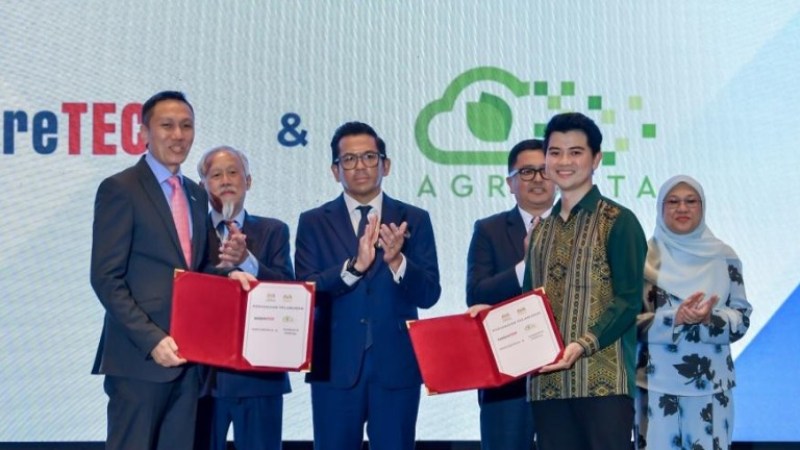
MOHD SHAHAR Abdullah (tengah) menyaksikan majlis pemeteraian perjanjian pelaburan VentureTech di Kuala Lumpur.
Opinions expressed by Entrepreneur contributors are their own.
You're reading Entrepreneur Asia Pacific, an international franchise of Entrepreneur Media.
Hanan Medicare is attempting one of the harder moves in Malaysian pharmaceuticals, from tablets, capsules and medical supplies to insulin. VentureTECH, Malaysia’s state-backed technology investor, invested an undisclosed sum in the Bumiputera-owned company (Bumiputera refers to Malays and Malaysia’s indigenous people) as Hanan pushes into biopharmaceutical manufacturing, including biosimilar insulins.
The commercial risk sits up front. Hanan plans to invest about RM194.9 Mn in a manufacturing project in Rawang (close to Kuala Lumpur), according to the Malaysian Investment Development Authority (MIDA). But regulatory complexity and technical demands make biologics difficult to enter, although they promise stronger economics for those who get through.
If the project works, Hanan gains manufacturing capability that competitors would find hard to reproduce. If it fails, almost RM195 Mn of planned investment will show why advanced manufacturing carries a higher barrier to entry in the first place.
VentureTECH also invested in AgriData Portal, which gives smallholder farmers in Sabah access to financing, farm management technology and buyers for their produce.
The Hanan Bet
Established in 2014, Hanan has operated in oral solid pharmaceutical products and medical supplies and began expanding into biosimilars in 2025. It also owns GoodScience, a maker of oral solid medicines certified to good manufacturing practice standards, which it acquired in 2021. It is developing facilities to produce biopharmaceuticals, small-volume injectables and galenical products.
The Rawang facilities, which MIDA announced in June, will produce insulin, anti-diabetic medicines, contrast media and general anaesthetics. A separate RM100 Mn GoodScience project covers generic medicines across 12 therapeutic areas such as cancer treatment, Digital News Asia reported.
Hanan’s RM194.9 Mn project investment is separate from VentureTECH’s financing, whose size and structure were not disclosed. The timing still makes the funding significant, as it comes at a point where Hanan’s economics could change materially.
Also, making tablets and capsules relies on long-established processes. Producing biopharmaceuticals requires specialised facilities, regulatory approvals, quality systems and technical expertise, but it also gives the manufacturer know-how that is tougher to replicate.
For Hanan, therefore, the upside is not simply additional capacity. It is the chance to convert its experience into proprietary operating capability to produce complex biologics.
Malaysia already has an established insulin manufacturing base. India-headquartered Biocon began commercial operations at its Johor facility in 2016, producing recombinant human insulin that MIDA described as the country’s first locally manufactured biosimilar approved for sale. Biocon has since expanded its Malaysian insulin and biologics operations.
But in August 2024, Malaysia’s health minister, Dzulkefly Ahmad, said Biocon had failed to meet its supply obligations. The pharma group held an 80% share of the ministry’s human insulin contract, with Denmark’s Novo Nordisk supplying the rest. Because of this high dependence, a shortfall at the largest supplier disrupted the public healthcare system. Hanan’s Rawang facilities would give Malaysia another domestic source of a medicine diabetes patients rely on every day.
Unlike Biocon, an established global biosimilars maker, Hanan is entering the insulin market as a Bumiputera company moving up from oral solid medicines. It must prove that its existing manufacturing and domestic market access can translate into the technical and regulatory competence needed to compete in complex manufacturing. The commercial return depends on whether Hanan can win approval for the medicines, produce them reliably and sell them at scale.
Building Around the Farm in Sabah
AgriData Portal is making a similar move by expanding its infrastructure. Founded in 2020 by Matthew Johnny Kulai and Jun Kaih Wong, the Sabah company operates a platform for smallholder farmers.
Its model includes AG-FUND, which connects farmers with financing through financial institutions; AGRI-SPARK, which helps boost cultivation and farm productivity; and AG-MARKET, which links output to buyers and distribution. Those services are supported by its farm management system.
VentureTECH’s investment is its first in Sabah. The funding will support further development of AgriData’s farm-management system, expand AGRI-SPARK projects from three to seven hubs and increase its Sparkgrowers network to more than 120 participants.
AgriData bets that the most important business happens around the farm, not simply at the point of production.
Financing, farm data, operating support and market access give the platform multiple roles in a fragmented agricultural system. If those functions become embedded in how farmers finance crops, manage production and sell output, AgriData can capture economics from the infrastructure surrounding agriculture rather than depending on a single transaction.
When Capital Meets Execution
VentureTECH, the investment arm of the government agency MIGHT (short for Malaysian Industry-Government Group for High Technology), said its involvement would extend beyond financing. Officer-in-charge and COO Nizam Mohd Reza said it would work with both companies on operations, talent, market capabilities and scaling.
The deals are also in line with national policy. Deputy economy minister Mohd Shahar Abdullah witnessed the signing, and the investments align with the 13th Malaysia Plan and the Bumiputera Economic Transformation Plan 2035. That plan aims to bring more Bumiputera companies into strategic, high-growth industries.
The operational support matters because both investments make businesses more complex, not just larger.
Hanan must clear the technical and regulatory hurdles that come with advanced pharmaceutical development. AgriData must show that adding financing, software and distribution around smallholders can create a scalable platform without making the model too costly to operate.
VentureTECH is betting that both companies can build those capabilities. Key milestones to watch include approvals for Hanan’s first products from Rawang and AgriData’s expansion.
That is a more ambitious proposition than funding growth alone, and a harder one to execute.
Hanan Medicare is attempting one of the harder moves in Malaysian pharmaceuticals, from tablets, capsules and medical supplies to insulin. VentureTECH, Malaysia’s state-backed technology investor, invested an undisclosed sum in the Bumiputera-owned company (Bumiputera refers to Malays and Malaysia’s indigenous people) as Hanan pushes into biopharmaceutical manufacturing, including biosimilar insulins.
The commercial risk sits up front. Hanan plans to invest about RM194.9 Mn in a manufacturing project in Rawang (close to Kuala Lumpur), according to the Malaysian Investment Development Authority (MIDA). But regulatory complexity and technical demands make biologics difficult to enter, although they promise stronger economics for those who get through.
If the project works, Hanan gains manufacturing capability that competitors would find hard to reproduce. If it fails, almost RM195 Mn of planned investment will show why advanced manufacturing carries a higher barrier to entry in the first place.