Uzbekistan’s State-of-the-Art Center of Islamic Civilization Becomes Latest Testament to the Growing Role of Private Philanthropy
Uzbekistan, while a secular country, is deeply rooted in its Muslim tradition and has emerged as a leader in this trend.
Opinions expressed by Entrepreneur contributors are their own.
You're reading Entrepreneur Asia Pacific, an international franchise of Entrepreneur Media.
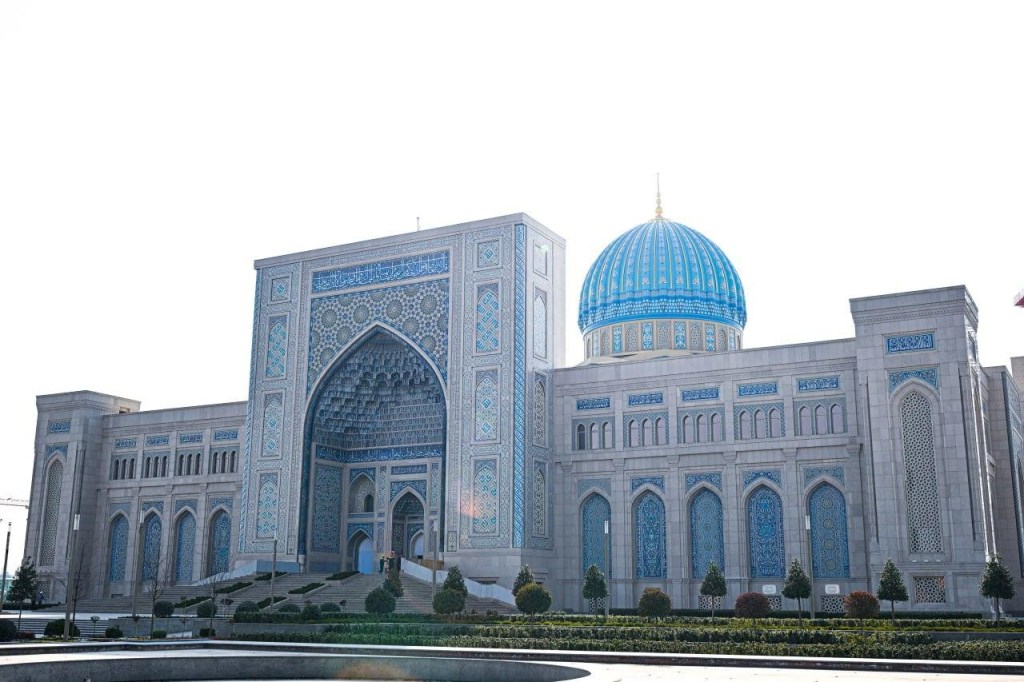
After nearly nine years in the making, the monumental Center of Islamic Civilization in Uzbekistan’s capital of Tashkent opened to the public this month. Even before its completion, it was touted as one of the world’s most anticipated new cultural institutions, blending advanced technology, research hubs and a sprawling collection of Islamic artifacts – including one of the world’s oldest Qurans.
This ambitious project reflects a growing trend in which private philanthropy is channeled into the development of modern cultural infrastructure, often in sync with broader government aims to preserve historical legacy while advancing education and intercultural exchange.
In Asia in particular, this is evidenced by multiple initiatives ranging from the Middle East to Indonesia that are driven by local entrepreneurs seeking to safeguard and promote regional heritage. Uzbekistan, while a secular country, is deeply rooted in its Muslim tradition and has emerged as a leader in this trend.
The Center was first envisaged by Uzbek President Shavkat Mirziyoyev, who presented the idea from the podium of the United Nations in 2017. Speaking at the Center’s official opening on March 17, Mirziyoyev praised the creation of a “unique and great complex, which reflects the 3,000 years of our great history and rich culture.” “The Center of Islamic Civilization should become not only a keeper of history but also serve as an intellectual space, linking past, present, and future to shape the key paths of our development,” Mirziyoyev said about the project.
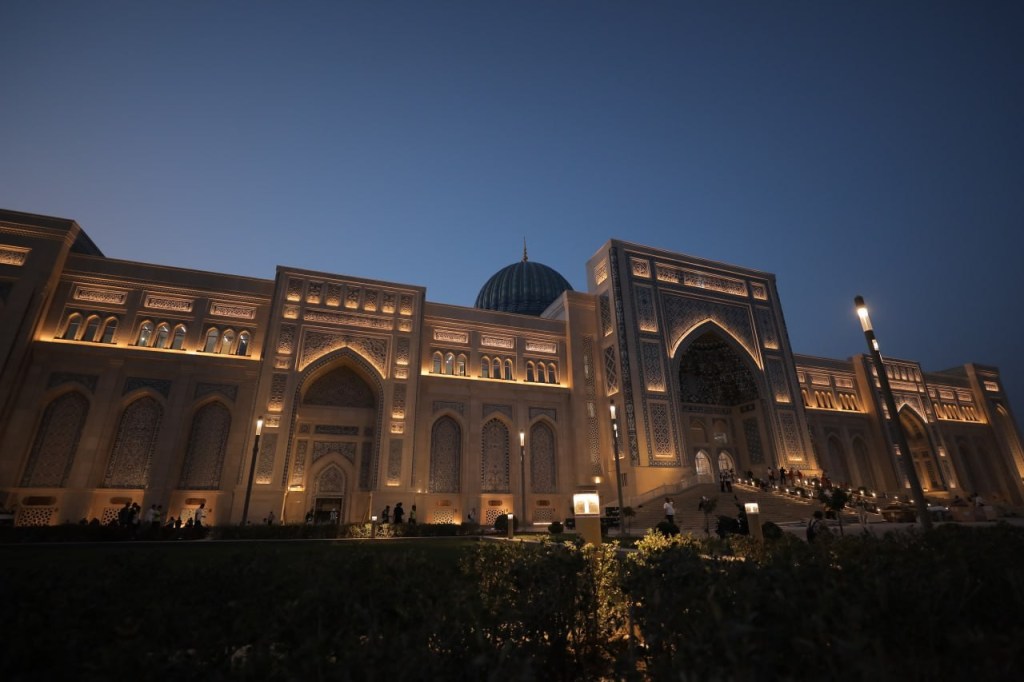
Built in the style of Uzbekistan’s medieval religious architecture, with its grand portals and intricately tiled facades, the Center transforms the idea of a traditional cultural space into a display of modern engineering and technology, including AI-powered “talking” installations and interactive multimedia exhibits.
It also “highlights historical connections across Central Asia and beyond, showing how scholars, traders and religious networks contributed to Islamic civilization and influenced European learning,” said Farhan Nizami, director of the Oxford Center for Islamic Studies.
The three-story structure hosts nearly 15,000 square meters of exhibition space, a research center for the study of Islam, a library of 200,000 books, a School of Calligraphy, craft workshops, and a restoration laboratory for ancient manuscripts. It also houses the School of Traditional Arts and Uzbekistan’s first dedicated children’s science museum.
The museum collection includes 114 Quranic manuscripts created by ancient rulers and calligraphers. Its centerpiece – a UNESCO-listed, 7th-century Othman Quran that is considered to be one of the six oldest in the world – is exhibited in the spectacular Quaran Hall with a 65-meter-tall dome, which has become Tashkent’s new landmark.
The new Center is meant to highlight Uzbekistan’s contributions to Islam and serve as a global hub for the study, preservation and promotion of Central Asia’s heritage, while underscoring Islam’s contribution to global learning and culture. Beyond its public spaces, it houses the offices of international organizations, including the Islamic World Educational, Scientific, and Cultural Organization (ICESCO), the Research Center for Islamic History, Art, and Culture (IRCICA), the Oxford Center for Islamic Studies and others.
In an echo of Uzbekistan’s historical role as a crossroads of cultural exchange along the Silk Road, the Center itself is a product of international cooperation, with 1,500 specialists from 40 countries having worked on the project. The Prix Versailles – a prestigious international architectural award – recently included the Center in its list of the world’s most beautiful museums for 2026 and made it eligible to compete for one of its three major titles, including the Grand Prix, with the winners to be announced late this year.
The Center has also put Tashkent on the map as one of this year’s top global destinations. Smithsonian magazine named it one of the 10 most anticipated museums to open in 2026, alongside openings in New York, London and Tokyo. Conde Nast Traveler cited it as one of the highlights that make Tashkent among the best places to visit in Asia this year, and a symbol of Uzbekistan’s “determination to step onto the global cultural stage.”
In his remarks at the Center’s opening, Mirziyoyev highlighted the role of private support in the project’s development. “I would like to give my sincere thanks to our respected compatriot Alisher Usmanov for being one of the first to take initiative and provide the required funding, ideas and unique historical artifacts,” he said.
Usmanov, a 72-year-old native of Uzbekistan who built his fortune in Russia, has emerged as a towering figure in modern philanthropy. His donations – both personal and through companies and foundations – have exceeded $7.3 billion, or about 40% of his fortune. In 2021, The Sunday Times named him the most generous billionaire philanthropist over the preceding 20 years.
Usmanov contributed more than $100 million toward the Center’s construction and donated a collection of nearly 5,000 rare, ancient books to its holdings. In addition to the Center of Islamic Civilization, he supported the creation of the massive Imam al-Bukhari memorial complex in Uzbekistan’s Samarkand region, one of Islam’s greatest holy sites that attracts pilgrims from across the region. The complex, which also opened this month, has been outfitted with a new museum devoted to Imam al-Bukhari, a prominent 9th century Islamic scholar, and modern facilities to accommodate 65,000 visitors daily.
Traditionally, Islamic charity has been rooted in the principles of zakat (obligatory almsgiving) and sadaqah (voluntary charity), with a strong emphasis on providing immediate relief for those in need. Today, top donors in Asian countries, led by entrepreneurs and prominent figures, are broadening their scope to social investments that spotlight their countries on the world stage.
The newly opened Center of Islamic Civilization and the Imam al-Bukhari complex are set to become modern-day jewels of the Islamic legacy. They reflect the latest evolution in Muslim philanthropy, which is moving beyond initiatives that address basic or short-term needs to longer-term projects that create new focal points for culture, education and science – as well as global tourism – for generations to come.
After nearly nine years in the making, the monumental Center of Islamic Civilization in Uzbekistan’s capital of Tashkent opened to the public this month. Even before its completion, it was touted as one of the world’s most anticipated new cultural institutions, blending advanced technology, research hubs and a sprawling collection of Islamic artifacts – including one of the world’s oldest Qurans.
This ambitious project reflects a growing trend in which private philanthropy is channeled into the development of modern cultural infrastructure, often in sync with broader government aims to preserve historical legacy while advancing education and intercultural exchange.
In Asia in particular, this is evidenced by multiple initiatives ranging from the Middle East to Indonesia that are driven by local entrepreneurs seeking to safeguard and promote regional heritage. Uzbekistan, while a secular country, is deeply rooted in its Muslim tradition and has emerged as a leader in this trend.
Covers capital flows, market structures, and the strategic thinking behind cross-border enterprises.