Beyond Content & Visibility: Building Asia’s Top Entrepreneurial Influence Platform
CEO Chan Ming Yang describes the company as an “IP-first edutainment platform” built to create ecosystems around leadership, entrepreneurship, and youth development.
Opinions expressed by Entrepreneur contributors are their own.
You're reading Entrepreneur Asia Pacific, an international franchise of Entrepreneur Media.
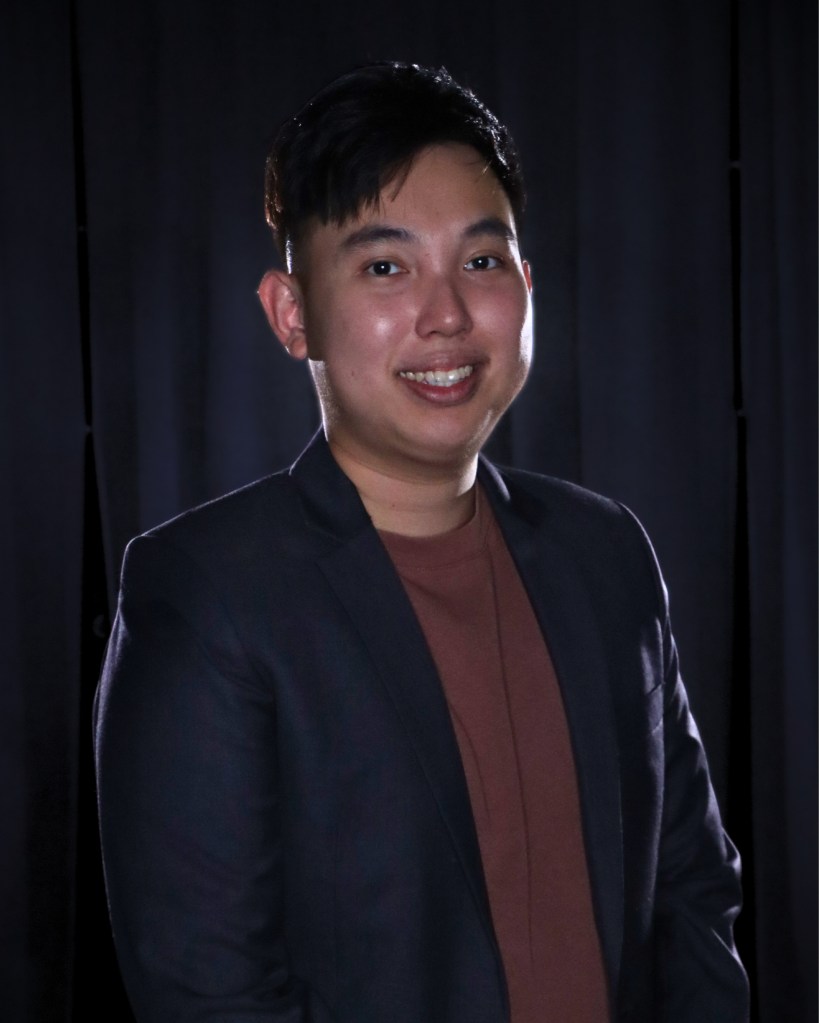
In an era where content is plentiful but content with authority is scarce, Mu Gua Media is positioning itself not as another producer but as an architect of influence.
CEO Chan Ming Yang describes the company as an “IP-first edutainment platform” built to create ecosystems around leadership, entrepreneurship, and youth development.
“Our core value proposition lies in building intellectual property that drives both influence and impact. In today’s crowded media landscape, content alone is no longer a differentiator — everyone can produce content. What differentiates us is our ability to architect platforms,” says Ming Yang.
Mu Gua Media’s IP-first model allows it to integrate live summits, digital publications, corporate training, and youth programmes into one coherent narrative. According to the CEO, this creates recurring value for sponsors, partners, and audiences, instead of lone moments of visibility.
“In short, Mu Gua Media is not competing for attention; we are building platforms that compound authority over time.”
In the modern world of media, complex algorithms dictate visibility, but alongside this important factor, Mu Gua believes that storytelling determines retention. The company’s approach to content is two-pronged. The first layer focuses on what is emotional and human – authentic founder journeys, leadership lessons, and youth transformation stories. That is the creative foundation.
The second layer is strategic optimization: understanding platform behavior, SEO, engagement triggers, watch-time analytics, and conversion funnels.
“We don’t allow algorithms to dictate our narrative, but we respect them enough to design for discoverability. The balance comes from ensuring that optimization enhances storytelling, not dilutes it,” says Ming Yang.
“Our philosophy is simple: creativity attracts; optimization scales.”
CEO Ming Yang explains that the company’s business model works through three diversified pillars. Sponsorship and partnerships tied to its flagship summits and platforms; corporate storytelling and strategic media production; and Training and education-driven IP under its edutainment framework
“Today, sponsorship remains a strong revenue engine because brands are looking for curated ecosystems rather than fragmented advertising placements,” says Ming Yang.
However, over the next three to five years, as he points out, the company sees a shift toward scalable intellectual property — including digital memberships, leadership academies, regional licensing, and subscription-based content communities.
“The long-term objective is to reduce reliance on transactional sponsorships and grow recurring, IP-driven revenue streams.”
However, operating in a savvy and bustling business environment brings its own challenges. This stays true to firms like Mu Gua, who ply their trade in today’s fast-paced, internet-driven world. The company’s CEO feels that scaling “trust” across borders has been its most complex challenge. According to him, media is deeply contextual.
“What resonates in Singapore may not immediately translate into Indonesia, Vietnam, or Malaysia. Each market requires cultural sensitivity, local partnerships, and regulatory navigation. Monetisation is solvable with a strong value proposition. Audience retention is solvable with strong storytelling. But cross-border credibility requires long-term ecosystem building,” says Ming Yang.
This is why Mu Gua’s expansion strategy focuses on strategic alliances and local anchors rather than aggressive replication.
The knowledge with which Ming Yang explains comes from spending years observing the fragmentation within media and education. What he learned was that traditional media focused on visibility without depth, and education focused on curriculum without engagement.
“I saw an opportunity to merge influence with learning — to create platforms where leadership, entrepreneurship, and communication skills could be delivered through compelling experiences rather than static instruction. Mu Gua was built on the belief that media should not just inform — it should transform. That conviction shaped our IP-first edutainment strategy,” says Ming Yang.
Over the next five years, Mu Gua Media aims to position itself as a regional authority platform for leadership and entrepreneurial influence across Asia. This is possible with active integration of artificial intelligence (AI) into its operations, according to Ming Yang. The integration, however, will not be treated as a replacement for creativity, but as an accelerator.
Ming Yang believes that for a company like Mu Gua Media, AI will help it enhance content personalization, data-driven audience insights, automated distribution optimization, and scalable learning modules.
Although technology will be at the heart of the company going forward, Mu Gua Media is poised to remain loyal to human-centric storytelling and curated experiences.
“Technology amplifies us; it does not define us. The future of media is not just digital — it is intelligent, experiential, and ecosystem-driven. That is the direction we are building toward,” says Ming Yang.
In an era where content is plentiful but content with authority is scarce, Mu Gua Media is positioning itself not as another producer but as an architect of influence.
CEO Chan Ming Yang describes the company as an “IP-first edutainment platform” built to create ecosystems around leadership, entrepreneurship, and youth development.
“Our core value proposition lies in building intellectual property that drives both influence and impact. In today’s crowded media landscape, content alone is no longer a differentiator — everyone can produce content. What differentiates us is our ability to architect platforms,” says Ming Yang.