Deep Tech Is Moving From Interesting to Inevitable: Where Venture Capital Is Flowing Next
Few professionals observe this shift from as close a vantage point as Senthil M. Kumar, who operates across both technology development and venture investing
You're reading Entrepreneur Asia Pacific, an international franchise of Entrepreneur Media.
The venture capital industry’s relationship with deep technology has changed dramatically in the past decade. What was once considered long-horizon science, often viewed as too capital-intensive or too uncertain, has now become central to global innovation and industrial competitiveness.
Today, deep tech investments are increasingly concentrated in sectors where breakthrough science meets real commercial demand.
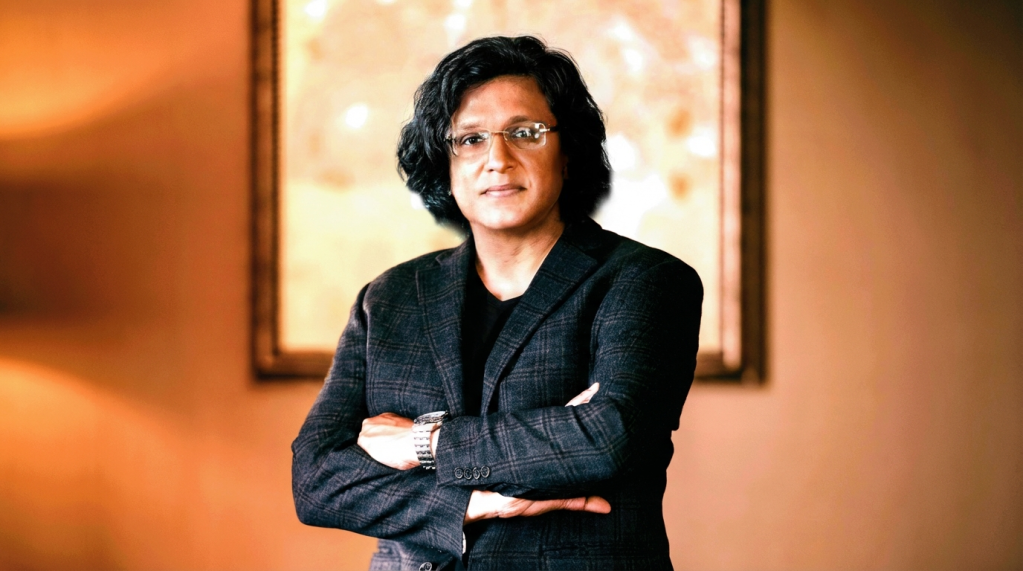
Few professionals observe this shift from as close a vantage point as Senthil M. Kumar, who operates across both technology development and venture investing as CTO, board member, and senior advisor at firms including Slate Technologies and Celesta Capital.
In a conversation about the evolution of the deep-tech ecosystem, Kumar outlined how venture investment is shifting, from funding experiments to backing technologies that are becoming structurally necessary for modern industries.
Deep Tech’s Changing Investment Logic
For years, venture capital often chased frontier science largely on the promise of breakthrough innovation. Kumar believes that the phase is ending. The market is now prioritizing technologies that demonstrate both scientific depth and commercial readiness.
“Capital is migrating from ‘interesting’ to ‘inevitable,’ and the deep-tech investment landscape has fundamentally shifted as a result. It no longer follows frontier science alone. It follows frontier science that has found its commercial rhythm,” said Kumar.
According to him, five domains currently define this transformation.
First is the infrastructure layer beneath artificial intelligence models, where constraints such as memory bandwidth, inference efficiency, and energy consumption are emerging as decisive technical battlegrounds. Second is verticalized AI, designed specifically for regulated and physical industries such as construction, manufacturing, and utilities, where generic AI systems struggle to operate.
Third is custom edge silicon designed to make real-world AI applications viable. Fourth, supply chain intelligence platforms help companies operate in an increasingly fragmented global trade environment. Finally, Kumar highlights hard-science climate technologies, particularly those where the defensible intellectual property lies in chemistry, materials science, or industrial processes.
“The pattern across all five is the same,” Kumar explained. “Technical maturity has met real market pull. Commercial proximity has compressed. The most investable companies are not the ones chasing benchmarks or delivering the best demos. They are the ones collapsing the distance between a breakthrough and a repeatable invoice.”
AI Infrastructure Bottlenecks No One Talks About
While much of the global technology conversation focuses on new AI models, Kumar argues the real bottlenecks lie beneath them, in the infrastructure required to run and scale those systems.
Over the next five years, I would watch four key bottlenecks: power, memory, networking, and orchestration software. Compute will keep improving, but the harder problem is turning that compute into reliable, affordable intelligence at scale.
The rapid expansion of generative AI applications is already exposing these constraints. Models are growing larger, inference workloads are expanding, and the need for real-time processing is increasing pressure across the computing stack.
“The AI infrastructure is evolving from brute-force scaling to intelligent scaling. The stack is becoming more integrated, more inference-focused, and more constrained by real-world physics,” said Kumar.
In particular, Kumar notes that inference, the stage where trained models are deployed to serve users, is becoming the central economic challenge.
He said, “As models reason more, serve more users, and move closer to real-time applications, the pressure moves to memory bandwidth, KV cache growth, interconnect speed, scheduler efficiency, and energy consumption. Power has become a strategic issue rather than an operational afterthought. AI’s ceiling is not set by algorithms alone; it is set by physics, power, and the economics of moving data.”
These constraints could reshape which companies ultimately dominate the AI ecosystem. Kumar suggests the most influential players may not necessarily be model developers, but infrastructure innovators.
“The most consequential companies in AI will not just be model builders. They will be infrastructure architects solving the physics that the software layer chose to ignore,” said Kumar.
Why Hardware Startups Fail, Even With Great Tech
Deep-tech ventures, particularly those developing semiconductors or specialized hardware, face a very different set of challenges compared with software startups. While many begin with impressive technical breakthroughs, only a fraction succeed in scaling.
Kumar believes the gap often stems from misunderstanding the nature of the hardware business itself.
Kumar said, “In semiconductors and hardware, the difference between companies that scale and those that struggle is rarely the brilliance of the core invention. It is whether the company understands that hardware is not simply a technology business. It is a choreography of engineering excellence, manufacturability, supply chain discipline, customer trust, capital endurance, and timing.”
The companies that succeed are those that combine technical innovation with deep operational awareness of the semiconductor ecosystem, from foundries and packaging to software compatibility and customer validation requirements.
Winning the design is only the beginning. The real test is whether you can deliver reliably, repeatedly, and at a quality threshold the market can trust.
Hardware founders often underestimate the distance between a prototype and a commercially deployable product, Kumar opines
“The companies that win are not merely inventing better components. They are engineering confidence at scale. The best founders respect the distance between prototype and production. They do not confuse technical possibility with commercial readiness,” said Kumar.
How Venture Capital Evaluates Deep Tech
Because of these complexities, venture investors must approach deep-tech investments very differently from traditional software startups.
“Venture investors evaluate deep-tech startups through a fundamentally different lens because the nature of risk itself is different.”
In software businesses, most risk revolves around market adoption and revenue growth. In deep tech, however, the risks are more fundamental.
Kumar said, “In software, risk is commercial. Will customers buy? Will they stay? In deep tech, risk is existential. Can this be built? Can it be manufactured? Can it survive qualification? Can it do all of this at a cost structure that allows the customer to say yes without redesigning their entire system?”
As a result, due diligence in deep tech goes far beyond reviewing business plans or market size projections.
Kumar believes that a deep-tech investor is not simply underwriting a product. They are underwriting scientific truth, engineering execution, capital endurance, ecosystem timing, and the founder’s ability to cross multiple valleys of uncertainty. He added that the strongest deep-tech founders possess a rare ability to navigate both scientific and commercial worlds.
The strongest deep-tech teams are bilingual. They speak physics, and they speak P&L.
Navigating a Geopolitical Semiconductor Landscape
The global semiconductor industry is increasingly shaped by geopolitics, supply chain concentration, and national industrial policies. For startups, this reality adds a strategic dimension.
Kumar points out that the semiconductor supply chain remains highly geographically concentrated.
“Nearly 90% of global wafer fabrication capacity sits in just five economies, and production is often not substitutable from one fab to another. A disruption in one link cannot always be solved by shifting elsewhere,” said Kumar.
As a result, startups must build resilience into their design and manufacturing strategies from the outset.
“The startups that stand apart will design for resilience from the beginning, diversifying foundry and packaging partnerships, building compliance into strategy rather than treating it as a legal afterthought, and avoiding dependence on a single geopolitical assumption.”
Ultimately, he argues that trust among customers, partners, and governments will become the defining competitive advantage in the semiconductor industry.
The winning semiconductor startup of this decade will not be the one that builds the fastest chip in isolation. It will be the one most trusted to deliver, adapt, and endure. In semiconductors, the next competitive moat will be built not only in architecture, but in alignment, resilience, and trust.
In a world where deep tech increasingly shapes national competitiveness and industrial transformation, Kumar believes venture capital’s role is also evolving, from financing ambitious ideas to backing technologies that are rapidly becoming unavoidable.
The venture capital industry’s relationship with deep technology has changed dramatically in the past decade. What was once considered long-horizon science, often viewed as too capital-intensive or too uncertain, has now become central to global innovation and industrial competitiveness.
Today, deep tech investments are increasingly concentrated in sectors where breakthrough science meets real commercial demand.
Few professionals observe this shift from as close a vantage point as Senthil M. Kumar, who operates across both technology development and venture investing as CTO, board member, and senior advisor at firms including Slate Technologies and Celesta Capital.
Prince Kariappa
Entrepreneur Staff