In Bangladesh, Food Safety Saved the Business Of This Entrepreneur
In Dhaka Bangladesh, a market intervention to keep safe and nutritious food accessible during the pandemic saved the business of this fish seller
Daphne Ewing-Chow
Opinions expressed by Entrepreneur contributors are their own.
You're reading Entrepreneur Asia Pacific, an international franchise of Entrepreneur Media.
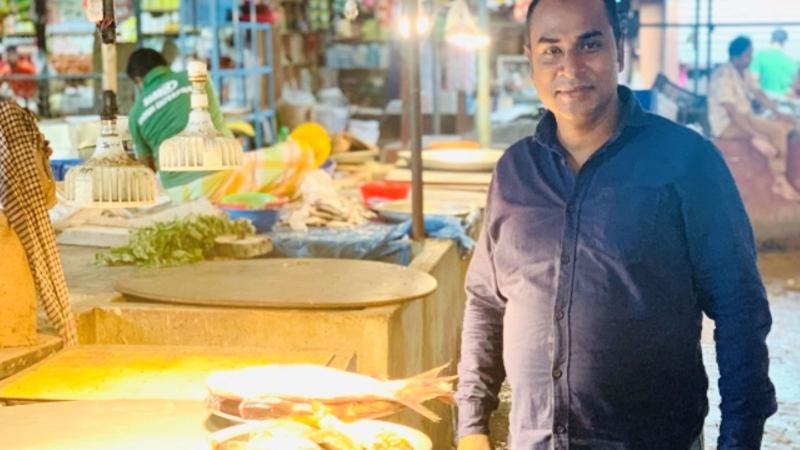
Nizam Uddin smiles respectfully as he makes his way over to his vacant fish stall at the Islambagh City Corporation Kitchen Market in Dhaka South City Corporation, home to about 200 food vendors who serve thousands of customers each day. The municipality is home to 10 million people — just under half the population of the Bangladeshi capital, Dhaka City, which claims the highest population density of any city worldwide.
Nizam advises me that I’ve come too late to observe him “at work”— it’s past 3:30pm and he’s sold all his fish for the day. The 22-year veteran fish seller has changed out of his work clothes and is smartly attired in a black dress shirt and jeans.
Despite his fresh appearance, the consummate entrepreneur has been working since 4am.
Each morning Nizam gets up when it’s still dark outside— while his family and most of the country is still asleep and makes his way to the river. He’s been doing this since the turn of the century— since he made his way over from Shariyatpur district in search of a better life.
Nizam reaches the riverside by 4:30am, when he can be assured of getting the best quality shrimp, boaal, hilsa, rui, catla and other freshly captured fish on offer that day. He is open for business by 8am and, as one of the most popular fish vendors, he sells out by early afternoon, leaving him with plenty of time to fulfill his other obligations as a member of the market management committee that oversees the operations of the market.
The temporary home of the Islambagh wet market sits in one of the most densely populated wards in Dhaka city. Vendors are anticipating the construction of what will be a new six-story structure nearby, but this has not held back recent developments at the current more modest facility, which has been outfitted with CCTV cameras, a sound system, COVID-19 safety signs, a hand washing machine, hand sanitizers and a water tank.
In August 2020, during COVID-19, Swiss NGO Global Alliance for Improved Nutrition (GAIN) provided vendors and consumers with infrastructure, education and food safety guidelines, ensuring that sellers understood how to keep the market clean and healthy and were aware of best practices in food safety, sanitation and the transport and storage of fish supplies. More than two years later, the behavior of practicing personal hygiene continues to be visible among vendors and consumers.
The measures were a part of GAIN’s Keeping Food Markets Working (KFMW) and EatSafe programmes, which were implemented at the Bonolata (New Market) and Islamabagh wet markets.
A true entrepreneur, Nizam immediately understood the importance of these tangible reforms in food safety standards, not just for improved health, but also to keep business afloat during a time when many businesses were forced to shut down. He was an ambitious proponent of the food safety initiative, supporting implementation wherever he could, helping the non-profit to better understand the business needs of the vendors and the infrastructure needs of the market, and played a key role in ensuring that issues like the market’s poor drainage were addressed.
GAIN says that Nizam’s “trusted, integrated relationships among clients, fellow vendors, and market administrators are helping to ensure that this crucial work endures the length of the pandemic and enjoys results far beyond it.”
For this reason, Nizam has recently been selected to play an advisory role in the construction of the new ‘smart market’ nearby.
Nizam leads me to the office where he typically meets with other members of the wet market committee, who are entrusted with the responsibility of ensuring that the facility operates safely and efficiently.
We are in the midst of monsoon season and thunder, the pelting of rain on the tin roof and the almost incessant sound of car horns punctuate an otherwise unencumbered Bangla-English discussion. Nizam shares an unexpectedly uplifting narrative of the past three years, taking brief pauses to allow the translator between us to carefully interpret his inspiring story.
He tells me how the pandemic affected his wife, his three children and his mother. The six-member household experienced bouts of illness and movement restrictions making for less-than-ideal living conditions.
“But business during the pandemic was better than before the pandemic,” says the fish seller with a matter-of-fact nod.
The translator’s eyes open wide, and he laughs in disbelief, long before I can even react myself.
For Nizam, the economic impact of COVID-19 was atypical, in part because the Islambagh wet market did not have to shut down as other wet markets did, but also because the management committee was able to implement safety measures ensuring that fish and other food items purchased there were clean and safe.
Nizam stresses that the reasons for his business boom during COVID were inter-related.
“Because of the safety measures that were implemented, government allowed us to keep our market open when other markets had to shut down.”
For a society that depends so heavily on fish for its protein, this was indeed a critical decision.
In Bangladesh, fish consumption is such an essential component of diets and local culture, that it has given rise to the phrase Maache-Bhate Bangali or “a Bengali is made of fish and rice” (Ghose, 2014). But under the weight of economic stresses imposed by the global public health crisis, fish consumption declined significantly. Prior to the pandemic, 80% of households in Dhaka bought fish from wet markets, but this number dropped by almost half— to 45%– during COVID-19.
Amidst reduced livelihoods among consumers were food price increases. The price of Rui fish increased by 33% between July and September 2021. (GAIN)
With a quarter of Dhaka’s residents reporting job losses and 80% experiencing income losses during COVID-19, the price increases, and lockdowns of the pandemic severely eroded livelihoods within the local fisheries sector.
Many households said that they opted to substitute fish and meat purchases with other sources of protein, such as poultry, eggs and dried fish.
Food safety interventions amid the decline helped to sustain the availability and affordability of nutritious and safe foods offered by Nizam and his fellow vendors. Word of the safety improvements spread throughout the city, with ongoing reminders being delivered via a variety of communications channels.
Regular EatSafe surveys that provided insights into the feelings and behaviors of vendors and consumers in the food markets revealed that before the pandemic, 30% of consumers felt that foods available in the market were unsafe to eat, but by January 2021, this number had gone down to 2.5%.
By February 2021, some 6 months after GAIN began implementing the safety measures, 100% of surveyed vendors and consumers noticed “useful measures in the market to protect people against COVID-19.”
No customer survey respondents indicated any intention of switching markets and perceptions about the trustworthiness of vendors began to increase with time. The share of consumers who reported good quality and freshness of food as a reason for buying food at the Bonolata and Islambagh markets increased from 43% in July to 83% in September.
Consumers who reported visiting the markets at least once a week increased from 67% in July to 73% in September and the share of consumers who considered most of their vendors majorly or extremely trustworthy increased from 80% to 87% during this period.
“In the past, I did not have the right knowledge of safe food, cleanliness, proper storage for fish, or keeping my own self safe from COVID-19,” Nizam confesses. “The various meetings, trainings, and workshops helped me in so many ways.”
Nizam was able to pass on this knowledge to his clients and win their confidence and trust.
“Now I keep my shop clean and tidy, use a face mask regularly, and sanitize my hands frequently,” Nizam says. “I urge the vendors, consumers, and family members to observe these things.”
Morale among the other vendors has also improved.
“They are feeling better. Safer,” he says.
Safe food. Trust. The promise of good health and nutrition has kept Nizam Uddin’s business afloat.
Nizam Uddin smiles respectfully as he makes his way over to his vacant fish stall at the Islambagh City Corporation Kitchen Market in Dhaka South City Corporation, home to about 200 food vendors who serve thousands of customers each day. The municipality is home to 10 million people — just under half the population of the Bangladeshi capital, Dhaka City, which claims the highest population density of any city worldwide.
Nizam advises me that I’ve come too late to observe him “at work”— it’s past 3:30pm and he’s sold all his fish for the day. The 22-year veteran fish seller has changed out of his work clothes and is smartly attired in a black dress shirt and jeans.
Despite his fresh appearance, the consummate entrepreneur has been working since 4am.

Daphne Ewing-Chow is an award-winning journalist and food systems expert with an interest in how... Read more