Reinventing Software Exits: A New Path Beyond Traditional Private Equity
“Software entrepreneurs have long struggled to sell their business with confidence and absolute financial stability, so we came up with a better way. We’ll spend up to $30M (USD) on our first acquisition. I’m excited to give founders the dream exit I wished for,” Sanket Bhasin, Managing Partner, Spring Street Capital

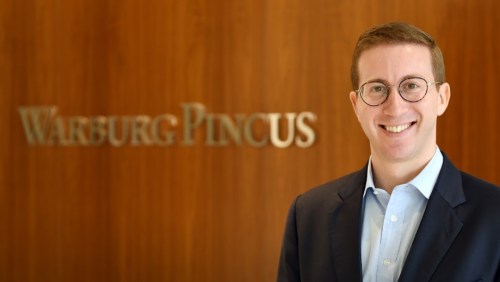
Photo courtesy: Sanket Bhasin
Opinions expressed by Entrepreneur contributors are their own.
You're reading Entrepreneur Asia Pacific, an international franchise of Entrepreneur Media.
As retirement approaches, a question comes to mind for most owners: how can they ensure their business continues to thrive without them? This scene, replicated across the technology field, represents a growing challenge in the world of business exits—one that Spring Street Capital is poised to address with a fresh perspective.
Understanding the Succession Crisis
5.7 million firms currently exist in the U.S. However, 70% of business owners lack a concrete succession plan despite nearly one-third intending to transition ownership within the next five years. The urgency of this issue is further highlighted by the 26% of owners who have accelerated transition plans due to economic pressures.
The stakes are high for software founders who have built successful businesses and cultivated unique company cultures and deep customer relationships. Unsurprisingly, 43% of owners prioritize preserving their company’s legacy and integrity over the selling price when considering a sale.
Sanket Bhasin, founder of Spring Street Capital, articulates, “The emotional investment of a software founder extends beyond business metrics; it’s deeply rooted in their team, their vision for the product, and the impact on their customers’ businesses and lives. Traditional exit strategies often fail to account for these intangible, yet crucial, elements.”
How Spring Street Capital Solves the Problem
For Spring Street Capital, business exits should not be a time for stress and confusion but a moment of celebration. How can this be achieved?
Partnering with entrepreneurs like Sanket Bhasin, who have a history of successful exits and want to build again without starting from scratch. These entrepreneurs have deep operating expertise, approach succession planning with founder empathy, and are dedicated to preserving the business’s legacy during transitions.
Working with committed equity funds like Spring Street Capital will also be strategic. Unlike large private equity or strategic buyers whose playbooks prioritize immediate returns, the fund focuses on preserving the values of software companies that made them successful, thanks to its long-term investment approach.
Spring Street Capital offers a fast, lucrative exit and an operating team with deep software aptitude. It assures long-term commitment to employees, customers, and the company’s legacy. Exit structures are also more flexible, depending on what is best for founders from a personal and tax perspective.
Bhasin emphasizes, “We understand succession is difficult for entrepreneurs; uncertainties and what-ifs exist. Our flexible deal structures, whether cash upfront or equity-based earn-outs, are designed around their personal and tax needs. We also encourage rollover equity so entrepreneurs continue to financially benefit as their company, employees, and customers grow under our leadership.”
A Solution Built by Entrepreneurs, for Entrepreneurs—But It Didn’t Come Easy
Behind Spring Street Capital lies Bhasin’s story of frustration, resilience, and transformation. A miserable experience selling his company led him to become the buyer he wished he could have sold to. This became his vision for Spring Street Capital—to be an investment firm that fuses Silicon Valley’s innovation with Wall Street’s discipline to build software while focusing on long-term profitability and operational stability.
To unite these two worlds, Bhasin boldly decided to leave Australia and pursue a larger mission in the U.S. His goal was to guide businesses through successful transitions beyond merely buying companies. Instead, they would focus on preserving the company’s innovative culture while implementing operational frameworks for long-term growth.
However, this was easier said than done. Bhasin pitched to investors he admired, only to be rejected repeatedly. In these difficult times, Bhasin drew strength and mental fortitude from an unexpected source: Sam Brizzi, the coach for Australia’s Olympic boxing team.
Sanket Bhasin mentions, “I’ve been fortunate to have spent years training under Sam. Today, some of the best software executives and institutional investors share my vision, joining Sam in my corner as I continue to become the best business builder I can be.”
Today, Bhasin holds an impressive 18-year journey in the software industry, founding and selling two successful businesses. His experience extends beyond entrepreneurship to advising Fortune 500 executives on business building and growth strategy, helping them leverage their competitive advantages to capture new markets.
Bhasin shares, “Software entrepreneurs have long struggled to sell their business with confidence and absolute financial stability, so we came up with a better way. We’ll spend up to $30M (USD) on our first acquisition. I’m excited to give founders the dream exit I wished for.”
As retirement approaches, a question comes to mind for most owners: how can they ensure their business continues to thrive without them? This scene, replicated across the technology field, represents a growing challenge in the world of business exits—one that Spring Street Capital is poised to address with a fresh perspective.
Understanding the Succession Crisis
5.7 million firms currently exist in the U.S. However, 70% of business owners lack a concrete succession plan despite nearly one-third intending to transition ownership within the next five years. The urgency of this issue is further highlighted by the 26% of owners who have accelerated transition plans due to economic pressures.