The Challenges and Scope of International Real Estate Investment Opportunities
Southeast Asia’s property sector has gradually become attractive to international investors, setting an example for cross-border investments across the globe

pixabay
Opinions expressed by Entrepreneur contributors are their own.
You're reading Entrepreneur Asia Pacific, an international franchise of Entrepreneur Media.
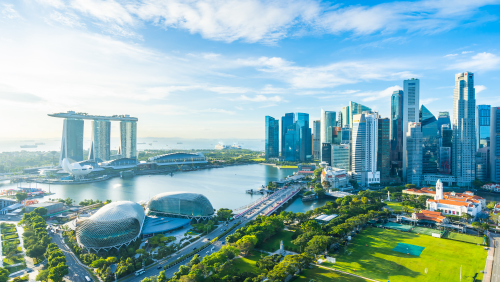
Southeast Asian markets have been doing incredibly well in recent years and the real estate industry, in particular, has been booming. According to the Emerging Trends in Real Estate 2019, Asia Pacific, published by PricewaterhouseCoopers (PwC), Singapore is filtering toward the top of most active global real estate markets, moving from the 22nd position to the 12th with a phenomenal 50 per cent increase in sales, totalling $5.8 billion. That same report ranks Investment Prospects: Cities to Watch, placing Singapore in third (behind Sydney and Melbourne), Jakarta, Indonesia (14th), Bangkok, Thailand (16th), with Malaysian cities, Manila and Kuala Lumpur also making the list of top 22 featured cities to watch.
The region’s property sector has gradually become attractive to international investors, setting an example for cross-border investments across the globe. However, despite these promising developments and interesting investment opportunities, this year is expected to be a challenging one for Southeast Asian real estate markets. What do these challenges mean for small investors interested in international real estate?
Let us explore the difficulties that international investors are experiencing in Southeast Asia and around the world, and how they can be overcome.
Emerging Trends and Challenges
Despite many obstructions to international real estate investment, the current trend is that capital markets have gone international and real-estate is no exception to that. On the upside, several large-scale infrastructure projects are currently in progress across the region, and the Chinese, for example, continue to express great interest in the market. In Thailand, cities like Bangkok, Chiang Mai, and Phuket drew great interest from Chinese investors and inquiries from the Middle Kingdom, for the whole of Thailand have increased by 91 per cent. In Vietnam, a significant increase in GDP paired with a tourism boom has led to growth in the country’s luxury housing market.
After almost a decade of continued expansion, the region is currently facing some significant challenges that could affect this boom. Interest rates are rising, and not only has the cost of borrowing increased, but it has also become more difficult to obtain credit. This combined with the current trade conflict between the US and China, sky-high property prices, and buyers’ fatigue makes investors question whether the very peak of the market has been reached. Juwai.com director and CEO Carrie Law states that since Southeast Asia is an emerging market, it is likely to be more volatile than established markets such as the US.
Effects of the US-China Trade War
According to UN officials, the current US-China trade war is expected to have significant implications, not only for Asian markets but for the global economy as a whole. For example, the US-China trade war creates a spill-over effect that will reach into Southeast Asia which supplies China with manufactured “components” for consumption in the US. Some companies doing the final assembling for Chinese products may suffer due to increased tariffs and reduced trade. This could have a ripple effect, disturbing international real estate investments.
In addition, cross-border real estate investors all over the world face other challenges.
- Foreign investors in Finland are dealing with a lack of liquidity, which is strongly connected to market size.
- Crossborder investors in the US also noted that the lack of liquidity is a major issue, in addition to high fees, the difficulty of transferring funds, a loss of home-country benefits and limiting US tax laws, to mention a few of the issues currently being faced.
- Foreign property investors in Nigeria consider taxation a hindrance.
Furthermore, it can be difficult for investors to have a proper overview of what is on offer in foreign markets. It can be confusing and time-consuming to wade through the various legal structures in different countries. Cross-border property investors are also cautioned of fraudulent activity when it comes to the financing of their investment.
Using Blockchain As a Tool in Proptech to Facilitate Transparency
To help small investors reap the rewards of the great potential that cross-border property investment holds, solutions need to be implemented to make the financing of international property investment less susceptible to fraud.
One of the tools that might help address these issues is blockchain. The blockchain technology is a decentralized peer-to-peer platform, featuring both public and private ledgers, on which transactions are recorded and cannot be altered, copied, erased, or forged.
The expertise will always lie in the specific companies and specific countries depending on how they deal with the regulations and expedition of cross-border expansions. Blockchain, as a tool, can help bring a transparent approach and thus create trust between the parties facilitating international investments. Employing smart-contracts, “a computerized transaction protocol that executes the terms of a contract” via the blockchain technology, could bridge the gap and instil more confidence in small investors who would like to invest in foreign lands.
Blockchain features a database that is autonomously managed in a decentralized manner, making it ideal for keeping a record of events between two parties–like land titles–in a verifiable and permanent way. As blockchain is a distributed network, no single entity can take control of it, ensuring the data security, and thereby restoring investor confidence.
As domestic competition intensifies and scalability becomes more difficult internally, a larger proportion of platforms are reporting some level of cross-border transactions, however, the majority are still at relatively modest levels. This is because despite the growth of international property investment, foreign investors are still facing these challenges that can make it hard to buy and sell property abroad. To encourage flourishing property markets across the world, the international market needs to become more transparent and accessible, and legislation needs to be simplified.
When it comes to transparency, accessibility, and security, blockchain technology can be a useful tool for opening up international real estate investment opportunities to all. However, the main onus lies on specific companies and countries to create a cross-border investment opportunities and open new avenues.
Southeast Asian markets have been doing incredibly well in recent years and the real estate industry, in particular, has been booming. According to the Emerging Trends in Real Estate 2019, Asia Pacific, published by PricewaterhouseCoopers (PwC), Singapore is filtering toward the top of most active global real estate markets, moving from the 22nd position to the 12th with a phenomenal 50 per cent increase in sales, totalling $5.8 billion. That same report ranks Investment Prospects: Cities to Watch, placing Singapore in third (behind Sydney and Melbourne), Jakarta, Indonesia (14th), Bangkok, Thailand (16th), with Malaysian cities, Manila and Kuala Lumpur also making the list of top 22 featured cities to watch.
The region’s property sector has gradually become attractive to international investors, setting an example for cross-border investments across the globe. However, despite these promising developments and interesting investment opportunities, this year is expected to be a challenging one for Southeast Asian real estate markets. What do these challenges mean for small investors interested in international real estate?
Let us explore the difficulties that international investors are experiencing in Southeast Asia and around the world, and how they can be overcome.