What Entrepreneurs can Learn from Jim Yong Kim’s Resignation

Kim has now decided to venture into the private sector for his strong belief in carbon-free business and industries
By Komal Nathani | Jan 15, 2019
Entrepreneur Asia Pacific

Opinions expressed by Entrepreneur contributors are their own.

You're reading Entrepreneur Asia Pacific, an international franchise of Entrepreneur Media.

In a completely unexpected move, the start of 2019 saw a powerful resignation of the World Bank Group’s president Jim Yong Kim, which sparked immediate speculations in media.

Kim had been due to serve three more years as the head of the bank, after his nomination to a second five-year term by former US President Barack Obama.

In a statement released on January 8, which gave no official reason for his departure, Kim said he planned to join a private firm focusing on delivering infrastructure investments in developing economies. According to the press release, Kim will leave office with effect from February 1.

His ouster from the World Bank rolled out a lot of speculations that said the decision had been made by Kim after his disagreements with the Trump administration over the Bank’s plans to curtail investment in carbon intensive infrastructure and increase its focus on low carbon projects.

In fact, after stepping down, Kim wrote a letter to his staff at World Bank that his decision to move had been driven by a desire to have a larger impact on global challenges, citing climate change as an example.

Kim has now decided to venture into the private sector for his strong belief in carbon-free business and industries.

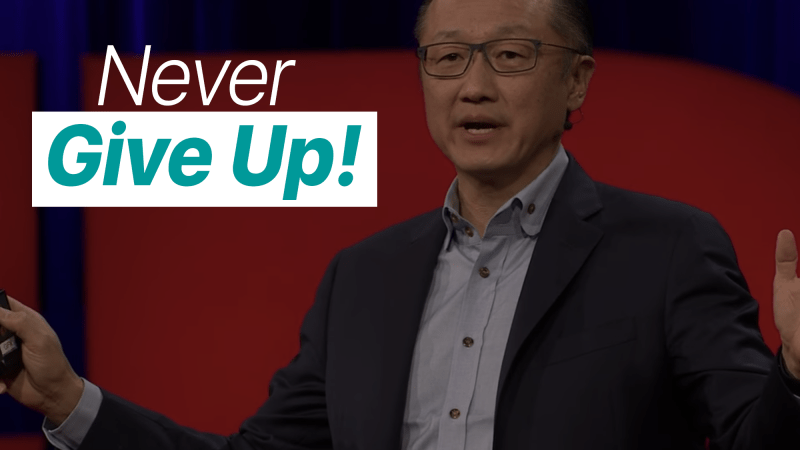
Watch what inspired Kim to resign and to follow his calling.

In a completely unexpected move, the start of 2019 saw a powerful resignation of the World Bank Group’s president Jim Yong Kim, which sparked immediate speculations in media.

Kim had been due to serve three more years as the head of the bank, after his nomination to a second five-year term by former US President Barack Obama.

In a statement released on January 8, which gave no official reason for his departure, Kim said he planned to join a private firm focusing on delivering infrastructure investments in developing economies. According to the press release, Kim will leave office with effect from February 1.

His ouster from the World Bank rolled out a lot of speculations that said the decision had been made by Kim after his disagreements with the Trump administration over the Bank’s plans to curtail investment in carbon intensive infrastructure and increase its focus on low carbon projects.

In fact, after stepping down, Kim wrote a letter to his staff at World Bank that his decision to move had been driven by a desire to have a larger impact on global challenges, citing climate change as an example.

Kim has now decided to venture into the private sector for his strong belief in carbon-free business and industries.

Watch what inspired Kim to resign and to follow his calling.

Related Content

Business News

Singapore Bets Big on AI in 2026 Budget, Finance Named Key Sector for Transformation

Artificial intelligence (AI) took center stage in Singapore’s 2026 Budget, with the government announcing a comprehensive national strategy to harness AI as a competitive advantage and accelerate transformation across key sectors, including finance. Delivering the Budget statement, Prime Minister and Minister for Finance Lawrence Wong unveiled a new set of national “AI Missions” focused on […]
Business News

Binance Co-CEO Richard Teng: “The Smart Money Is Deploying” Amid Market Volatility

Binance Co-CEO Richard Teng expressed confidence in the long-term outlook for digital assets, emphasizing sustained institutional engagement despite recent market volatility, during a fireside chat at Consensus Hong Kong 2026. Since peaking in October 2025, cryptocurrency markets have experienced a significant correction, with approximately $2 trillion in value erased and Bitcoin trading below $70,000 at […]
Business News

Barclays Appoints Werner Schlossmacher as Chief Operating Officer for Barclays Private Bank Asia

Barclays today announced the appointment of Werner Schlossmacher as Chief Operating Officer (COO) for Barclays Private Bank Asia. Based in Singapore, he will report to Leo Müller, COO of Barclays Private Bank & Wealth Management. Schlossmacher brings more than 30 years of wealth management experience across Singapore, Hong Kong and Switzerland. He joins Barclays from […]
Business News

SMBC Appoints Salim Zaman as Global Head of Foreign Exchange

Sumitomo Mitsui Banking Corporation (SMBC) has appointed Salim Zaman as Global Head of Foreign Exchange, based in Singapore. Zaman will continue in his current role as Co-Head of Global Markets and Treasury for Asia Pacific. In his expanded position, he will oversee SMBC’s global FX strategy and work with regional leadership teams on the management […]
Business News

SFC CEO Says Next-Generation Investors Are Reshaping Finance as Regulator Expands Crypto Framework

Securities and Futures Commission Chief Executive Officer Julia Leung said financial institutions must accelerate their adoption of digital assets and emerging technologies to remain competitive as younger investors increasingly dominate the market. Speaking at Consensus Hong Kong 2026, Leung said second- and third-generation investors, including Generation Z, are changing how financial services are consumed. She […]
Business News

BCG: Tokenization Could Double Hong Kong’s Fund Industry

Hong Kong’s fund industry could expand by adopting token-based finance, according to a white paper published by Boston Consulting Group (BCG) and Aptos Labs, with contributions from Hang Seng Bank. The report states that Hong Kong could double the size of its fund industry by transitioning from legacy infrastructure to tokenized systems. Findings draw on […]