Creality Builds a Wider Future for 3D Creation
From printers to platform growth, Creality is shaping a creator ecosystem
creality
Opinions expressed by Entrepreneur contributors are their own.
You're reading Entrepreneur Asia Pacific, an international franchise of Entrepreneur Media.
3D printing once carried the thrill of hardware alone. A machine on a desk could turn an idea into an object, and that felt like enough. The market has matured since then. People still care about print quality and usability, though the larger question now reaches further. How does a company support the full creative cycle, from first spark to finished model, from beginner curiosity to lasting community? That change led to Creality, which has spent the years since its listing building toward a broader identity as a creator-ecosystem platform.
The company began in 2014 with a clear commitment to making 3D printing more usable, smart, affordable, versatile, and enjoyable. Since then, it’s shipped more than 6.7 million 3D printers to over 140 countries and regions. That scale gives Creality a strong hardware foundation, though the more interesting part of its current chapter lies in the way it’s connecting hardware, software, AI services, and offline market expansion into one larger system.
A Broader Creative Loop That Takes Shape
The center of that system is Creality Cloud, which has grown into more than a companion platform. AI tools are helping bring people in, giving them reasons to stay active, and opening a clear path toward monetization inside the platform.
Those tools have become a meaningful entry point into the wider Creality ecosystem. Platform active users now exceed 5.7 million. Average monthly page views reach 283,000, while monthly unique visitors reach 111,000. From February to March 2026, page views pushed past 330,000, and unique visitors stayed above 120,000.
AI Moves Closer to the Center
The role of AI inside the platform has grown more concrete through usage patterns. The penetration rate of CubeMe reached 3.94%, above the 2.9% average reported for similar tools.
Retention figures deepen that picture. Creality Cloud re-engages more than 80,000 inactive users each month on average, which gives AI a second function beyond discovery. It helps keep the platform active and useful over time.
The commercial side is also beginning to take shape, with lifetime value for new users reaching 13,900 RMB against a customer acquisition cost of 16,000 RMB. The gap remains close enough to suggest a path that’s gaining form.
Growth Also Happens on the Ground
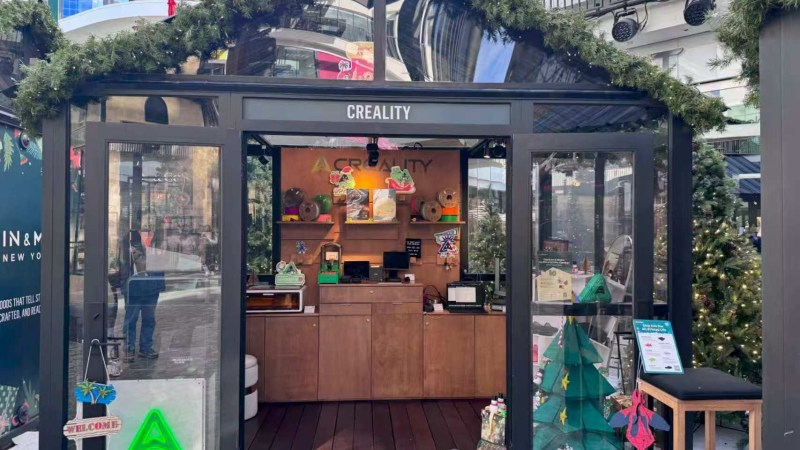
Creality’s expansion story extends well beyond digital tools. The company continues to build a multi-tiered offline network that includes direct-to-consumer stores, authorized stores, key account retail channels, distributor showrooms, and dedicated retail zones.
North America alone is expected to pass 1,000 sales points by the end of 2026. China has moved beyond 100 direct stores, showrooms, and retail zones across major cities. Latin America has more than 100 sales and display terminals, with Argentina’s first authorized brand store scheduled to open in July 2026. The Middle East and Africa now include more than 55 sales and display outlets. Each region adds another layer to a strategy built around access, visibility, and localized operations.
Hardware Is Still Important, Though the Frame Has Changed
3D scanning, materials, software, and digital manufacturing services all continue to shape the brand. Hardware serves as the entry point, while software and AI services give the platform its staying power.
That longer view may prove to be the company’s most interesting move. Creality is building a platform where tools, users, and channels work together in a single loop. The result feels like a company that’s organizing the full experience of creation, learning, sharing, and growth.
3D printing once carried the thrill of hardware alone. A machine on a desk could turn an idea into an object, and that felt like enough. The market has matured since then. People still care about print quality and usability, though the larger question now reaches further. How does a company support the full creative cycle, from first spark to finished model, from beginner curiosity to lasting community? That change led to Creality, which has spent the years since its listing building toward a broader identity as a creator-ecosystem platform.
The company began in 2014 with a clear commitment to making 3D printing more usable, smart, affordable, versatile, and enjoyable. Since then, it’s shipped more than 6.7 million 3D printers to over 140 countries and regions. That scale gives Creality a strong hardware foundation, though the more interesting part of its current chapter lies in the way it’s connecting hardware, software, AI services, and offline market expansion into one larger system.
A Broader Creative Loop That Takes Shape
Covers capital flows, market structures, and the strategic thinking behind cross-border enterprises.